


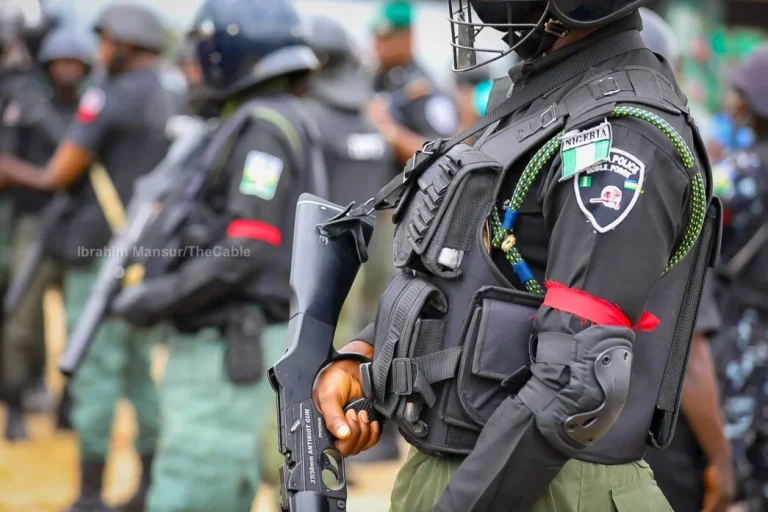
At least 31 Nigerian states spent an estimated N252.26bn on security-related activities between January and June 2026, even as killings, kidnappings, banditry and other forms of insecurity continued across the country.
An analysis of the states’ first- and second-quarter budget performance reports, based on data from Open Nigerian States, a BudgIT-backed repository of government budget information, showed that Kogi, Plateau and Bauchi recorded the highest security-related expenditure during the six-month period.
Kogi led the states with N34.67bn, representing 13.74 per cent of the total expenditure captured in the analysis. Plateau followed with N23.69bn, while Bauchi recorded N22.35bn.
Combined, the three states spent about N80.70bn, accounting for roughly 32 per cent of the N252.26bn recorded across the 31 states.
The expenditure covered security equipment, homeland security personnel, security votes and operations, ministries of security and special advisers, as well as security trust funds.
The figures also indicate a significant rise in state-level security spending. The combined expenditure increased from N75.84bn in 2025 to N252.26bn in 2026, although the year-on-year comparison is not based on the same number of states because comparable 2025 data was available for only 22 states.
Security votes and related homeland security expenditure accounted for the largest increase, rising from N47.67bn to N135.61bn. Spending under ministries of security and special advisers also increased from N14.95bn to N42.15bn, while expenditure on security equipment stood at N37.08bn and homeland security personnel at N26.89bn.
Despite the increased spending, Nigeria continued to record serious security challenges during the period.
The National Human Rights Commission documented 651 kidnapping incidents and 492 killings between January and March 2026, while other security reports recorded further deadly attacks, kidnappings and banditry in the second quarter.
The gap between rising expenditure and persistent insecurity has consequently raised questions about the effectiveness, transparency and accountability of security spending at the state level.
A retired police officer, Inalegwu Idachaba, argued that governors should adopt result-based security budgeting rather than simply releasing large sums without clearly defined targets.
He said state security plans should be based on specific threats facing each area and should enable authorities to measure whether funding is producing improvements in crime prevention and public safety.
He also advocated stronger community policing and better coordination between governors, police commissioners and other security agencies.
Retired Brigadier General George Emdin similarly noted that insecurity in Nigeria was multidimensional and could not be addressed through a single strategy.
Civil society groups, however, demanded greater accountability for the funds being spent.
The Executive Chairman of the Centre for Anti-Corruption and Open Leadership, Debo Adeniran, said Nigerians had the right to know whether security allocations were reaching the personnel and institutions responsible for protecting citizens.
The Executive Director of the Civil Society Legislative Advocacy Centre, Auwal Musa Rafsanjani, also questioned how the reported expenditure was being utilised and called for detailed information on procurements, equipment and other security projects funded by the states.
Rafsanjani further urged the Auditor-General and the National Assembly to strengthen oversight of security expenditure, warning against the use of security spending as a channel for diverting public funds.
The latest figures therefore highlight a growing contradiction: while state governments are committing hundreds of billions of naira to security, many Nigerians continue to face threats from kidnappers, bandits, terrorists and other criminal groups.