



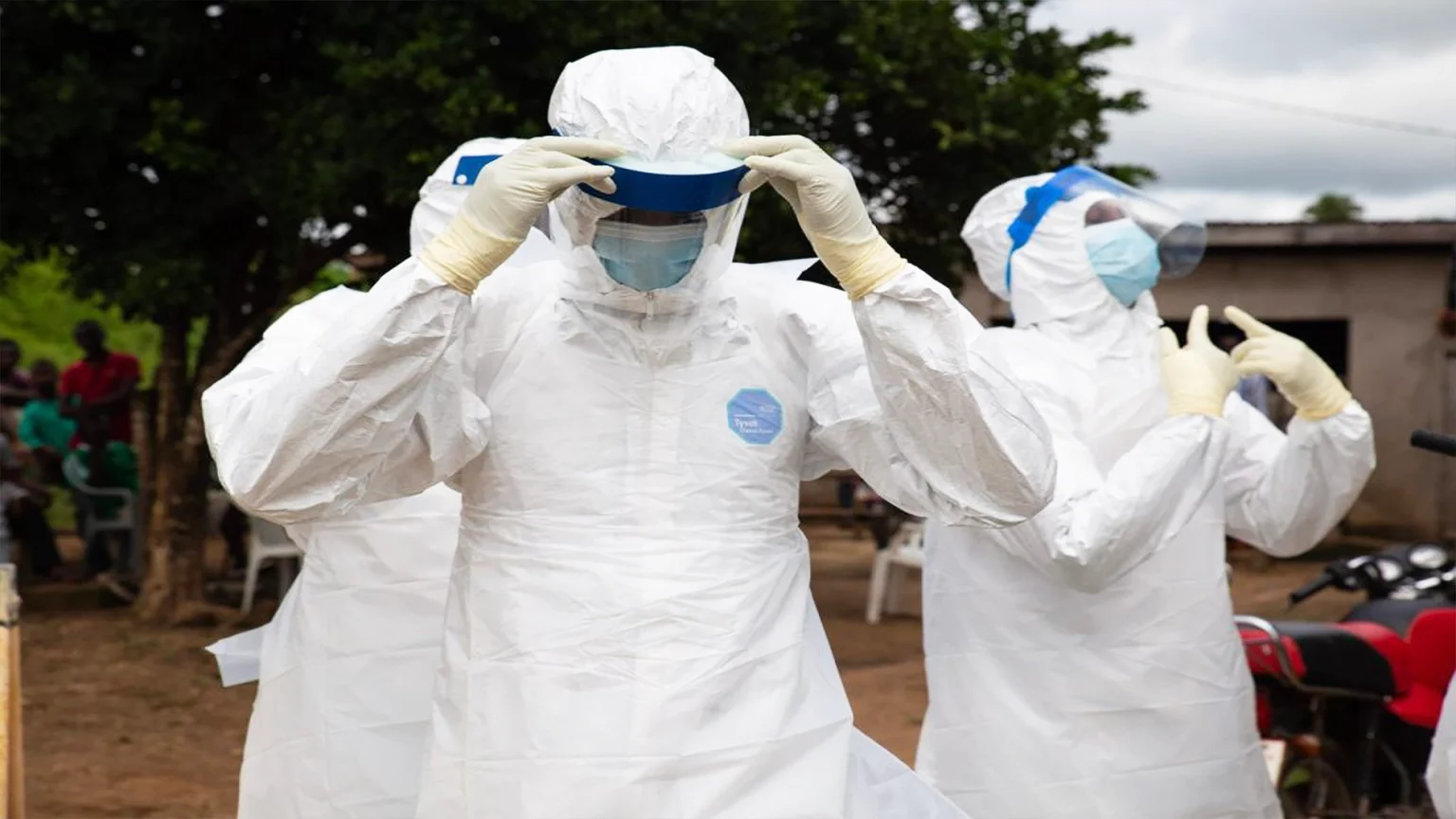
The Ebola outbreak raging in the Democratic Republic of Congo is growing “exponentially”, the United Nations’ senior Ebola coordinator warned Friday.
The Ebola outbreak is already the biggest in the country’s history, having killed more than 2,300 people from more than 5,000 cases, according to the African Union health agency. The virus eruption is “growing exponentially,” Julien Harneis told reporters in Geneva, speaking from the DRC.
Friday’s warning reinforces alarm Harneis has raised before. In an earlier briefing, he said cases were doubling roughly every 20 days, a pace of growth he described as far outstripping the response, warning that “the gap between the epidemic and our response is widening.”
UN humanitarian chief Tom Fletcher has separately called it the fastest-growing Ebola outbreak on record, saying “we need speed, scale, and solidarity before this virus gets even further ahead of us.”
WHO Director-General Tedros Adhanom Ghebreyesus has warned that at its current pace, the outbreak is on track to eclipse the 2014-2016 West African epidemic that killed more than 11,000 people, telling an emergency meeting this week: “We must be frank: the epidemic is far from being under control. It had a big head start, and we are still playing catch-up.”
This is the DRC’s seventeenth Ebola outbreak on record, and it became the country’s largest by case count in late July before overtaking the 2018-2020 outbreak’s death toll of 2,299 to become the deadliest in the nation’s history.
Part of what has made it so difficult to contain is the strain involved — there is currently no approved vaccine or treatment for this specific strain, known as Bundibugyo, and the outbreak was officially declared on May 17 even though genetic sequencing later showed it had already been spreading since February.
It has since expanded from a single health zone in Ituri Province to 49 health zones across five provinces — Ituri, North Kivu, South Kivu, Haut-Uélé and Tshopo — with a crude case fatality ratio around 44-46%.
Response efforts have been further complicated by a lack of security and attacks on health facilities in eastern DRC, where dozens of armed groups operate, alongside significant foreign aid cuts and a lack of public trust that has undermined awareness campaigns.
There has been at least one glimmer of hope on the treatment front: the first volunteer to receive an experimental vaccine for this Ebola strain got the jab in the United Kingdom last month.
Meanwhile, the UN’s humanitarian aid office has allocated $54.5 million to accelerate the response in the DRC, help neighbouring countries such as South Sudan and the Central African Republic prepare, and build community trust in the public health response.
More to follow as details emerge from Friday’s briefing.