


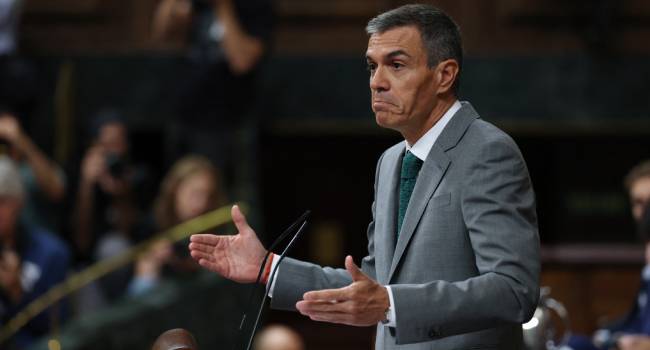
Spanish Prime Minister Pedro Sánchez says there is no solid evidence that Morocco planned the mass migrant rush into Ceuta, despite a police report pointing to unusually weak border controls and alleged Moroccan security force inaction during the crisis.
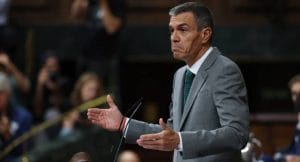
Spain’s Prime Minister Pedro Sanchez addresses the congress of deputies on the government’s handling of the situation in Spain’s North African enclave Ceuta after a mass influx of migrants, at the lower house of parliament in Madrid on September 3, 2026. (Photo by THOMAS COEX / AFP)
Spanish Prime Minister Pedro Sanchez on Thursday insisted there was no “solid proof” Morocco orchestrated July’s migrant rush into Ceuta, after a police report highlighted multiple failings by Moroccan security forces.
But the Socialist leader slammed “unacceptable” Moroccan government comments about Ceuta since the crisis began, in rare public criticism of neighbouring Rabat which claims the north African enclave.
Sanchez also risked inflaming delicate relations with Morocco by revealing the government had urged King Felipe VI to visit Ceuta and Spain’s other north African territory of Melilla.
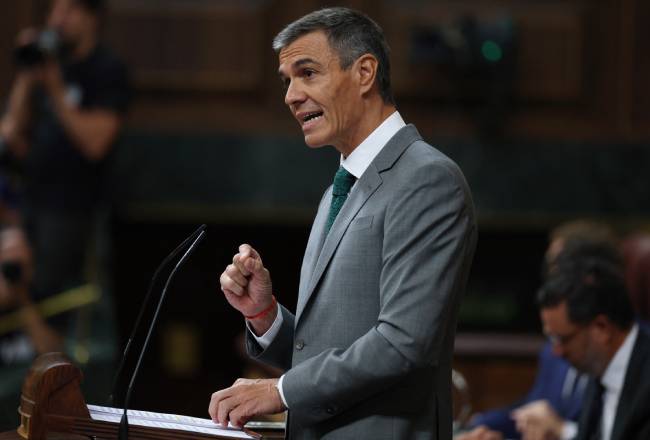
Spain’s Prime Minister Pedro Sanchez addresses the congress of deputies on the government’s handling of the situation in Spain’s North African enclave Ceuta after a mass influx of migrants, at the lower house of parliament in Madrid on September 3, 2026. (Photo by THOMAS COEX / AFP)
More than 70,000 migrants crossed into Ceuta from Morocco on July 30 and 31 in an unprecedented surge that left scores dead, most by drowning as they tried to swim around a breakwater.
The leftist government has consistently avoided blaming Morocco, with which it has spent years trying to improve historically complicated relations — notably over the status of Ceuta and Melilla.
But a Spanish police report seen by AFP on Wednesday flagged a Moroccan police response of “total permissiveness” that facilitated the rush, with some officers directing migrants towards the water.
Police numbers around the border post were “clearly smaller than usual” and officers “made no serious attempt” to stem the surge, said the report, based on satellite images, open-source videos and migrant testimonies.
Addressing parliament on Thursday to offer explanations about the crisis, Sanchez said no police, legal or international institutions had submitted “solid proof to the government of Spain that Morocco planned or executed the incident”.
“If this solid proof existed, we would act accordingly,” said Sanchez, who added that “this government is not afraid of confronting other foreign powers.”
‘Unacceptable’ Comments
Sanchez also slammed “unacceptable” comments about Ceuta and Melilla by two Moroccan government ministers, revealing Spain summoned Morocco’s ambassador on August 21.
Moroccan media quoted Justice Minister Abdellatif Ouahbi in August as saying Rabat had “historic” and “geographical” rights over Ceuta and Melilla, calling for a “final solution” that would allow the territories to “return to the fold of the motherland”.
Ceuta and Melilla — which share the European Union’s only land borders with Africa — will remain Spanish “until the end of time”, Sanchez told parliament on Thursday.
Although most of the migrants who streamed into Ceuta have since returned to Morocco, thousands continue to roam the small city’s streets and sleep rough, increasing tensions among locals who feel abandoned.
Tens of thousands of people protested in Ceuta and across Spain on Wednesday over the leftist government’s handling of the crisis, with the conservative and far-right opposition using the rallies to attack Sanchez.
The opposition has consistently cast doubt on Morocco’s role and accuse Sanchez of being subservient to Rabat.
Some analysts have suggested Morocco used the migrant rush to exert political pressure on Spain after Sanchez visited Rabat’s historic enemy Algeria in July.
The disputed Western Sahara is a source of tension, with Morocco largely controlling the former Spanish colony that is claimed by the Algerian-backed pro-independence Polisario Front.
Yet Spain reversed its long-standing policy of neutrality in 2022, backing Rabat’s autonomy plan for the territory under Moroccan sovereignty — infuriating Algeria.
Sanchez also revealed the government had urged King Felipe to travel Ceuta and Melilla “in the coming weeks”, in rare public comments about royal matters.
Such a visit would likely spark tensions with Morocco, after the last trip by a Spanish monarch to the cities in 2007 sparked a diplomatic crisis.
“Ceuta needs to be supported by the state more than ever,” Sanchez said in justification of the plea.
AFP