



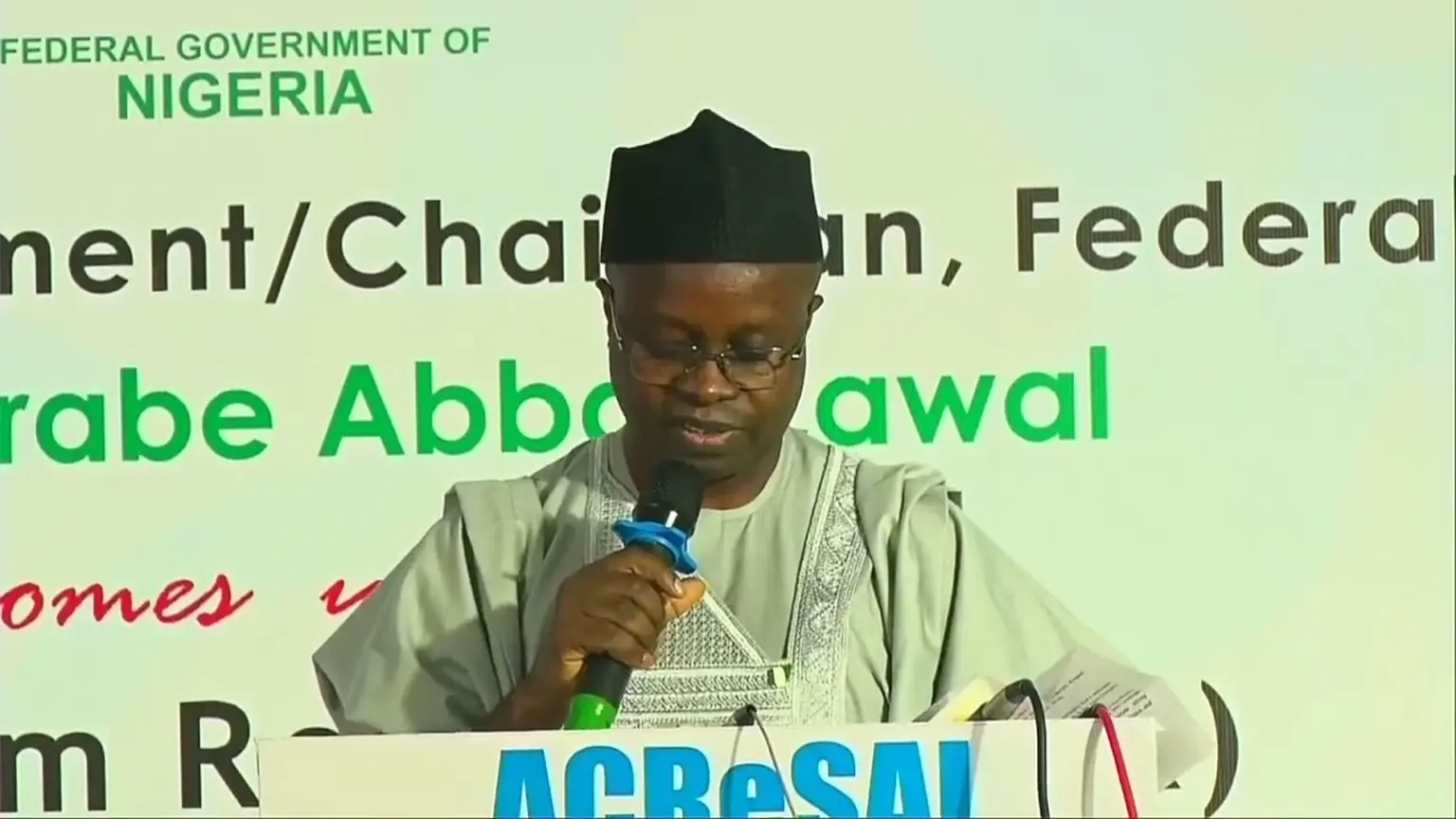
Permanent Secretary of the Federal Ministry of Environment, Dr Salihu Usman
• Ogun intensifies lead poisoning prevention, tasks industries on safety
• Unveils assessment report, plans coordinated intervention
The Federal Government, yesterday, reaffirmed its commitment to eliminating lead exposure and phasing out lead-based paints in Nigeria by 2030.
The government said environmental regulation, public health surveillance, laboratory testing, healthcare services, community awareness and enforcement must work together to prevent lead poisoning.
Permanent Secretary of the Federal Ministry of the Environment, Dr Salihu Usman, disclosed this in Abuja during the commemoration of the 2026 International Lead Poisoning Prevention Week.
The event, organised by the ministry in collaboration with stakeholders, had the theme, “From Detection to Protection.”
The Federal Government warned that failure to enforce safety standards could expose more Nigerians, particularly children, to preventable health risks.
Usman, who was represented by the Director of Pollution Control and Environmental Health, Mrs Adeola Omotunde, said Nigeria must move beyond issuing policies and standards to implementing practical measures that protect public health.
He said exposure to lead could damage the neurological, cardiovascular, renal, gastrointestinal and haematological systems.
Usman, therefore, called for greater awareness among paint manufacturers, importers, retailers, painters, construction professionals and consumers, urging them to support the production and use of safer alternatives.
He said the government would continue to work with relevant institutions and partners to strengthen environmental standards, promote compliance and improve the management of hazardous chemicals and contaminated sites.
Meanwhile, the Ogun State Government has released its lead poisoning assessment report to enhance environmental health safety, curb further exposure to toxic metals and protect the health of residents.
The state’s Commissioner for Health, Dr Tomi Coker, disclosed this at a media briefing to mark the 2026 International Lead Poisoning Prevention Week, themed, “From Detection to Prevention: Acting Together to End Lead Exposure in Nigeria.”
In her remarks, the representative of the Alliance for Responsible Battery Recycling, Christiana Oloride, lauded the ministry and other stakeholders for their efforts to raise awareness and strengthen measures to prevent lead exposure.
Also speaking, the Executive Director of SRADeV Nigeria, Dr Leslie Adogam, called for stronger national capacity in laboratory testing, environmental monitoring, human biomonitoring, exposure assessment and risk communication.
Coker said the report was prepared by the Ministry of Health, in partnership with Ministries, Departments and Agencies (MDAs), as well as implementing partners, to provide evidence-based guidance for public health planning and coordinated measures to tackle lead exposure.
Coker described lead as a hazardous metal that poses significant health risks, adding that children, pregnant women and workers who come into contact with the substance are particularly susceptible to its harmful effects.
Also speaking at the event, the Commissioner for the Environment, Dr Ola Oresanya, said the state government would enforce the polluter-pays principle, under which individuals or organisations responsible for pollution would bear the cost of cleaning up affected areas.