



Leftwing opponent alleges vote count irregularities after Trump-endorsed lawyer secures narrow majority
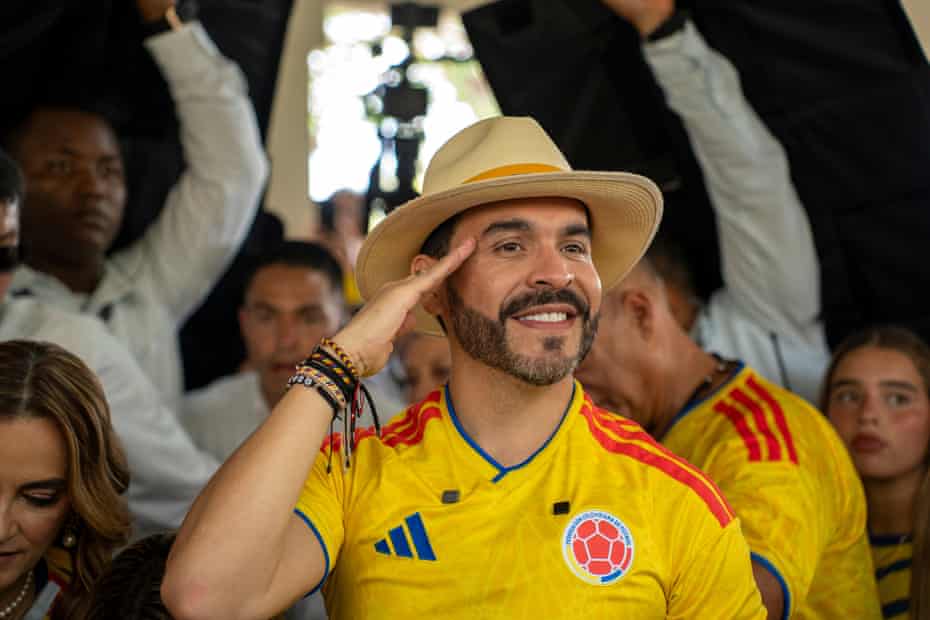
The Trump-admiring far-right millionaire lawyer and self-styled “outsider” Abelardo de la Espriella has won Colombia’s presidential runoff, defeating the leftwing senator Iván Cepeda.
With 99.98% of ballots counted in the preliminary vote tally, De la Espriella had secured 12.95m votes, or 49.66%, just 249,901 more than Cepeda, who received 12.7m votes, or 48.7%. A further 1.6% of ballots were cast blank.
The margin was narrower than in the first round three weeks ago, when De la Espriella had beaten Cepeda by 673,000 votes.
De la Espriella’s victory marks a sharp swing back to the right after four years under Colombia’s first and only leftwing president, Gustavo Petro, who was barred by the constitution from seeking re-election and therefore backed Cepeda as his successor.
The result is also being seen as further evidence of a wave of far-right candidates sweeping presidential elections across Latin America, after recent victories by Nasry Asfura in Honduras and José Antonio Kast in Chile, while Keiko Fujimori currently leads the vote count in Peru.
Like them, De la Espriella also received the endorsement of the US president, Donald Trump – although only after winning the first round.
In a live address broadcast on his social media channels, De la Espriella said his victory would “change the course of Colombia’s history forever”.
He added that he had just spoken by phone with the US president: “He [Trump] has expressed his support and his recognition of our victory.”
In a video posted by the US Republican congresswoman María Elvira Salazar after the result, De la Espriella said: “To solve Colombia’s problems, we need to build a very close alliance with the US, which is not only our main trading partner but also our most important strategic ally in the fight against organised crime.”
The US secretary of state, Marco Rubio, posted that he had spoken with De la Espriella to congratulate him: “The Trump administration looks forward to working closely with your incoming administration to advance regional security cooperation, end illegal immigration to the United States and strengthen our economic ties. Colombia’s best days are ahead,” he wrote.
When Petro leaves office in about six weeks, only Mexico, Brazil – which will hold elections in October – Uruguay and Guatemala will remain under leftwing governments in the region.
In a post on social media, Petro alleged irregularities in the preliminary vote count released by the National Civil Registry, the independent public body responsible for organising Colombia’s elections. Without providing evidence, the president claimed that the registry was allegedly “uploading forms … without the signatures of election jurors” and said that “those polling stations must be immediately challenged”.
Petro also wrote that he would only recognise the outcome of the official scrutiny process, which is expected to take about two more days. “No president can be declared yet. It is the scrutiny process that determines who the president is,” he said.
In the first round, the president also alleged fraud in the preliminary count without presenting evidence, drawing widespread criticism from election experts. The difference between the preliminary count and the official tally was less than 0.1%.
Following Petro’s lead, Cepeda declined to recognise the preliminary results and, likewise without presenting evidence, said in his speech that a team of lawyers from his party was “proceeding to challenge 33,000 polling stations across the country”. He added: “Once the final scrutiny result is produced and the corresponding verifications have been carried out, we will recognise the official result that emerges from that scrutiny process.”