



economy and perceived slow progress in tackling illegal immigration.
Attention quickly shifted onto the man seen widely as Starmer’s likely replacement. While it’s still possible that there will be a leadership contest within the Labour Party, senior members appeared keen to avoid the spectacle and momentum was building fast around Andy Burnham.
Until last week, Burnham had been the Mayor of Manchester, Britain’s fifth largest city, for about a decade. He stepped down from that role to stand in a local by-election last week, easily clinching the seat in Makerfield, Greater Manchester, to become the local Member of Parliament in the House of Commons.
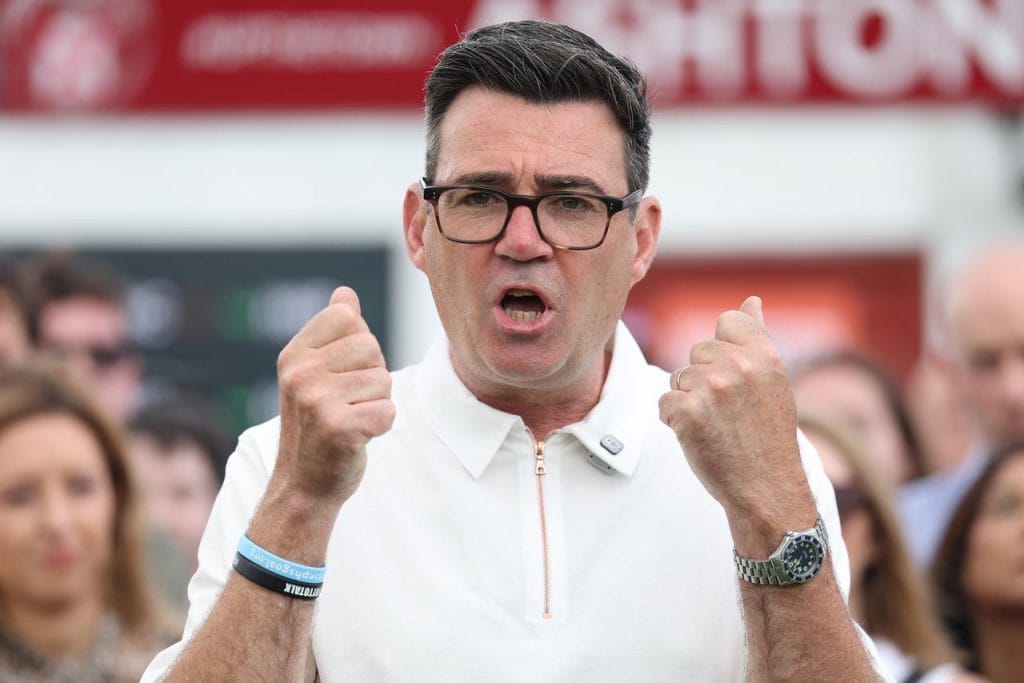
the type of constituency Labour has struggled to hold onto in recent years.
The seat is predominantly white British, traditionally working-class, post-industrial and voted heavily to leave the European Union in the 2016 “Brexit” referendum. Communities like Makerfield across the U.K. were considered Labour heartlands for decades, but they have become increasingly contested as many voters drift toward right-wing, populist parties such as Reform UK.
Reform, led by President Trump’s ally Nigel Farage, has made major gains over the last year thanks to concern among voters over immigration amid perceived declines in living standards.
Burnham outperformed expectations, however, giving Labour strategists hope that the party can reconnect with voters before the next national elections, which could change the makeup of the House of Commons and give another party a chance to take the reins.
Who is Andy Burnham?
Burnham has spent years positioning himself as a viable alternative to Starmer, criticizing Labour’s leadership at moments of weakness while carefully cultivating his own national profile.
How Burnham would differ from Starmer as a national — and international leader — isn’t exactly clear.
A lawmaker from the Conservative Party, Labour’s longtime chief rivals, recently described Burnham as “Keir Starmer with a Northern accent.”
Whether he would adopt a different approach in dealing with President Trump — after Starmer found that going out of his way to keep the American leader on-side can bring somewhat limited advantages — also remains to be seen. At least one European leader who previously appeared to be reasonable match for Mr. Trump, at least ideologically, has found herself at odds with the White House during the Iran war.
Burnham would be under pressure to maintain Britain’s most cherished alliance, but as he campaigned ahead of the recent by-election in Makerfield, he warned the U.K. against adopting American-style politics.
“Politics is getting more polarized. And the path we’re on, if we are not careful, is a path towards the politics of the United States of America,” he told supporters. “A polarized, poisonous politics where people in communities don’t work together anymore.”
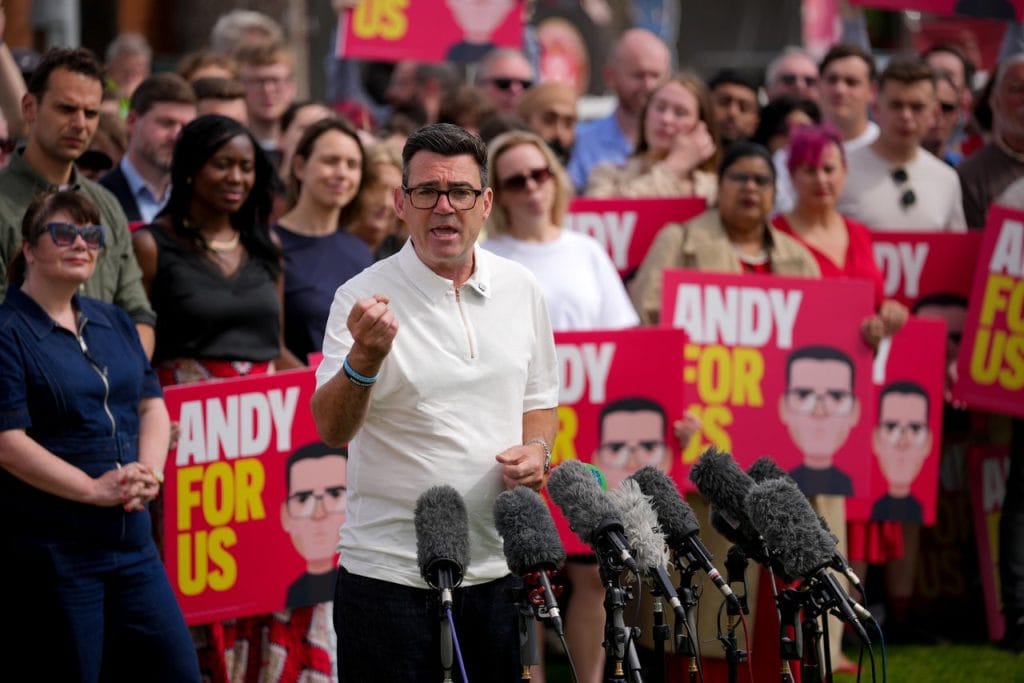
Members of Parliament. The leader of the party that commands a majority in the House of Commons typically becomes prime minister.
A governing party can change its leader (who is generally the prime minister) if a majority of its lawmakers believe that person has become an electoral liability and, crucially, they can do so without a general election.
Britain has seen a remarkable number of these entirely legal and constitutional but electionless leadership changes in recent years. If Burnham next inhabits the prime minister’s residence at Number 10 Downing Street in London, he will be the seventh person to do so in a decade.
Burnham’s supporters argue that with his strong support in Labour’s traditional northern heartlands and a fresh public profile, he could become a viable alternative and lead the party to a second consecutive win in the next national elections — or at least spare them the electoral disaster that polls now suggest is awaiting the party.
There must be a new national election called by 2027, but the government can call one any time before that to try and win a mandate. The risk, obviously, is the government can also lose its majority in parliament, and the premiership with it.
While widely seen as the likely replacement, Burnham is not the only name to have been bandied about by Labour as a potential successor to Starmer.
Until Monday, Wes Streeting, a former national Health Secretary and prominent figure on Labour’s centre-right, was widely regarded as an underdog, but a likely contender to challenge Burnham for Labour Party leadership.
Less than an hour after Starmer’s announcement, however, Streeting backed Burnham putting more wind in the King of the North’s sails.