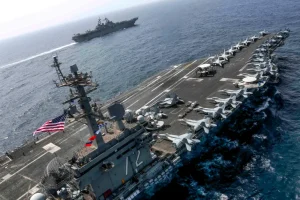



U.S. forces carried out retaliatory airstrikes on Iran for the second straight night, after Bahrain said it had been targeted by Iranian drones and a ship came under attack in the Strait of Hormuz for the second time in recent days.
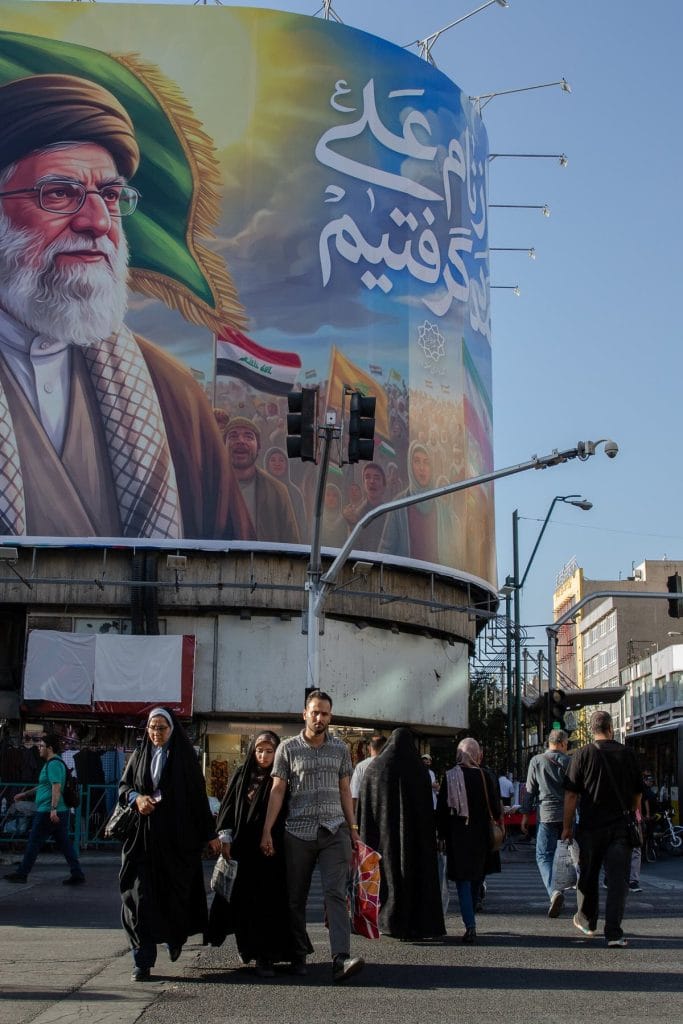
A billboard in Tehran showing Ayatollah Ruhollah Khomeini, the founder of the Islamic Republic, and Ayatollah Ali Khamenei, Iran’s former supreme leader who was killed in U.S.-Israeli strikes in February.Credit…
Here’s the latest.
A flare-up of tit-for-tat hostilities that has threatened to unravel talks on the Iran war extended into a fourth day when the United States struck more targets in Iran early Sunday morning local time.
The U.S. military said it conducted airstrikes on multiple targets in Iran in “direct response” to an Iranian attack earlier in the day on an oil tanker in the Strait of Hormuz. The tanker, the Panamanian-flagged Kiku, was hit by a projectile, according to a British ship monitor, but Iranian officials have not taken credit for the strike.
Iran’s state broadcaster reported explosions in the coastal city of Sirik on the Strait of Hormuz. The official state news agency, IRNA, characterized the strikes in its news bulletin as a “violation of the cease-fire.”
Earlier on Saturday, Iran had launched attack drones at Bahrain, officials there said, apparently in retaliation for U.S. airstrikes on missile and drone sites in Iran the night before. The American strikes were themselves a retaliation for Tehran’s decision to attack a container ship on Thursday as it passed through the strait.
Whether the back-and-forth attacks since Thursday will undermine talks to reach a final peace agreement remains to be seen. Each side seems to be testing each other’s red lines and threats, analysts say, but for now, neither side seems eager to return to a full-blown war.
Iran’s foreign ministry on Saturday accused the United States of violating the cease-fire with its Friday night strikes and vowed that the Iranian military would “defend the country’s sovereignty, security, and national interests with all its strength.”
Bahrain accused Tehran of “destabilizing security, exporting chaos and undermining regional stability,” but reported nothing was damaged. One of the two drones fired at Bahrain was shot down, while a second landed harmlessly, according to a U.S. official who requested anonymity because they were not authorized to speak publicly.
Hours later, a shipping monitor run by the British Navy reported that a projectile had struck the Kiku tanker in the Strait of Hormuz. The ship had left an oil field in Qatar two days earlier, flying a Panamanian flag, the U.S. official said. The strike was likely to further deter ships from passing through the waterway, which Iran had agreed to reopen as part of the cease-fire with the United States.
Before the last several days of attacks, that deal, signed earlier this month, had produced a relative calm in the region. More vessels were passing through the Strait of Hormuz and there were signs of progress toward an agreement, backed by the Trump administration, that would wind down the war’s second front in Lebanon.
Here’s what else we’re covering:
- Friday’s strikes: The U.S. strikes against Iranian missile and drone targets on Friday lasted about 90 minutes, a U.S. official said. Six fighter jets struck four Iranian sites along the Strait of Hormuz and on Qeshm Island, according to the official, who requested anonymity to discuss the operation.
- Lebanon deal: The Trump administration announced an agreement between Israel and Lebanon on Friday that U.S. officials hope could help end the conflict there. The deal stipulates that Israeli forces withdraw from a small fraction of the territory they occupy in southern Lebanon, making way for Lebanon’s army to take control. But Naim Qassem, Hezbollah’s leader, said the agreement — which effectively calls for the group’s disarmament — was “null and void” on Saturday.
- Global energy: Oil prices had risen after the Iranian attack on Thursday but eased on Friday, falling to levels last seen before the war. The U.S. strikes on Iran came after markets had closed for the weekend.