


The bill was passed by the House of Representatives and by the Senate.
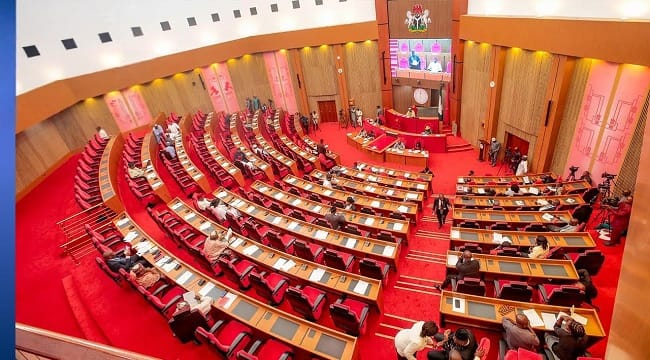
The Nigerian Senate
The Senate has defended the passage of the Constitution of the Federal Republic of Nigeria (Alteration) (State Police) Bill, 2026, insisting that the proposed constitutional amendment is a response to the country’s growing security challenges rather than a politically motivated initiative.
In a statement issued on Sunday by the Directorate of Media and Public Affairs of the Leader of the Senate, Opeyemi Bamidele described the bill as “a child of necessity and not of political expediency”, adding that it emerged from broad national consultations rather than partisan interests.
The Constitution of the Federal Republic of Nigeria (Alteration) (State Police) Bill, 2026, was passed by the House of Representatives on June 11, 2026, and by the Senate on June 24, 2026, marking a significant step towards introducing a dual policing system in Nigeria.
According to Bamidele, the proposal to establish state police has become an urgent national priority that should not be overshadowed by political considerations, given the country’s worsening security situation.
He noted that the idea of creating state police did not originate recently but had evolved through years of constitutional review and extensive stakeholder engagement.
“Observations have shown that Nigerians largely welcome the passage of the Bill with a conviction that it will significantly de-escalate the country’s security conditions at the sub-national level,” he said.
READ ALSO: Senate Passes Bill To Establish State Police
Bamidele explained that the proposal formed part of memoranda submitted to the Senate Ad-hoc Committee on the Review of the 1999 Constitution and subsequently underwent rigorous consultations across the federation because of its sensitive nature.
Process
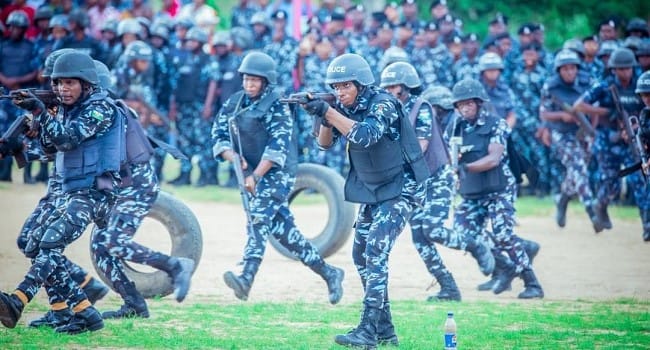
FILE PHOTO: Officers display their skills at the passing-out ceremony of 1068 retrained constables at The Mobile Base, 26 PMF, Uyo.
He said the National Assembly engaged key stakeholders throughout the process, including the Executive, the Nigerian Governors’ Forum, the Conference of Speakers of State Legislatures, and the leadership of the Nigerian police.
According to him, public hearings conducted across the six geopolitical zones in July 2025 received overwhelming support for the proposal.