



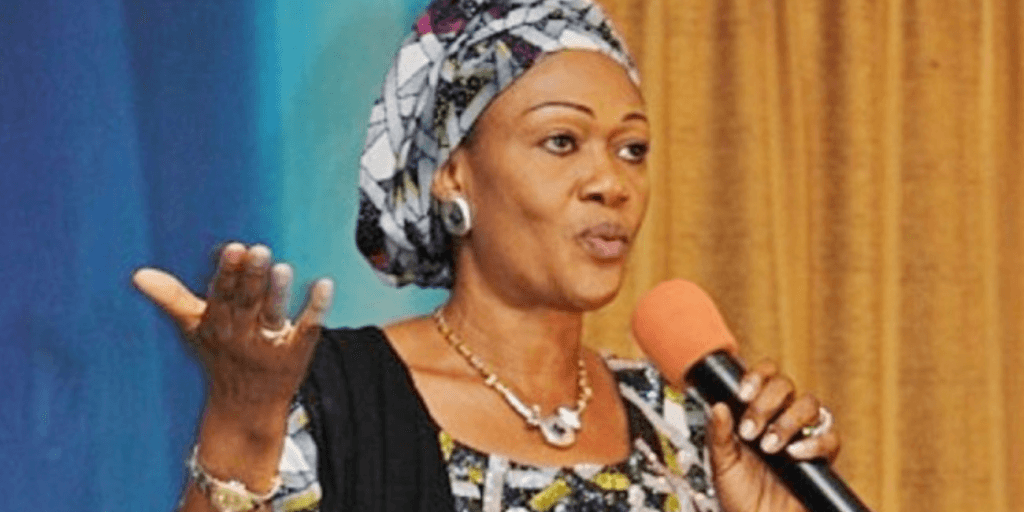
Mrs Tinubu, however, claimed that the government’s intervention targets a broad spectrum of petty traders and remains focused on helping them expand and sustain their businesses.
Oluremi, President Bola Tinubu’s wife, on Monday sought to draw a line under the controversy surrounding her recent comments on informal businesses, insisting that the Nigerian government’s economic empowerment programme is not designed solely for “akara” sellers but also benefits thousands of traders dealing in tomatoes, pepper, vegetables and roasted plantain across the country.
The clarification comes after her earlier remarks referencing “akara, roasted corn and kuli-kuli” businesses attracted widespread criticism on social media, where many Nigerians argued that the comments failed to reflect the severity of the country’s economic hardship.
Mrs Tinubu, however, claimed that the government’s intervention targets a broad spectrum of petty traders and remains focused on helping them expand and sustain their businesses.
She spoke on Monday during the inauguration of the newly constructed Abubakar Maje Haruna Hall at the Emir of Hadejia’s Palace in Jigawa State, according to a video aired by TVC News.
Addressing the controversy, Tinubu’s wife disclosed that the government had already provided N100 million to the Jigawa State Government to empower 2,000 petty traders, explaining that the intervention extends well beyond the businesses highlighted in her earlier remarks.
“Because of the atmosphere, what is going on, I’ve told Her Excellency that we’ve already given, donated about 100 million to her to use to empower 2,000 petty traders.
“And I know they’ve been talking that I said akara. It’s not only akara, we also have tomato sellers. We have “booli” and those also selling pepper, selling vegetables for us in the market.
“We will continue to empower them and add to their resources so that their trade can really be sustainable. So that is what we are doing,” she said.
Mrs Tinubu explained that each of the 2,000 beneficiaries would receive N50,000 to recapitalise their businesses under the initiative.
“We continue to carry the capacity. We have the amount of 2,000 women who are already in small businesses. They will recapitalise their businesses with the N50,000 each. We’ve already given the N100 million,” she added.
She also dismissed suggestions that public criticism would derail the administration’s empowerment agenda, insisting that the government would continue supporting low-income traders despite the backlash.
“I know all those people who are affected, they do appreciate it. And we are not intimidated by all those wrong reports. But we are forging ahead and making sure that our people, you know, are well cared for,” Mrs Tinubu said.
Turning to Nigeria’s broader economic prospects, the First Lady urged young Nigerians to look beyond crude oil and embrace opportunities in agriculture and other natural resources, saying her visits across the country had exposed the nation’s enormous but underutilised economic potential.
“Nigeria is a really blessed country. I’ve been travelling, and I pray that our young people will see the resources we have in this nation. We have not even gone to explore yet because we are thinking it’s oil. But there are so many things,” she said.
Her earlier comments drew backlash from many Nigerians.