



Summary
- Donald Trump says the US is reinstating its blockade of Iranian ports in the Strait of Hormuz, beginning “immediately”
- In a post on Truth Social, he says the US will be the “guardian” of the vital waterway and impose a 20% charge on all cargo shipped to pay for the cost of “safety and security” – how this will work in practice is unclear, writes our White House reporter
- Earlier, Iran’s military said it wouldn’t allow the US to “interfere in the management” of the key shipping route
- Meanwhile, the US and Iran have continued to exchange strikes – US Central Command (Centcom) said overnight it had hit a submarine and Iranian ship maintenance facility, in response to Iran targeting commercial ships in the strait
- While a small number of vessels appear to be moving through the key waterway, traffic remains restricted, according to ship tracking website MarineTraffic
- Iran has said it is targeting US bases in Jordan, Bahrain, and Kuwait, plus radar systems in Oman – Bahrain accuses Iran of targeting civilians
Trump says US reinstating blockade on Iranian portspublished at 15:2715:27Breaking
US President Donald Trump has just said the US will reinstate the blockade on Iranian ports.
Here’s his Truth Social post in full:
“The Hormuz Strait is OPEN, and will remain OPEN, with or without Iran. We are reinstating the THE IRANIAN BLOCKADE, so named because it is only stopping Iran’s ships or customers from entering or leaving. All other countries will have fair and open use of the Strait.
“The U.S.A. will be, from this point forward, known as ‘THE GUARDIAN OF THE HORMUZ STRAIT,’ but as such, and as a matter of FAIRNESS, will be reimbursed, at the rate of 20% on all cargo shipped, for any and all costs necessary to do the job of providing safety and security to this very volatile section of the World. The process and formation will begin immediately.”
Trump offers few details of how Hormuz blockade will work in practice
What Donald Trump’s latest announcement of a new blockade on Iranian ports means in practice remains unclear.
Many US allies are likely to baulk at the prospect of reimbursing the US and paying 20% of all cargo shipped – and his detractors at home and abroad are likely to point out that the strait was open and unencumbered before Operation Epic Fury began on 28 February.
The announcement could also become politically complicated for the president domestically.
Some lawmakers – including Republicans – had openly questioned what the US gained from the ceasefire, its extension and further negotiations.
Many Americans are also likely to wonder why – despite repeated promises to the contrary – oil prices are inching up again. Trump is not on the ballot for the upcoming midterm elections, but other Republicans are and will be hearing from constituents concerned about prices.
The announcement could also be a bid to restart negotiations and push other countries to be more involved, a tactic that Trump has used in the past.
In a few hours’ time we will hear from Trump on-camera, when he may provide more detail about the announcement.
Iran’s military says it will not allow US to interfere in Strait of Hormuz ‘management’
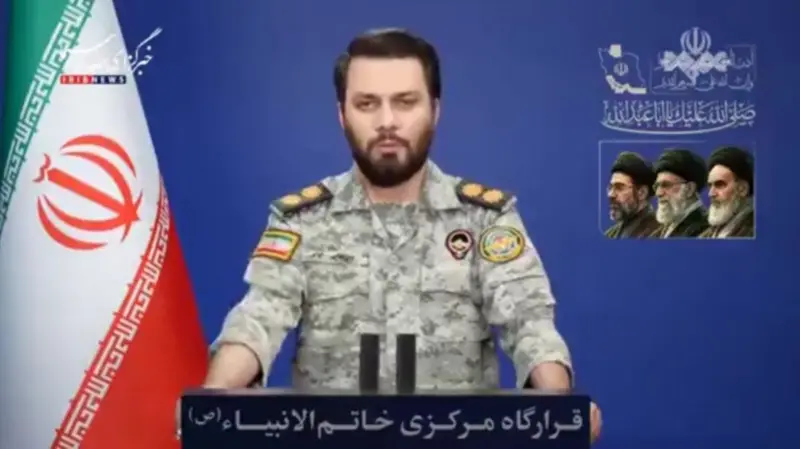
The statement was carried on Iranian media
Iran’s top military headquarters, Khatam al-Anbiya, says it will not allow the US to “interfere in the management” of the Strait of Hormuz.
In a statement shared by Iran’s Tasnim news agency, the Iranian military says “frequent misadventures” from the US in the strait have “seriously jeopardised the security of the region”.
It adds “we do not and will not allow” the US to control the crucial waterway – and that Iran’s armed forces are dealing with any disturbances from the “bandit army” of the US.
Any cooperation with the US will be considered an act of “war” against Iran’s sovereignty, it adds, warning that if the conflict spreads “the flames of war will engulf all the countries of the region”.
Earlier today, Donald Trump said the US was “taking over the strait”.
US struck submarine and ship maintenance facility in overnight Iran strikes – Centcom
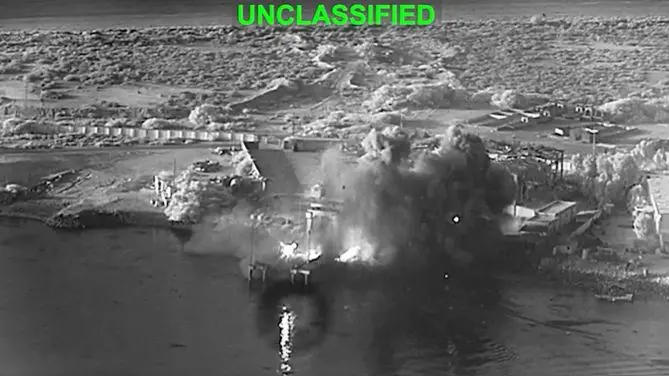
US Central Command (Centcom) says, in an update, that American military forces struck a submarine and ship maintenance facility in Iran overnight.
It says multiple one-way attack surface drones hit the port at Bandar Abbas Naval Base in southern Iran, and shares video footage of the operation.
“Last night’s strikes degraded Iran’s ability to continue attacking commercial shipping,” Centcom adds in a statement on X.
The US had previously said it conducted its strikes in response to Iranian attacks on commercial ships in the Strait of Hormu z
Commercial vessel movement remains restricted in Strait of Hormuz
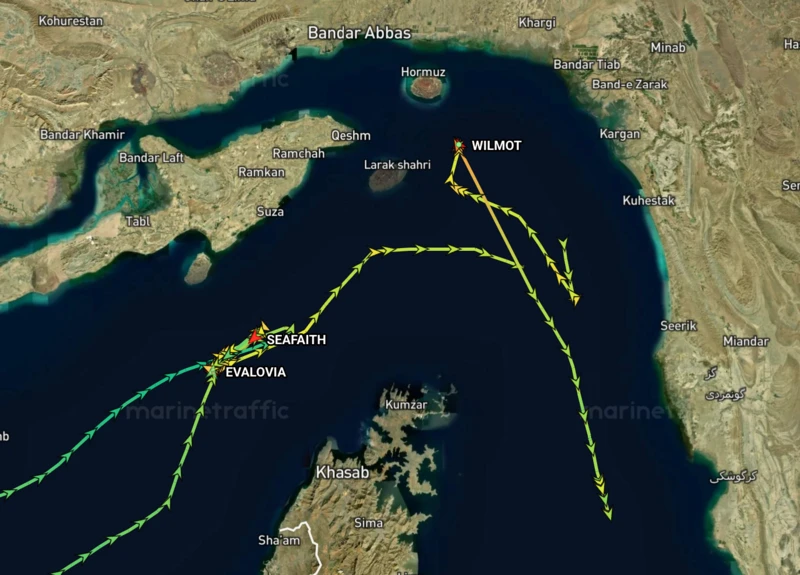
A small number of vessels appear to be moving through the Strait of Hormuz although traffic remains restricted, according to the ships we can track on the website MarineTraffic.
Two vessels – Wilmot and Seafaith – appear to be sailing east into the Gulf of Oman with their location transmitters switched on according to tracking data.
Wilmot is broadcasting Pakistan as its destination without specifying a port and Seafaith is sailing to Sohar in Oman.
Two other ships, Evalovia and Aisana, stopped transmitting their locations after previously appearing to head out of the strait. Their current locations cannot be confirmed.
MarineTraffic tracking showed Wilmot, Evalovia and Seafaith each altered course while outbound towards the Gulf of Oman and had reversed direction. Wilmot and Seafaith have resumed their outbound journeys. Evalovia also appeared to turn back towards the Gulf of Oman before it went dark – meaning it switched off its location transponders.
Vessels often switch off their location transmitters when there is a risk to their safety.
Cargo ship Bayaze D and a small number of Iranian vessels appear to be sailing west through the strait likely towards ports in Iran.
Earlier, ship-tracking data showed no vessels had transited the Strait of Hormuz since yesterday evening.
Iran says it hit several US bases in regionpublished at 07:1607:16
Following overnight strikes by the US, Iran’s Islamic Revolutionary Guard Corps (IRGC) says it attacked several bases linked to the US in Bahrain, Kuwait and Jordan.
Via Iranian state media, the group says it struck two US-linked air bases in Kuwait, as well as army infrastructure and a drone command centre in Bahrain, and the Prince Hassan Air Base in Jordan.
Bahrain’s interior ministry has issued several warnings over the last four hours, urging citizens to head to safe locations.
The Jordanian military shot down four Iranian missiles that entered its airspace on Monday, a Jordanian source tells the AFP news agency.
Meanwhile the Kuwaiti military says it “intercepted hostile aerial targets” within the country’s airspace.
Bahrain army accuses Iran of targeting civilianspublished at 12:2512:25
Bahrain’s military has again accused Iran of targeting civilians with missiles and drones.
It says its air defences “intercepted and destroyed” several Iranian attacks this morning, adding that it remains in a state of “readiness” and “high alert” to defend itself.
It comes after Bahrain was targeted in further tit-for-tat strikes between the US and Iran overnight.