



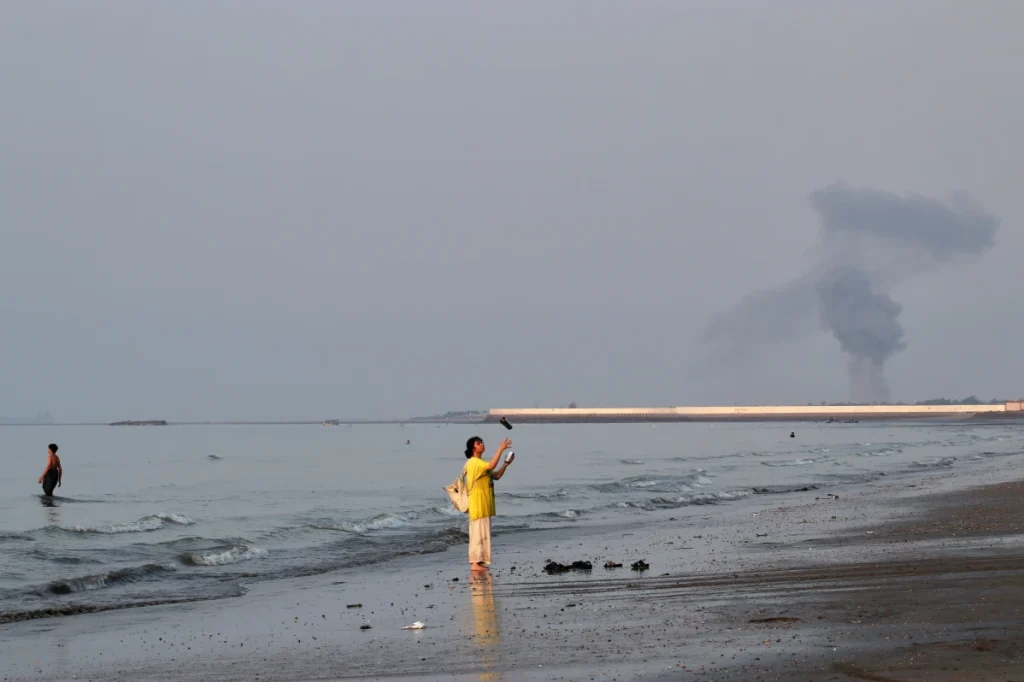
DUBAI, United Arab Emirates (AP) — The U.S. reimposed a naval blockade on Iran and intensified its airstrike campaign Wednesday in retaliation for Tehran’s attacks on ships trying to pass through the Strait of Hormuz. The American strikes hit an Iranian army barracks, killed at least seven troops and wounded more than 260 people across the country, Iranian officials said.
Days of back-and-forth strikes by the U.S. and Iran across the Middle East — and renewed threats to the waterway crucial to global energy supplies — have shredded the interim deal to end the conflict and the region could tip back into all-out war.
The U.S. first imposed a blockade in April and then lifted it last month after signing the interim deal that paused the fighting and set a 60-day period for negotiations over issues like Iran’s nuclear program. Those talks have stalled as fighting over the Strait of Hormuz has intensified.
When the U.S. and Israel launched the war on Iran on Feb. 28, Tehran effectively closed the waterway to shipping traffic — a move that sent the price of oil, fertilizer and many other goods soaring far beyond the region and gave Iran major leverage in negotiations. Those rising prices pose a particular challenge to U.S. President Donald Trump and his Republican Party, which hopes to retain control of Congress in elections in November — but Washington has struggled to successfully reopen the waterway.
Iran’s paramilitary Revolutionary Guard threatened Wednesday to halt all energy exports from the Middle East over the blockade.
“The export of oil and gas from the region will be either for everyone or for no one,” it said.