



The Federal Government has adopted Kaduna State’s household mapping model as part of efforts to reduce the number of out-of-school children nationwide, following the state’s reported success in cutting the figure from about 550,000 to fewer than 180,000, according to Governor .

Minister of Education, Dr. Olatunji Alausa, during a meeting with Kaduna State Governor, Uba Sani, in Abuja.
The Federal Government has adopted Kaduna State’s household mapping model as a national strategy to tackle the growing challenge of out-of-school children across Nigeria.
The decision was announced by the Minister of Education, Dr. Olatunji Alausa, during a meeting with Kaduna State Governor, Uba Sani, in Abuja.
Governor Sani described the move as a significant endorsement of Kaduna State’s data-driven approach to governance, noting that the household mapping framework has been instrumental in reducing the number of out-of-school children in the state from about 550,000 to fewer than 180,000.
According to the governor, the model provides accurate data that enables government authorities to identify vulnerable children, target interventions effectively and allocate resources where they are most needed.
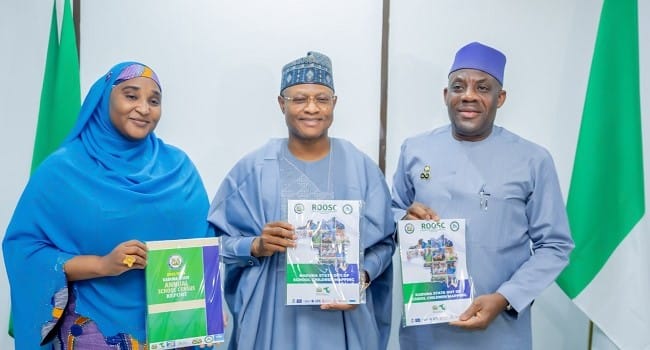
Governor Uba Sani described the move as a significant endorsement of Kaduna State’s data-driven approach to governance.
He said the initiative has improved school enrolment and retention rates through tailored programmes designed to address the specific challenges facing children and their families.
Sani noted that the Federal Government’s adoption of the framework reflects growing confidence in Kaduna State’s commitment to evidence-based policymaking and efficient service delivery in the education sector.
He expressed the state’s readiness to collaborate with federal authorities in rolling out the model nationwide, adding that its implementation could significantly improve access to education and help reduce the number of out-of-school children across the country.
The governor reaffirmed his administration’s commitment to ensuring that every child has access to quality education, stressing that strategic partnerships, reliable data and targeted interventions remain critical to achieving sustainable educational development.