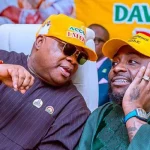



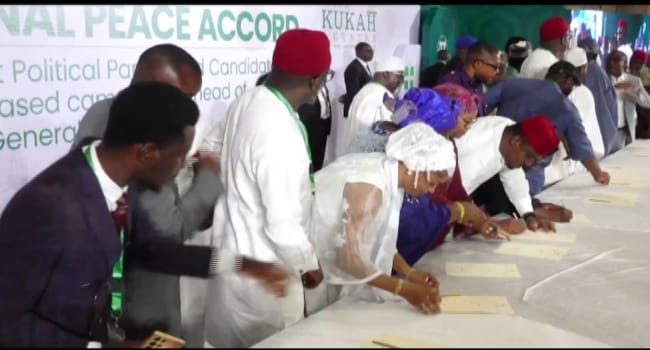
Presidential candidates Peter Obi, Omoyele Sowore, Donald Duke and other political contenders have signed the National Peace Accord in Abuja, committing to peaceful and issue-based campaigns as the 2027 election season officially gets underway.
Chieftains of political parties were also at the signing of the peace accord.
The presidential candidate of the Nigeria Democratic Congress (NDC), Peter Obi; his African Action Congress (AAC) counterpart, Omoyele Sowore; and the presidential candidate of the Peoples Redemption Party (PRP), among others, have signed the National Peace Accord, months before the 2027 elections.
The event, which took place at the Bola Ahmed Tinubu International Conference Centre in Abuja, attracted representatives of other presidential candidates, contestants for the governorship and National Assembly posts; the National Chairman of the Independent National Electoral Commission (INEC), Joash Amupitan; the Secretary to the Government of the Federation (SGF), George Akume; chairmen of political parties; and other top political leaders across the country.
Organised by the National Peace Committee (NPC), Tuesday’s event is the first part of the exercise. The second phase will take place after the 2027 polls.
Before the commencement of the gathering, which serves as a framework for peaceful political engagement in the lead-up to the January and February polls, Obi called for a credible exercise.
The former Anambra State governor said, “I don’t have any fear [going into next year’s election] except to say that, please, for the sake of the children of Nigeria, can we have an election where people’s votes will count?”
To ensure a peaceful exercise, the NDC presidential candidate asked Nigerians not to cast their ballots for anyone or any party that violates the tenets of the accord.
“Well, the punishment is that Nigerians should not vote for them,” he said when asked what the punishment should be for those who violate the agreement.
He asked contestants to “be exemplary” in their conduct as the general elections inch closer.
“You can’t answer ‘His Excellency’ without being an excellent person,” Obi, 65, said. “So, the process that will make you answer ‘His Excellency’ should be excellent, and the only way to do it is to conduct yourself properly.”
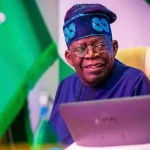
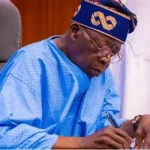
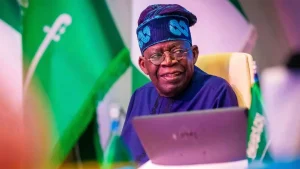
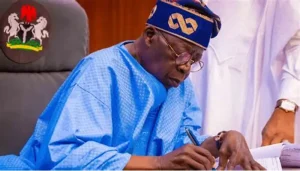
President Bola Tinubu, who was represented at the signing of the peace accord by Akume, praised the NPC leadership—including a former Head of State, Abdulsalami Abubakar; the Sultan of Sokoto, Muhammad Sa’ad Abubakar; and Bishop Matthew Hassan Kukah—for sustaining the initiative since 2014.
He noted that technological improvements such as the Bimodal Voter Accreditation System (BVAS) have eliminated ballot stuffing and restored power to voters, citing the off-cycle elections in Anambra, Osun and Ekiti as proof of growing transparency in Nigeria’s electoral process.
“Different parties won them, and local and foreign observers described them as free, credible, and transparent. When the process and outcome are manifestly transparent, we see less post-election litigation in our courts,” he said, adding that “politicians are now more accountable to the people because votes count.”
He reaffirmed the commitment of the ruling All Progressives Congress (APC) to adhering to the tenets of the accord and rejected electoral violence, hate speech, misinformation and incitement on social media ahead of the 2027 exercise.
“Let us remember that elections are not a do-or-die affair. We are partners in the project of nation-building. Win or lose, our country, Nigeria, must be the ultimate winner,” he said.
At the event, the INEC chairman reiterated the commission’s resolve to conduct a credible exercise, insisting that the electoral body won’t favour any candidate or party.
“INEC has no interest in who wins or loses any election. The commission does not have a candidate, nor does it favour any political platform,” Amupitan said.
The INEC boss told political players to “Let the 2027 election campaign be a marketplace of ideas, not a theatre of war.”
“Nigerians do not want insults; they want solutions. They deserve to hear clear, concrete, and measurable manifestos,” Amupitan, a professor of law, told the gathering.
Amupitan promised Nigerians that the umpire would work to build on the gains recorded by the commission in the past to deliver a credible election.
“I am pleased to report that our preparations for the 2027 elections are progressing with absolute precision. We are scaling our operational logistics to manage a massive nationwide ad hoc workforce of 1.4 million personnel across over 176,000 polling units,” the Kogi-born professor said.
In an interview with Channels Television before the signing of the accord, Kukah asked politicians to ensure that Nigerians feel the impact of their participation in elections.
“Ordinary Nigerians need to see a qualitative and measurable improvement in the quality of their lives. We are not just handing you our votes, and then you take the votes and run with them,” he said.
The cleric asked Nigerians to become more actively involved in the electoral process, arguing that the responsibility for credible elections should not be left entirely to the Independent National Electoral Commission (INEC).
“I think that critical to all of this is the need to sensitise ordinary citizens. I think we often underrate the capacity of the ordinary citizen,” Kukah said.
The ceremony came one day before the commencement of campaigns for the presidential and National Assembly elections.
First signed ahead of the 2015 election, the accord seeks to commit political parties and their candidates to issue-based campaigns and peaceful conduct before, during and after the elections.