



Zambian President Hakainde Hichilema has secured a second five-year term, the Electoral Commission of Zambia announced early Tuesday, declaring him the outright winner of last Thursday’s presidential election without the need for a run-off. He was declared the winner having secured 61.4% of the roughly 5 million votes cast, with the commission recording 2,965,326 votes for Hichilema against 1,856,217, or about 38%, for his closest rival, opposition leader Brian Mundubile.
Hichilema’s score was similar to his showing at the 2021 polls, when he won his first five-year term.
“I therefore declare, Hichilema Hakainde S, to be president-elect of the Republic of Zambia this 18th day of August, 2026,” commission chairperson Mwangala Zaloumis said in a statement.
It was Hichilema’s seventh run for the presidency, and he had been widely expected to win given the advantages of incumbency, while it marked Mundubile’s first bid for the country’s top office.
The victory follows a closely watched election that saw vote counting suspended last Friday and restarted hours later under heightened security, after the commission cited attacks on some polling station officials and the theft of ballot papers.
Tensions escalated further on election night, when authorities arrested 11 people, including leading opposition figures, in a raid that involved an exchange of gunfire, with Mundubile present at the time. The government said the operation targeted “militia activity,” alleging that those arrested were caught in possession of military-grade equipment.
Mundubile said his home was raided by police in what he described as an attack on his life, though he had not issued an immediate public reaction to the final result.
In a statement following the announcement, Hichilema said he was thankful for the renewed mandate, while also reaching out to those who had backed the opposition: “To those citizens who preferred the ideas presented by our opponents, we hear you, and we will continue to work for you to ensure that every Zambian benefits from the development we are delivering.”
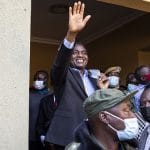
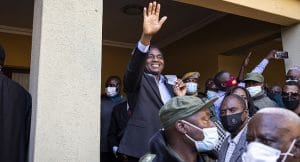
News of the win triggered jubilant scenes in Lusaka, with supporters taking to the streets in celebration following the announcement.
Hichilema campaigned heavily on his record of economic recovery, including a major debt restructuring deal secured during his first term, and says there is more work ahead as he seeks to double the size of the economy, create more jobs and expand opportunities for households.
Despite expectations that he would pursue austerity, Hichilema instead expanded social spending during his first term, introducing free secondary education that brought an estimated 2.3 million children back into classrooms, alongside increased social cash transfers and funding for community projects. “He has shown that he is sensitive to social needs and to the lives of ordinary voters,” said O’Brien Kaaba, a lecturer at the University of Zambia.
Still, many Zambians point to living costs and food prices as major concerns heading into his second term, with critics accusing his government of failing to ease poverty and growing less tolerant of dissent.
As Hichilema begins a second term shaped by both economic promise and lingering questions over the fairness of the vote, attention now turns to whether his administration can translate its macroeconomic gains into tangible relief for ordinary Zambians.