


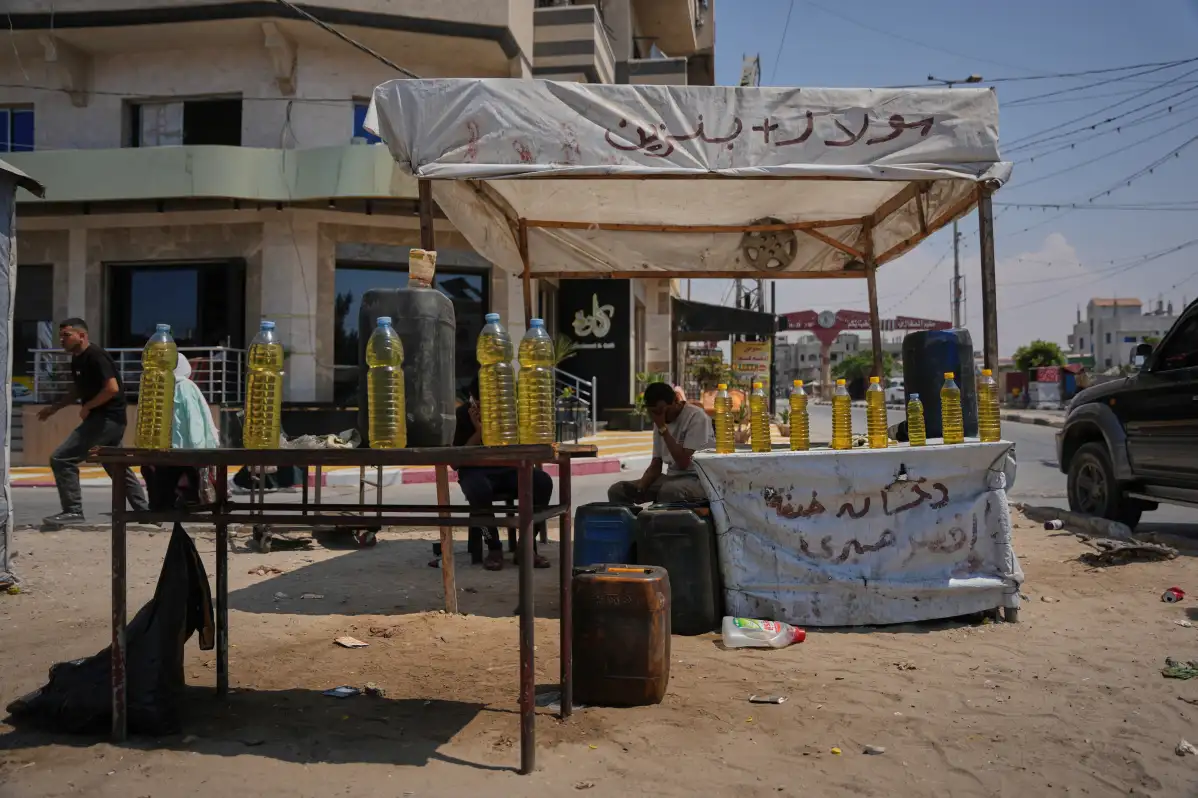
Smuggling of restricted goods into Gaza has expanded amid tight border controls, with cigarettes, fuel, medicine, solar panels and other supplies moving through illicit networks that generate millions of dollars for traders and middlemen, according to an Associated Press investigation.
CAIRO — Palestinians face inflated prices for groceries and batteries, hospitals have turned to smugglers for medicine and equipment, and Israeli soldiers and other middlemen are accused of pocketing millions of dollars as the smuggling of goods restricted by Israel into the Gaza Strip has boomed, according to an Associated Press investigation based on court documents and interviews with traders, truckers and officials.
Cigarettes and tobacco — banned from entry to Gaza since the start of the Israel-Hamas war in October 2023 — rake in the biggest profits for smugglers and merchants, officials and residents say. But everything from iPhones and solar panels to fuel and anesthetics are also brought into the tiny coastal territory illegally. Israel restricts quantities of some goods and bans others outright. It defines many as “dual use” — including concrete, vehicle parts and X-ray machines — asserting they could be repurposed by Hamas militants for military functions.
To build a picture of the illicit trade, The Associated Press analyzed Israeli court documents and spoke to five major traders who import smuggled goods, three merchants who sell them, and two truckers — all on condition of anonymity because of their roles in the illegal smuggling business and concerns about their safety in Gaza. AP also interviewed four Palestinian officials, two on condition of anonymity because of worries about retribution from Israel, Hamas or merchants; two U.N. officials, on condition of anonymity over concern for their jobs; and a dozen Palestinian residents, who spoke about how they get everyday items and their skyrocketing costs.
AP found a rush from all sides to profit off the tight restrictions imposed by Israel on Gaza and its 2 million residents, most of whom have been displaced by the war. Smuggling rings — which have long flourished, circumventing two decades of Israeli blockades and building a network of businessmen and collaborators — pull in millions of dollars. Payoffs go to Israeli troops, drivers, warehouse workers and others on both sides of the border, according to traders and court documents.
“The occupation has left no other option before us. Smuggling has become routine,” one trader said, noting that some in Israel’s military are willing to help — for a price. “We benefit, they benefit and the people in Gaza benefit because we provide goods, including food, to the market.”
The Israeli military said via email that it takes the issue of smuggling “very seriously and works to prevent it.” It said any cases of suspected involvement by Israeli military personnel are “examined and handled in accordance with the law.” But military officials did not answer a list of detailed questions from AP on the roles of soldiers or Gaza’s government in smuggling.
Gaza’s Hamas-led government also takes in some of the profit, according to merchants and one Palestinian official. Merchants call it “taxing” — on both smuggled goods and those brought in legally.
Mohammad Barbakh, of the Palestinian Economy Ministry in Gaza, told AP the government receives up to 20% of the price of any smuggled goods if the merchant reports them to authorities, and that increases to 80% if the items go unreported and authorities discover them. But he said authorities don’t refer to their cut as “taxes” and that they haven’t taxed goods entering legally since the war’s start.
How smuggled goods flow into Gaza
Since the war began, Israel has tightly controlled all entry of food, aid and goods into the Gaza Strip, including a total aid blockade that shut off entry entirely for nearly three months last year, pushing parts of the territory into famine. The flow of goods has increased since a fragile ceasefire deal went into effect in October but remains well below prewar levels.
Besides the U.N. and other humanitarian groups bringing in aid, Israel has given 12 senior traders in Gaza permits to import commercial goods. Contents of shipments must be approved by Israeli authorities, a process aid workers and merchants say can be long and opaque, sometimes ending with a rejection on grounds of “dual use.”
The military classifies a list of some 150 broad categories of items as “dual use,” including concrete, asphalt, steel pipes and wooden planks, according to documents provided by COGAT, the military department in charge of coordinating entry of goods into Gaza. In a statement to AP, COGAT said it has let in some “dual use” items including generators and X-ray machines, in specific cases under strict monitoring.
Some senior traders turn to smuggling networks to meet demand in Gaza, where smaller merchants look to sell contraband.
Two merchants and a trucker who is part of Gaza’s union told AP that sometimes government agencies ask for specific items to keep functioning — fuel, spare parts for civil defense vehicles or generators. Hospitals also turn to smugglers, for drugs and some equipment.