


The United Nations and Borno State Government have treated about 55,000 cholera patients, as humanitarian efforts in northeast Nigeria reached nearly 900,000 people in the first half of 2026 despite funding shortages.
The United Nations, in collaboration with other Humanitarian Workers and the Borno State Government, has treated 55,000 cholera patients in Borno State in 2026.
The United Nations Resident and Humanitarian Coordinator in Nigeria, Mohammed Malick-Fall, disclosed this in Maiduguri, the Borno State capital, during a press briefing to commemorate World Humanitarian Day, calling on the United Nations to scale up support to millions of Nigerians in need and safety for the aid workers.
According to him, the ongoing first-hand humanitarian response in Nigeria’s northeast has reached almost 900,000 people in the first half of 2026, despite dwindling funding.
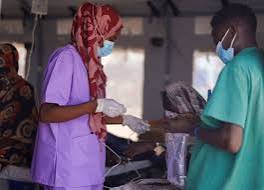
“Today, at the treatment centres we visited, I met humanitarian workers who continue to serve communities with extraordinary courage, dedication and compassion despite difficult and often dangerous conditions. We call for greater protection for these brave personnel so that they can do their critical work in safety,” he said.
“Together, the Government, health workers and humanitarian partners have treated more than 55,000 cholera patients, providing hygiene promotion services to over 1 million people and chlorinating in excess of 500 water points, giving communities access to safe drinking water. This collective work has helped drive the cholera case fatality rate down below emergency levels.”
“The commitment of these aid workers to saving lives and remembering colleagues around the world who have paid the ultimate price while helping others. Humanitarian workers are not targets,” Malick-Fall said.
He said that when humanitarian workers cannot safely reach communities with assistance, it is vulnerable women, men and children who suffer the consequences.
“Protecting humanitarian personnel and ensuring safe, unimpeded access to people in need is both a moral imperative and a legal obligation,” he said.
“Despite extraordinary efforts by humanitarian partners and government authorities, resources remain far below what is required to address growing needs. Through the Nigeria Humanitarian Fund (NHF) and the Central Emergency Response Fund (CERF), $135.5 million has so far been distributed in 2026 to tackle these emergencies.
“Additional donor contributions will be allocated over the coming months, but overall funding has dramatically reduced for humanitarian operations around the world over recent years, including in Nigeria. For 2026, Nigeria’s already hyper-prioritised Humanitarian Needs and Response Plan still faces a $159 million funding gap for the remainder of the year, meaning that hundreds of thousands of people risk missing out on the lifesaving support they need,” he said.