


• Nearly half of 19 parties with presidential candidates embroiled in court cases
• Court schedules Xmas break, retains judges for urgent pre-election matters
• ADC, PDP, LP, Accord battle leadership disputes, nomination challenges
• Atiku group demands release of judgment nullifying Mark-led ADC leadership
• Protesters petition ECOWAS, EU, others, threaten stronger action
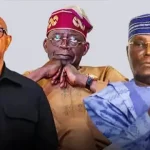
Opposition parties face mounting uncertainty ahead of the 2027 general elections as unresolved leadership disputes and pre-election lawsuits threaten their presidential tickets and candidates, raising questions about their readiness for the polls and the Independent National Electoral Commission’s (INEC) ability to meet electoral timelines.
With nearly half of the 19 parties that fielded presidential candidates embroiled in legal disputes, the Federal High Court’s planned Christmas vacation has added another dimension to concerns over the timely resolution of cases.
The anxiety was underscored yesterday as supporters of former Vice-President Atiku Abubakar staged protests over the judgment nullifying the David Mark-led leadership of the African Democratic Congress (ADC), demanding its immediate release to enable the party to exercise its right of appeal.
The protesters, under the auspices of United Friends from Atiku, also petitioned the Chief Justice of Nigeria (CJN), National Judicial Council (NJC), Economic Community of West African States (ECOWAS), United Nations (UN), European Union (EU) and other institutions, alleging that the delay could undermine the party’s preparations for the elections.
An investigation by The Guardian showed that the unresolved disputes are threatening to complicate the participation of several opposition parties, with the ADC, Peoples Democratic Party (PDP), Labour Party and Accord Party facing different legal challenges over their leadership structures and candidates.
The Federal High Court has announced a two-week Christmas vacation from December 21, 2026, to January 5, 2027, with regular sittings scheduled to resume on January 6, barely days before the presidential election.
The Chief Judge of the court, Justice John Tsoho, announced the vacation in a calendar issued in accordance with Order 46, Rule 4(c) of the Federal High Court (Civil Procedure) Rules, 2019. He also released the list of judges to serve as administrative judges during the period.
However, a statement by the court’s Director of Information, Catherine Oby-Christopher, clarified that Justices Inyang Ekwo and Obiora Egwuatu, designated as vacation judges for the Abuja division, would entertain matters involving the enforcement of fundamental rights and other issues of urgent national importance, including pre-election litigation.
Despite the provision, the growing number of disputes has raised concerns about the capacity of the parties and the electoral umpire to resolve outstanding issues within the prescribed timelines.
INEC’s updated list names 19 political parties with presidential candidates for the 2027 election, out of 22 registered parties expected to participate. The All Progressives Grand Alliance (APGA), New Nigeria Peoples Party (NNPP) and Youth Party did not have presidential contenders on the final list.
Among the parties whose leadership or nomination arrangements have attracted legal challenges are the ADC, PDP, Labour Party and Accord Party. The disputes have implications for the recognition of party executives, the validity of primaries and the submission of candidates’ particulars to INEC.
The development is particularly significant for opposition parties seeking to mount a formidable challenge against the ruling All Progressives Congress (APC).
ADC judgment puts Atiku’s ticket in jeopardy
THE ADC’s crisis is among the most consequential, following a November 5, 2026, judgment of the Federal High Court in Abuja nullifying the leadership of the party under former Senate President David Mark and invalidating processes conducted under its authority, including the presidential primary that produced Atiku as its candidate.
The judgment, delivered by Justice Peter Lifu, followed a suit instituted by Nafiu-Bala Gombe, who challenged the legitimacy of the Mark-led leadership.
The court held that the caretaker leadership did not emerge through the party’s required processes and consequently nullified decisions taken under its authority.
The ruling has thrown the party’s preparations into uncertainty, given its emergence as a major platform for opposition figures seeking to challenge the APC in the 2027 elections.
Although the party has rejected the judgment and resolved to appeal, questions have arisen over the status of its candidates and the extent to which the ruling could affect its participation in the polls.
Yesterday’s protest by Atiku’s supporters further brought the dispute into focus.
The group first converged on the Federal High Court premises, carrying placards and demanding that the judiciary uphold the rule of law and resist actions capable of undermining opposition parties. It subsequently took its protest to the United Nations office.
Coordinator of the group, Audu Aliyu, said the ADC had resolved to challenge the judgment at the Court of Appeal, stressing that the party remained committed to pursuing its grievances through constitutional means.
He said the party’s lawyers applied for the Certified True Copy (CTC) immediately after the judgment was delivered on November 5 and made the necessary payment, but the document had yet to be released despite repeated visits to the court registry as of Tuesday.
Aliyu alleged that pressure was being mounted on INEC to act on a judgment that had yet to be made available to the affected party.
“How can a judgment that has not been made available to the affected party be available to some people, to allegedly pressure INEC into taking action?” he asked.
The coordinator said the group had petitioned the CJN, requesting the immediate release of the CTC to enable the party to exercise its constitutional right of appeal.
In the petition signed by Aliyu and made available to journalists, the group described the delay as an obstruction to its right to appeal, arguing that withholding the judgment from the affected party while it was allegedly being used to influence INEC raised concerns about the fairness of the judicial process.
Citing Section 36(1) of the 1999 Constitution, as amended, the group argued that the right to fair hearing could be undermined if the affected party was denied access to the judgment required to pursue an appeal.
“Democracy does not die only through military coups. It can also be undermined through administrative delays and the denial of access to justice,” the petition read.
The group gave the relevant authorities 24 hours to release the CTC, threatening to return with a stronger protest if its demand was not met.
It urged the Chief Judge to direct the court registry to release the judgment immediately and address the delay, while reaffirming its confidence in the judiciary.
The petition was also copied to President Bola Tinubu, the NJC, Nigerian Bar Association (NBA), President of the Court of Appeal, ECOWAS, UN, EU and the United States Embassy.
PDP, Labour grapple with leadership disputes
THE PDP is also contending with a leadership dispute that could affect its organisational cohesion and preparations for the elections.
On November 4, the Court of Appeal in Abuja dismissed an appeal by the Adolphus Wabara-led Board of Trustees seeking an order compelling INEC to recognise the interim National Working Committee led by Kabiru Tanimu Turaki.
The appeal sought official recognition for the Turaki-led leadership, which has been embroiled in competing claims over the party’s national structure.
The appellate court upheld the earlier dismissal of the case, while the Turaki faction indicated its intention to approach the Supreme Court.
The prolonged dispute has raised questions over which faction has the authority to speak and act for the party, particularly as preparations for the elections gather momentum.
The Labour Party’s experience also illustrates how internal leadership disagreements can threaten electoral stability.
The party’s prolonged crisis involving Julius Abure and the Nenadi Usman-led caretaker leadership generated uncertainty over the authority to represent it.
However, a Federal High Court judgment in January recognised the Usman-led caretaker committee and directed INEC to recognise it as the party’s legitimate authority pending a national convention.
Accord faces fresh nomination challenge
THE Accord Party is facing separate legal disputes over its presidential ticket and other nominations, with the outcome of the cases potentially affecting its candidates for the 2027 elections.
On October 5, the Federal High Court in Abuja ordered the party to recognise Gbenga Olawepo-Hashim as its presidential candidate and submit his name to INEC.
Justice Mohammed Garba Umar issued the order after Olawepo-Hashim challenged the party’s refusal to recognise him following the May 30 presidential primary, at which he claimed to have emerged as the sole aspirant.
The court held that the party violated Section 86 of the Electoral Act 2026 by refusing to submit his name after the primary.
However, another suit instituted by the party’s National Secretary, Adebukola Ajaja, is seeking the disqualification of all Accord candidates for the 2027 elections.
Ajaja alleged that the party’s National Chairman, Maxwell Mgbudem, and National Organising Secretary, Ibe Kenechukwu ThankGod, usurped her responsibilities by submitting the candidates’ list to INEC without her participation.
She is asking the court to determine whether the nomination process and submission of candidates’ particulars complied with the party’s constitution and electoral guidelines.
Accord has challenged the suit, arguing that it was filed outside the statutory 14-day period for pre-election matters. It has also questioned Ajaja’s legal standing and the jurisdiction of the court to entertain the case.
The party’s presidential ticket was also listed by INEC with the candidates’ names withheld under a court order, adding to the uncertainty surrounding its nominations.
NNPP missing from presidential list, SDP secures clarity
THE NNPP is facing questions over its absence from INEC’s final presidential candidates’ list following the omission of its candidate, Suleiman Mohammed Dikwa.
Dikwa’s name had appeared on the commission’s provisional list after he reportedly secured the party’s nomination but was missing from the final publication released in September.
The development generated confusion within the party, with the Chairman of the NNPP State Chairmen’s Forum, Mamman Damisa, confirming that internal investigations were ongoing.
Although INEC’s current register identifies Dr Agbo Gilbert Major as the party’s National Chairman, the omission of Dikwa’s name has yet to be conclusively linked to the leadership dispute.
The party’s absence from the presidential contest is significant, considering its electoral strength and the role it played in the 2023 elections under former presidential candidate Rabiu Musa Kwankwaso.
In contrast, the SDP appears to have resolved its prolonged leadership crisis following a Supreme Court judgment affirming Professor Sadiq Umar Abubakar as the party’s National Chairman.
The decision, delivered on September 17, followed a series of legal battles involving Abubakar and the faction led by former National Chairman Shehu Gabam over control of the party’s national leadership.
The Supreme Court’s ruling settled the dispute over the party’s leadership, providing greater clarity on its organisational structure ahead of the 2027 general elections.