



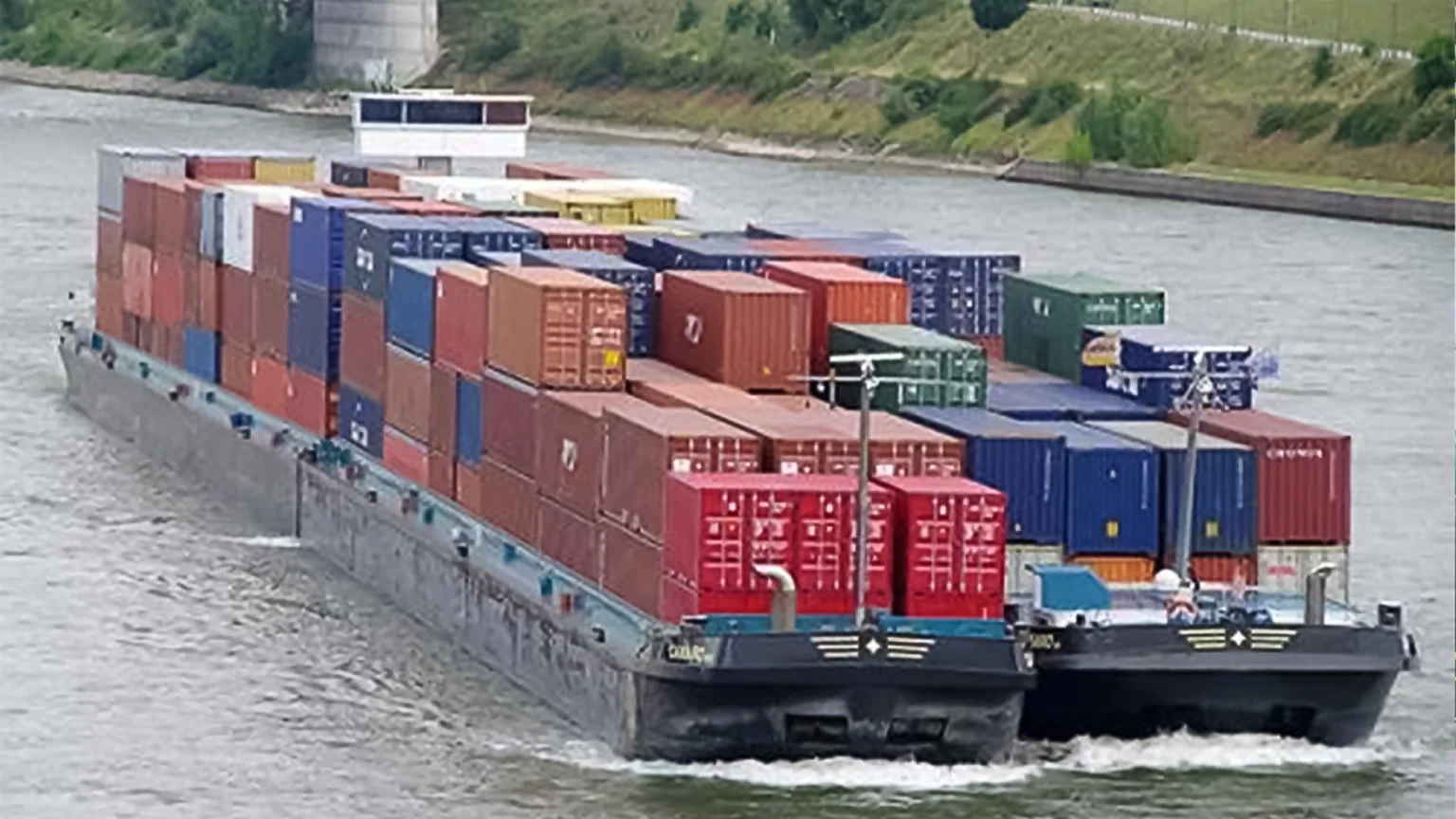
Shippers are counting their losses as a ship carrying over 2,500 containers sank in the southern waters of the Strait of Hormuz after striking a naval mine and exploding with massive fire.
According to a statement from Iran’s Islamic Revolutionary Guard Corps (IRGC) Navy, the ship sank yesterday morning due to the intensity of the blaze.
In a statement, the IRGC Navy said the vessel was attempting to cross an unauthorised and dangerous route through the strategic waterway when it struck the mine, triggering an explosion and a severe fire.
ASepah News Agency, which is affiliated to the IRGC, reported: “A container ship carrying 2,500 containers sank south of the Strait of Hormuz after hitting a naval mine and exploding, causing a massive fire.”
The statement did not identify the ship, disclose its flag or provide information about its crew or possible casualties.
The incident comes amid heightened maritime tensions in the Strait of Hormuz following the collapse of the U.S.-Iran memorandum of understanding, which has triggered a fresh wave of attacks on merchant vessels transiting the waterway, leaving several seafarers injured or dead.
On Tuesday, a container ship and tanker were attacked in the Strait by “unknown projectile,” according to the United Kingdom Maritime Trade Operations (UKMTO).
The UKMTO did not provide the times of the attack, the vessel names, the damage, the crew status, or the salvage details.
Also, six attacks were reported Sunday, which UKMTO identified as the most damage yet recorded in one day since the start of the conflict.
Iran officials had disclosed to the media that the rising rate of attacks on merchant shipping was meant to impede United States -sponsored oil exports through the strait, keeping global oil prices high and putting economic pressure on American voters ahead of the U.S. midterm election.
The officials claimed that the strategy had received support at the highest levels of Iranian leadership.
Drawing on recent Iranian state media statements, the Institute for the Study of War (ISW) stated that Iran might be developing anti-ship missile capabilities to improve its ability to target vessels.
The institution noted that Iran might have developed an anti-ship variant of its inexpensive and plentiful Kheibar Shekan ballistic missile, which was used in an attempt to target American naval forces on September 5.
Recall that Iran, through its media, had described the ammunition used in the September 5 attack as a Qasem Basir ballistic missile – a different model claimed to have a thermal imaging sensor for target tracking.