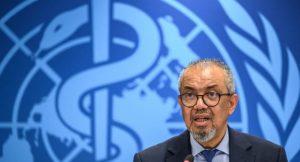



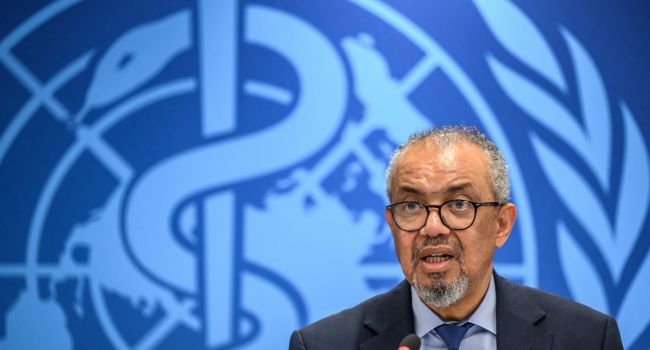
World Health Organization (WHO) Director-General Tedros Adhanom Ghebreyesus speaks during a press conference on global health issues, in Geneva, on October 7, 2026.
The World Health Organization on Thursday told countries to do more to prevent lead exposure, with hundreds of millions of children affected worldwide.
“Lead poisoning is one of the world’s most serious yet overlooked environmental health threats,” said Bruce Gordon, head of the WHO’s environment department.
Lead is categorised by the WHO as one of the 10 chemicals of major public health concern, along with others including arsenic, asbestos, mercury and highly hazardous pesticides.
Lead exposure is a widespread but preventable health threat estimated to contribute to more than 3.5 million deaths globally every year.
The WHO says 815 million children have blood lead levels of at least five microgrammes per decilitre, which its guidelines say should trigger a review of how they are exposed to lead, and action to reduce or end it.
“Over one in three children around the world are above WHO’s action level,” Gordon told reporters.
“A child can be exposed without showing any obvious symptoms.”
Lead is particularly dangerous for children because their developing brains and nervous systems are highly vulnerable to its toxic effects.
The widespread use of lead, a naturally occurring toxic metal found in the Earth’s crust, has resulted in extensive environmental contamination, human exposure and significant health problems, says the WHO.
“Exposure can occur through paint, cookware, cosmetics, spices, informal recycling and industrial contamination, among other sources,” it says.
“There is no known safe level of lead exposure, and even relatively low exposure can cause irreversible harm.”
Once inside the body, lead spreads to organs such as the kidneys, brain and liver, as well as to the bones.
Awareness ‘Not Enough’
In 2021, the WHO recommended identifying and eliminating the source of contamination for any individual with a blood lead level of at least five microgrammes per decilitre.
The agency pointed out that 3.5 microgrammes can be associated with reduced intelligence, behavioural disorders and learning difficulties in children.
Countries have recognised lead exposure as a pressing public health concern, and tasked the WHO with developing a global action plan, to be presented at their next annual assembly of member states in May.
The WHO said it was enhancing laboratory capacity to conduct blood lead level testing in Brazil, India, Nepal, Ethiopia, Ghana, Malawi, Rwanda, South Africa and Tanzania.
“Awareness alone is not enough, and we need to move to effective policy-making and enforcement,” said Gordon.
Fewer than half of countries had legally binding controls on lead in paint, according to the WHO’s latest assessment.
“Countries now need to move upstream, removing lead from products and environments before it reaches a child’s bloodstream,” Gordon said.
AFP