


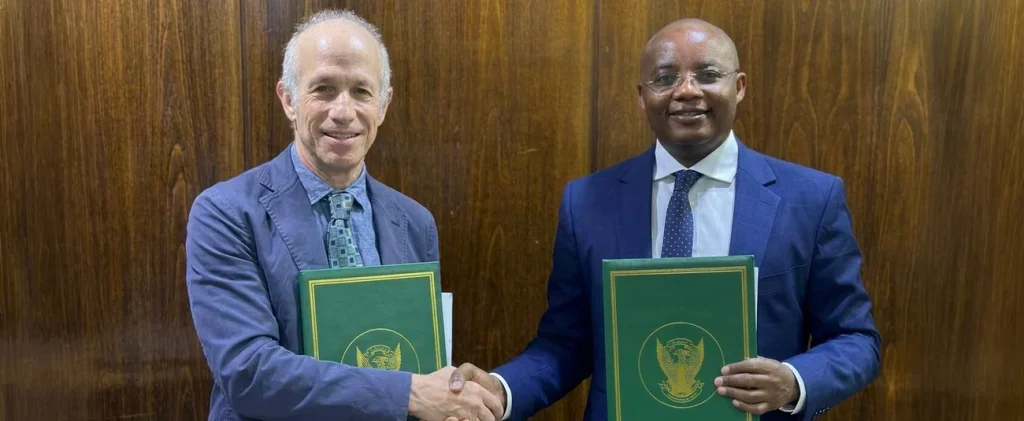
The African Development Bank Group (Bank Group), in partnership with UNICEF, is scaling up efforts to restore safe water and sanitation services for hundreds of thousands of children and families in Port Sudan, with a $54.8 million investment to address the city’s deepening water crisis.
Access to safe water remains one of the most urgent needs in Sudan, with millions of children at risk of waterborne diseases. In Port Sudan, an influx of displaced families has pushed already fragile systems beyond their limit, with water supply currently meeting less than 40 per cent of demand. By restoring essential systems in Port Sudan, the initiative aims to reduce disease outbreaks, protect children’s health, and ease pressure on overstretched host communities.
Launched on 09 June, the Port Sudan Emergency Water and Sanitation Project financed by the African Development Fund (ADF), the Bank Group’s concessional arm, and implemented by UNICEF, will support access to safe water for up to 750,000 people. They include roughly 600,000 people in Port Sudan, more than a third of whom are internally displaced.
The initiative will also improve sanitation services for an estimated 200,000 people, while extending support to vulnerable communities in other conflict-affected areas, including towns in North and South Kordofan.
UNICEF will lead implementation, focusing on restoring damaged water systems and expanding access to sanitation and hygiene services in communities, schools and health facilities. The support will focus on:
- Rehabilitating critical water infrastructure, including key water sources, pipelines and distribution networks;
- Expanding sanitation services and promoting safe hygiene practices to prevent disease outbreaks;
- Strengthening local water authorities to sustain essential services;
- Ensuring access for the most vulnerable, including children and displaced families.
“Children in Sudan are paying the highest price of this crisis,” said Sheldon Yett, UNICEF Representative for Sudan. “When water systems fail, children are the first to suffer – from disease, from missed school, and from heightened protection risks. Together with the African Development Bank (Group) and partners, we are restoring life-saving services and helping communities cope with the scale of this emergency.”
“This project responds to an urgent and growing need,” said David Muthusi Mutuku, the Bank Group’s Sudan Country Manager. “By combining immediate action with longer-term investments, we are providing climate-resilient, sustainable solutions to help ensure that communities under pressure can access safe, reliable water.”