



Plan includes more than 5 billion pounds for drones and autonomous systems over four years, Ministry of Defence says.
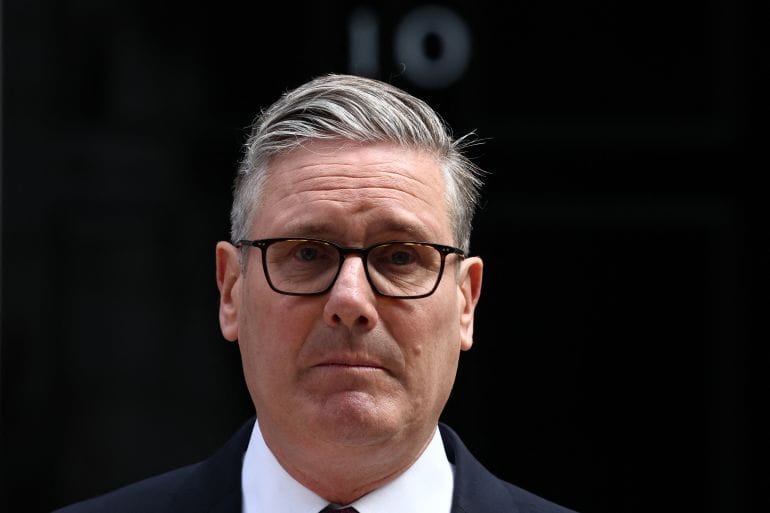
British Prime Minister Keir Starmer presented the defence spending plan before he is expected to leave office in July [File: Stringer/AFP]
Outgoing Prime Minister Keir Starmer has announced that Britain will spend almost 300 billion pounds ($397bn) over the next four years to modernise its armed forces amid rising threats.
Starmer, expected to leave office next month after losing the support of Labour MPs, announced on Tuesday that the overall defence budget would increase by 15 billion pounds ($20bn) over the next four years to almost 300 billion pounds as he launched his long-awaited defence investment plan.
“Last year I made the decision in the national interest to reprioritise aid spending towards defence and achieved the biggest uplift in defence spending since the end of the Cold War,” Starmer said.
“That was the right choice because the world has changed. National security is economic security.
“Today we uplift defence spending further – an additional 15 billion pounds worth of funding – by … reprioritising spending across government.”
The plan includes more than 5 billion pounds ($6.6bn) for drones and autonomous systems over the next four years, the Ministry of Defence said in a news release.
The announcement followed months of wrangling within Starmer’s Labour government over the resources required to modernise the United Kingdom’s armed forces in the face of rising threats, including from Russia.
Two defence ministers quit this month in a row over the spending proposals, including Defence Secretary John Healey, who said the plans risked making Britain “less safe”.
Starmer’s pledge came as United States President Donald Trump has repeatedly urged NATO allies to spend more on defence and become less reliant on Washington for security.
Starmer will take the plan, which foresees spending nearly 80 billion pounds ($105.7bn) a year by 2029, to Ankara for a NATO summit on July 7-8. He wants to signal Britain is on track to spend 3.5 percent of its gross domestic product on defence by 2035.
With likely successor Andy Burnham due to take power as early as July 20, Starmer acknowledged new governments could “build” on his blueprint.
Critics said the plan, delayed for more than nine months, was too little, too late.