



June 9, 2026 1:23 am
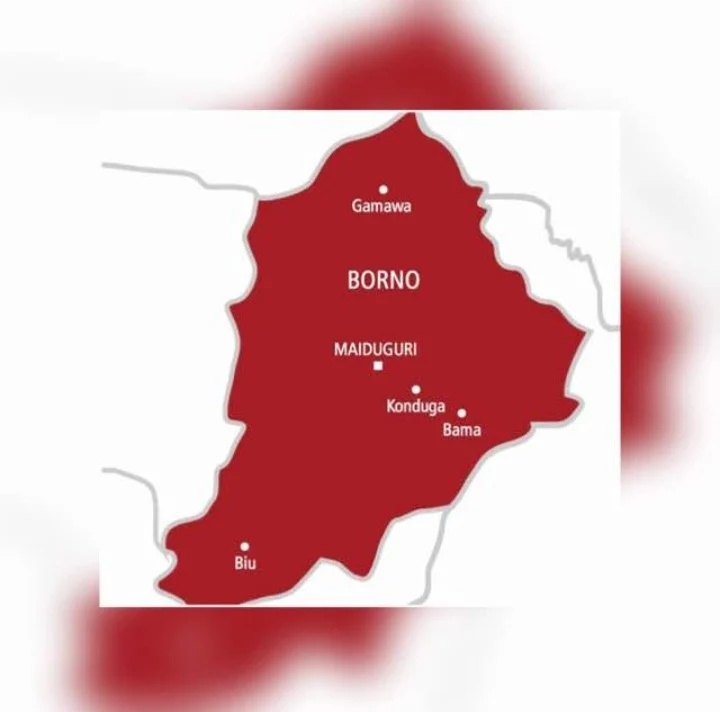
file photo: Borno State Map
Residents of Ngoshe community in Gwoza Local Government Area of Borno State who recently regained their freedom after spending three months in captivity have recounted their harrowing experiences in the hands of terrorists.
In separate interviews with The PUNCH in Pulka on Monday, the victims spoke about the harsh conditions they endured, including hunger, inadequate shelter, limited access to water, and the deaths of children while in captivity.
The PUNCH had reported that about 360 victims were among the 416 residents, mostly women and children, abducted during a terrorist attack on Ngoshe on March 4, 2026.
Terrorists den: 360 freed Borno captives recount starvation, deaths
June 9, 2026 1:23 am

By Isah Ojo
Kindly share this story:
Residents of Ngoshe community in Gwoza Local Government Area of Borno State who recently regained their freedom after spending three months in captivity have recounted their harrowing experiences in the hands of terrorists.
In separate interviews with The PUNCH in Pulka on Monday, the victims spoke about the harsh conditions they endured, including hunger, inadequate shelter, limited access to water, and the deaths of children while in captivity.
The PUNCH had reported that about 360 victims were among the 416 residents, mostly women and children, abducted during a terrorist attack on Ngoshe on March 4, 2026.
One meal/day
The victims said they survived largely on guinea corn throughout their stay in captivity.
One of the freed captives, Halima Musa, said the women were responsible for preparing meals supplied by their captors.
“We ate only guinea corn, once a day. If you ate around 2 p.m., you would have to wait until the next day before eating again. Sometimes, there was no soup. We cooked the food ourselves; they only provided what we were to cook,” she said.
Terrorists den: 360 freed Borno captives recount starvation, deaths
June 9, 2026 1:23 am
By Isah Ojo
Kindly share this story:
Residents of Ngoshe community in Gwoza Local Government Area of Borno State who recently regained their freedom after spending three months in captivity have recounted their harrowing experiences in the hands of terrorists.
In separate interviews with The PUNCH in Pulka on Monday, the victims spoke about the harsh conditions they endured, including hunger, inadequate shelter, limited access to water, and the deaths of children while in captivity.
The PUNCH had reported that about 360 victims were among the 416 residents, mostly women and children, abducted during a terrorist attack on Ngoshe on March 4, 2026.
The victims said they survived largely on guinea corn throughout their stay in captivity.
One of the freed captives, Halima Musa, said the women were responsible for preparing meals supplied by their captors.
“We ate only guinea corn, once a day. If you ate around 2 p.m., you would have to wait until the next day before eating again. Sometimes, there was no soup. We cooked the food ourselves; they only provided what we were to cook,” she said.
According to her, the captives slept on bare floors on a mountain and had limited access to water.
She added that six children died during the period of captivity.
“While in captivity, we lost six children — two boys and four girls. They died after falling sick,” she said.
Another captive, who asked not to be named, claimed the terrorists appeared to operate a food distribution network.
“I noticed that some people brought food supplies. They would drop some there and take the rest to other terrorist locations. From the way the food was being distributed, I suspected they might have farms somewhere,” the source said.
Teenagers allegedly recruited
Some of the victims alleged that 13 male teenagers were separated from the group shortly before their release and retained by the terrorists.
Among us, they selected boys between the ages of 13 and 17 to remain with them as fighters. About 13 boys were selected and taken away to another location,” one of the victims alleged.
Another freed captive, Khadijat, said there was no exchange of gunfire or visible military engagement during the process that led to their freedom.
“We did not see any soldiers. The terrorists brought us down from the mountain. They rode motorcycles while we walked. At a certain point, they left us and we made our way to the soldiers,” she said.
She disclosed that some of those released had spent as long as seven months in captivity.
“We met other people who had been kidnapped before us. Eleven of them had spent seven months there. They were abducted while fishing. We all came out together,” she said.
Ghana-Must-Go bags
Some of the freed captives also claimed that several Ghana-Must-Go bags were delivered to the terrorists’ enclave less than 24 hours before their release.