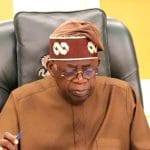



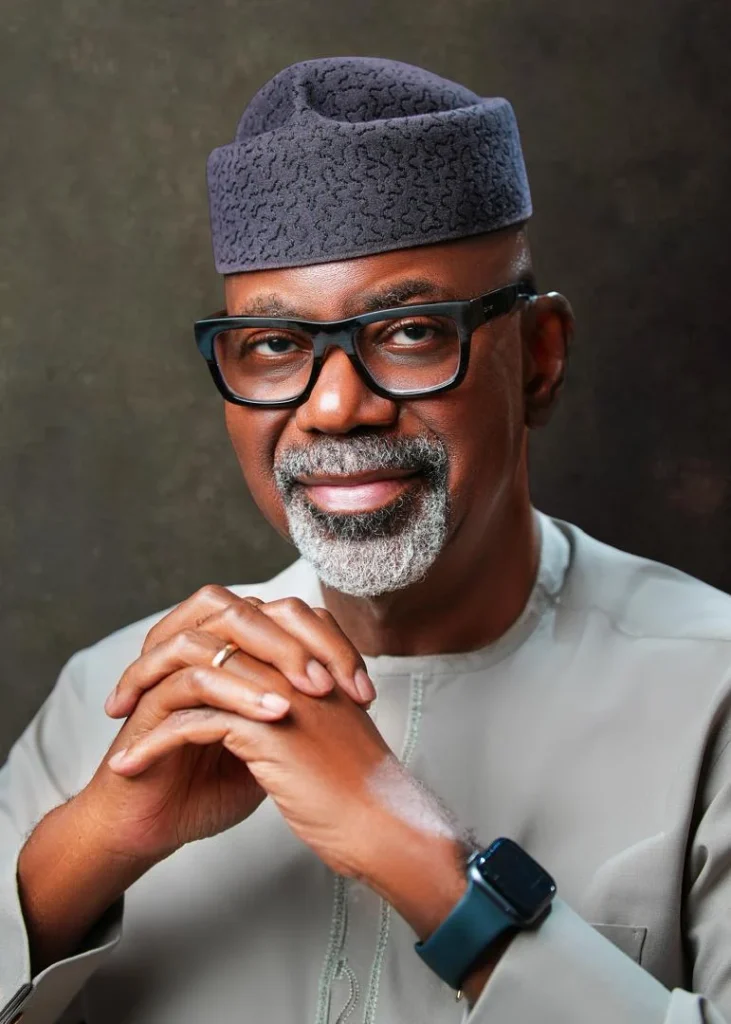
Senator Liyel Imoke.
Some leaders are remembered for the offices they occupied. Others are remembered for the people, institutions and possibilities they created long after leaving office.
As Senator Liyel Imoke turns 65 on July 10, the occasion is more than a celebration of age. It is an opportunity to reflect on a journey defined by service, reform, institution building and an enduring commitment to raising the next generation of leaders.
For more than three decades, Imoke has remained a consistent figure in Nigeria’s public life-combining quiet influence, strategic thinking and a belief that true leadership is measured not only by achievements recorded today, but by the foundations created for tomorrow.
Born on July 10, 1961, at the University College Hospital, Ibadan, Imoke was shaped by a family legacy rooted in public service. His father, the late Dr. Samuel Imoke, was one of Nigeria’s distinguished nationalists and public administrators who served in key ministerial positions in Finance, Labour and Education between 1953 and 1966. His mother, the late Mrs. Comfort Imoke, was a respected nurse, midwife and pioneer in community and public health.
Those early examples of discipline, excellence and service would become the values that defined his own leadership journey.
Educated across Nigeria, the United States and the United Kingdom before being called to the Nigerian Bar in 1988, Imoke built a strong academic and professional foundation.
He attended Santa Maria Primary School, Enugu; Ireti Primary School, Lagos; Government Primary School, Itigidi; Maryknoll College, Ogoja; and Federal Government College, Enugu.
He later earned a degree in International Relations with a minor in Economics from the University of Maryland, College Park, studied Law at the University of Buckingham, England, and completed postgraduate legal studies at the American University, Washington, D.C.
Before entering politics, he practised law in Washington, D.C. and Lagos while also pursuing business interests across various sectors.
At just 30 years old, Imoke became one of Nigeria’s youngest senators-an early indication of a leadership path that would later span legislation, policy reform and executive governance.
Throughout his years in national service, Imoke became associated with reforms aimed at strengthening institutions rather than simply managing systems.
This was particularly evident in Nigeria’s power sector, where he served as Special Adviser to the President on Public Utilities, Chairman of the Technical Board of the defunct National Electric Power Authority (NEPA), and later Minister of Power and Steel.
He played a significant role in some of Nigeria’s most important electricity sector reforms, including the Electric Power Sector Reform Act of 2005, the establishment of the Nigerian Electricity Regulatory Commission (NERC), the Rural Electrification Agency (REA), the unbundling of NEPA and the conceptualisation of the National Integrated Power Project (NIPP).
Earlier, he also chaired the board responsible for winding down the Oil Minerals Producing Areas Development Commission (OMPADEC), helping pave the way for the establishment of the Niger Delta Development Commission (NDDC).
These reforms reflected a consistent theme in his career: building systems capable of outliving individuals.
That same philosophy guided his tenure as Governor of Cross River State from 2007.
His administration pursued reforms in public financial management, procurement, healthcare, education, environmental sustainability and local government administration while strengthening transparency and accountability in governance.
Major initiatives including Summit Hills, the Greater Calabar Urban Renewal Programme and the Meetings, Incentives, Conferences and Exhibitions (MICE) strategy reflected his vision to diversify Cross River’s economy and position the state for long-term growth.
Yet perhaps one of the defining features of the Imoke administration was its focus on people.
For him, development was not complete if it did not reach the communities farthest from power. His government prioritised rural development, expanding access to roads, healthcare, education, agriculture and social intervention programmes across all 18 local government areas.
Governance was not limited to the capital; it was taken to where people lived.
His calm, deliberate and methodical leadership style became known by many as “Imokeism”- a reflection of a leader whose influence often came not from volume, but from vision.
His trademark Chief Obafemi Awolowo-style cap also became part of that identity. In a personal conversation, Governor Imoke once shared that being born in Ibadan inspired his fondness for the iconic cap, which eventually became closely associated with his public image.
Known affectionately by many as “Avatar,” Imoke’s greatest investment was never only in infrastructure but in human potential.
He understood that roads and buildings may transform communities, but educated, empowered and ethical people transform nations.
Having had the privilege of working under Senator Liyel Imoke throughout his eight years as Governor of Cross River State, I witnessed firsthand that this belief was not a political slogan but a principle he consistently lived by.
Perhaps the clearest expression of this philosophy came after public office.
In 2011, he established The Bridge Leadership Foundation, dedicated to mentoring and developing young leaders across Nigeria.
Through leadership programmes, mentorship, civic engagement and personal development initiatives, the Foundation has impacted more than 62,000 young Nigerians, mentees and trainers.
The Bridge represents a powerful continuation of Imoke’s belief: that the greatest achievement of leadership is not creating followers, but preparing other leaders.
At 65, the question is no longer only what one man has achieved, but how many lives his work will continue to influence.
The next chapter of his legacy may well be his most important- building institutions that will produce ethical, visionary and transformational African leaders for generations to come.
Beyond the offices he has held, Senator Liyel Imoke’s legacy can be seen in stronger institutions, courageous reforms, empowered communities and the many people who continue to carry lessons learned from his leadership.
His story reminds us that public service is not merely about occupying positions; it is about leaving behind systems, values and people capable of building beyond you.
Happy 65th birthday to His Excellency Senator Liyel Imoke, CON- a reformer, nation builder and mentor whose legacy continues to inspire generations of Nigerians.
Olanrewaju, a Public Relations and Strategic Communications expert, writes from Abuja.