


Former Vice President Atiku Abubakar has called for an increase in the minimum wage, arguing that rising living costs have made it increasingly difficult for Nigerian workers to meet their basic household needs.
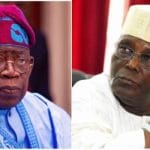
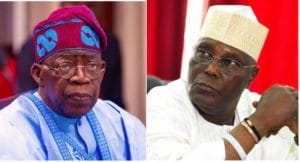
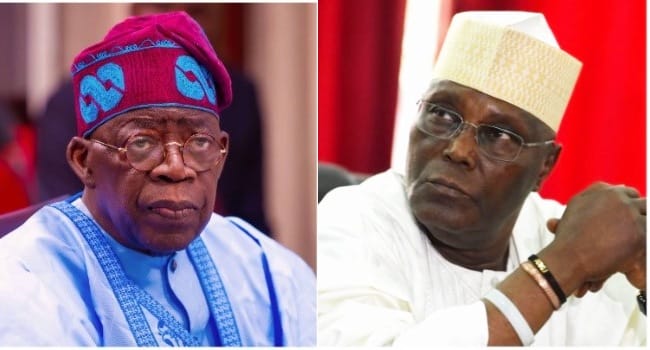
COMBO: President Bola Tinubu and former Vice-President Atiku Abubakar
Former Vice President and African Democratic Congress (ADC) presidential candidate Atiku Abubakar has backed the demand by organised labour for a substantial increase in the minimum wage.
Abubakar accused President Bola Tinubu of allegedly presiding over a “ruthless economic squeeze in which workers are paid more on paper and condemned to live on less”.
The ADC candidate, in a statement issued by the Director of Strategic Communications of the party’s presidential campaign council, Phrank Shaibu, said the administration’s self-congratulatory talk of reform had become an insult to Nigerians whose wages vanished between the filling station and the food market.
Atiku stated that Tinubu’s “reckless” removal of the petrol subsidy sent prices soaring before any credible protection was in place for working families.
“The government pulled away the floor, offered workers a flimsy umbrella and now applauds itself while the rain beats down on them,” he was quoted as saying. “Fuel, transport, food and rent have devoured their earnings. This is a callous way to govern people who work hard and ask only for the means to live.”
According to him, Tinubu asked Nigerians to make sacrifices and treated the suffering that followed as an afterthought.
“Those with the least have been made to carry the heaviest load. That is the cruel arithmetic of this cost-of-living crisis,” Atiku added.
“At ₦1,400 a litre, the entire ₦70,000 monthly minimum wage buys just 50 litres of petrol. What does the worker take home to feed the children? What pays the rent? What gets that worker back to work on Monday?”
Atiku further said that the increase from ₦30,000 to ₦70,000 had failed to restore purchasing power.
He argued that at the April 2023 national average petrol price of ₦254.06 per litre, ₦30,000 could buy roughly 118 litres while ₦70,000 buys only 50 litres at ₦1,400 per litre today.
“The payslip has grown, but the fuel it can buy has more than halved. Tinubu has given workers a larger number and left them with a smaller life. That is hardship dressed up as a wage increase,” he said.
‘Nigeria’s Wage Floor Compares Poorly’
In April, 2024, President Tinubu signed the minimum wage bill into law, increasing the National Minimum Wage from ₦30,000 to ₦70,000 after months of deliberations between government authorities, labour unions, and the private sector.
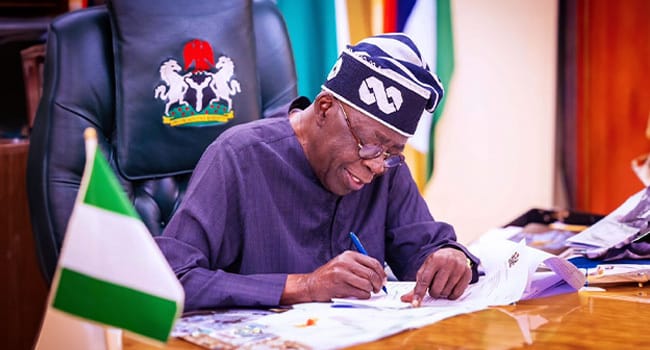
(FILE) President Bola Tinubu
But the former VP said that Nigeria’s wage floor compares poorly with those of several oil-producing and African economies.
“Using exchange rates from 24 July 2026, Libya’s monthly minimum wage was worth approximately ₦213,000; Algeria’s, ₦245,000; Equatorial Guinea’s, ₦302,000; and Gabon’s, ₦351,000. Even the Benin Republic’s minimum wage stood above Nigeria’s when converted at those rates,” the statement disclosed.
Atiku also said that though wage rules and living costs differ across countries, those differences cannot make ₦70,000 adequate for a Nigerian worker facing today’s prices.
“The Nigerian worker is the engine of this country’s productive life, yet Tinubu expects that engine to run without fuel. A worker leaves home before dawn, gives the country a full day’s labour, then stands at a bus stop wondering whether the money left will pay the fare home or put food on the family table,” the ADC presidential candidate stated.
“That is a national disgrace. You cannot work people to exhaustion, pay them into poverty and lecture them about productivity. If a full month’s wage cannot sustain a worker’s family, government has failed the people who keep this country moving.”
He further said that the damage extended far beyond the filling station as the price of petrol does not stay at the pump but follows the farmer to market, enters the baker’s oven and appears in the fare a parent pays to take a child to school.
“Government then announces a wage increase and watches those costs swallow it before the month has begun,” Atiku added.
He challenged President Tinubu to agree immediately to a substantial minimum-wage increase that reflects the real cost of food, transport, rent and power, adding that “if he has no intention of raising workers’ pay, he should say so plainly and stop stringing the Nigeria Labour Congress and other labour leaders along”.
“Nigerian workers deserve an answer, not another round of meetings that ends where it began. I will begin the work of raising the wage floor from my first day in office,” Atiku said.
“Tinubu has eight months left in this term. Nigerian workers cannot be told to endure eight more months of hunger while his government debates whether their wages are enough. He must raise the wage floor and bring down the costs crushing families.”
The former vice president, however, said that from May 2027, his policies would protect the people — support Nigerian production, deliver relief at the pump and provide targeted help to those hit hardest by the cost-of-living crisis, if elected.
“If we are serious about repairing the damage, better pay must be accompanied by lower living costs. Anything less leaves the Nigerian worker as the guinea pig in Tinubu’s economic experiment,” he added.
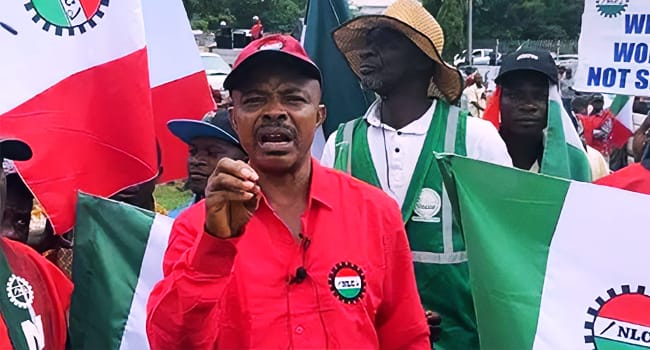
FILE: NLC President, Joe Ajaero
Atiku further reiterated that his plan for a targeted production subsidy would support petroleum products refined in Nigeria and sold to Nigerians, subject to a firm spending cap, public accounting and independent audit.
He said that government support must produce measurable relief at the pump.
“Nigerians do not eat FAAC figures. A full treasury is no answer to an empty kitchen. The test of this government is whether the men and women who work all month can live on what they earn,” ADC candidate stated.
“A living wage must buy a living. It is not a privilege; it is a basic right. Tinubu has made life painfully expensive. I will make life affordable again.”
Last month, labour leaders called for an urgent review of Nigeria’s ₦70,000 national minimum wage, saying the current wage no longer reflects the economic realities facing workers amid rising inflation and the cost of living.
The President of the Nigeria Labour Congress, Joe Ajaero, said the ₦70,000 minimum wage had become inadequate in the face of the increasing cost of goods and services, calling for fresh negotiations with the federal and state governments.