


The Federal Government has issued a fresh N729 billion bond to support the power sector, as the industry grapples with a N1.7 trillion revenue shortfall, highlighting ongoing efforts to address funding challenges and strengthen electricity supply.
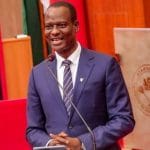
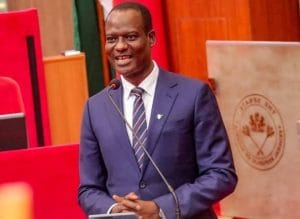
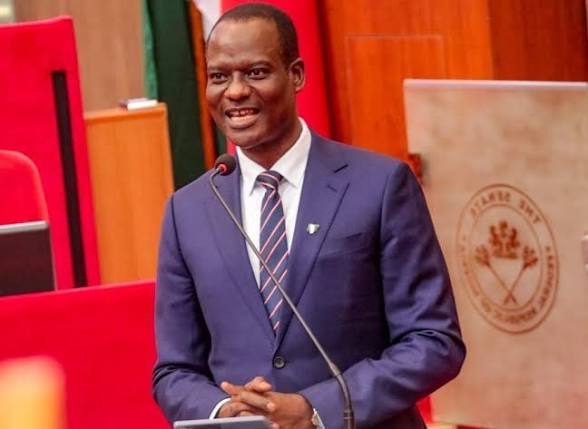
Minister of Finance and Coordinating Minister of the Economy, Taiwo Oyedele
The Federal Government yesterday, in Abuja, issued a fresh N728.98 billion Series 2 bond under its N4 trillion Power Sector Multi-Instrument Issuance Programme to settle verified legacy debts owed to 11 electricity generation companies (GenCos), even as the sector continues to struggle with a yearly revenue shortfall of about N1.7 trillion.
The latest issuance comprises N402 billion raised through cash bonds from the domestic capital market and N326.98 billion in non-cash bonds allocated to participating GenCos under the Presidential Power Sector Debt Reduction Programme (PPSDRP).
The intervention comes as the Nigerian Bulk Electricity Trading Plc (NBET) estimates that persistent market revenue shortfalls and non-cost-reflective tariffs continue to create a yearly funding gap of roughly N1.7 trillion, underscoring that debt repayment alone will not restore the sector’s financial health.
At the signing ceremony in Abuja,Minister of Finance and Coordinating Minister of the Economy, Taiwo Oyedele, said the programme seeks to resolve accumulated obligations that have weakened liquidity and discouraged investment across the electricity value chain.
“This transaction addresses an important challenge in Nigeria’s electricity market, which is accumulated legacy obligations that have weakened liquidity, constrained investments and affected confidence across the value chain,” Oyedele said.
He stressed that the bond must be complemented by structural reforms, including stronger market discipline, improved revenue assurance, reduced technical and commercial losses, as well as greater accountability.
“The success of this programme will not be measured by the size of the bond issued but by whether we achieve a financially sustainable electricity market that can attract investment, meet its obligations and deliver more reliable power to Nigerian households and businesses,” he added.
Managing Director and Chief Executive Officer of NBET, Akin Odeyemi, described the transaction as another milestone in the government’s efforts to address long-standing financial challenges that have constrained the Nigerian Electricity Supply Industry.
He explained that Series 2 follows the successful N501 billion Series 1 issuance completed in January 2026, which involved eight GenCos. The latest phase expands participation to 11 GenCos, reflecting growing stakeholder confidence.
“The programme provides a structural and market-aligned mechanism for settling verified legacy debt while restoring financial confidence, liquidity and sustainability to the electricity supply industry,” Odeyemi said.
He noted that unpaid obligations limited power producers’ ability to invest in additional generation capacity, making the debt settlement a broader effort to revive market confidence.
Special Adviser to the President on Energy, Olu Verheijen, said the government delivered more than N1.23 trillion under the N4 trillion programme, combining both Series 1 and Series 2.
According to her, the initiative followed extensive verification of debts owed to GenCos and gas suppliers, with settlement agreements already executed with 11 GenCos covering 21 power plants.
“Series 1 proved the model, and Series 2 is scaling it. What these numbers represent is trust restored, tested and honoured,” Verheijen said
She argued that “the programme forms part” of President Bola Tinubu’s broader effort to move Nigeria’s power sector “from debt and dysfunction to delivery and discipline.”
Providing an overview of the transaction, Managing Director of CardinalStone Capital Advisers, Michael Nzewi, said the N728.98 billion issuance represents the largest bond issuance in the history of Nigeria’s capital market.
Representing the Minister of Power, Joseph Tegbe, Permanent Secretary to the ministry, Mahmuda Mamman, described the bond as evidence of the government’s commitment to laying a stable foundation for sustainable electricity supply.
“This event matches commitment with action,” he said.
Special Adviser to the President on Power, Lanre Babalola, cautioned that settling legacy debts would be insufficient unless the sector addresses the drivers of recurring liabilities.
Director-General of the Bureau of Public Enterprises (BPE), Ayodeji Gbeleyi, also linked the intervention to Nigeria’s ambition of building a $1 trillion economy, arguing that sustainable electricity remains fundamental to industrial growth.
Speaking on behalf of GenCos, Sahara Group Chief Executive Officer, Kola Adesina, welcomed the intervention as a significant confidence-building measure but insisted that improved liquidity must translate into better operational performance.