


The Independent National Electoral Commission (INEC) has released its final list of candidates for the 2027 general elections, leaving out several prominent governorship aspirants.
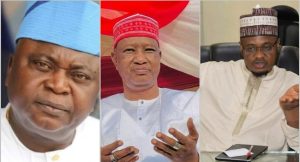
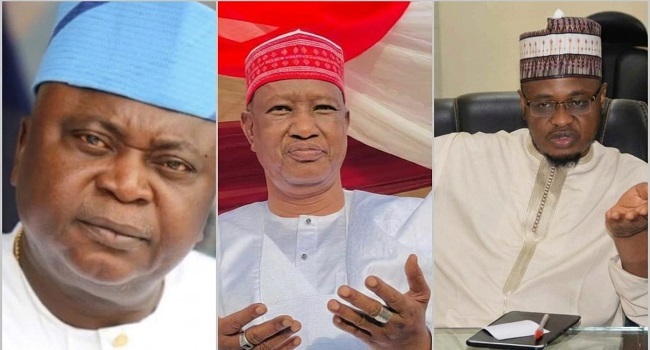
A combo of Adebutu, Gwarzo and Pantami.
1. INEC excludes prominent governorship candidates as 2027 nomination disputes intensify
The Independent National Electoral Commission (INEC) has published its final list of candidates for the 2027 general elections, omitting several prominent governorship aspirants.
Among those excluded are former Communications Minister Isa Pantami, the PDP’s candidate in Gombe State; Ladi Adebutu, the PDP’s candidate in Ogun State; and Aminu Abdussalam-Gwarzo, the Nigeria Democratic Congress candidate in Kano State.
Pantami’s omission follows a disputed primary election and a court-ordered rerun, which he subsequently won. His supporters say they are seeking a resolution.
The Ogun PDP has accused the ruling APC of interfering in Adebutu’s nomination, an allegation that remains unsubstantiated.
INEC has not publicly explained all the omissions. The development follows the Supreme Court’s September 24 judgment restoring provisions of the Electoral Act governing party membership registers and candidate nominations.
Why it matters: The exclusions could affect governorship contests in several states and generate fresh litigation ahead of the elections.
Watch: INEC’s explanations, possible corrections to the published lists and legal challenges by affected candidates.
2. Political violence erupts in Enugu as gunmen disrupt opposition campaign
Suspected political thugs attacked supporters of the Nigeria Democratic Congress in Enugu State on Saturday, October 10, disrupting activities surrounding the party’s governorship campaign launch.
The violence began near Akanu Ibiam International Airport, where supporters had gathered to welcome the party’s governorship candidate, Chinyeaka Ohaa.
Videos obtained by Premium Times showed supporters fleeing amid sporadic gunfire, injured participants and damaged vehicles.
The attackers reportedly struck again at the party’s secretariat, where the campaign launch was taking place.
The newspaper also reported allegations concerning the conduct of security personnel, but these have not been independently established. The Enugu police spokesperson had not responded to its inquiries at publication time.
Why it matters: The incident raises concerns about political violence, freedom of assembly and the protection of campaign activities ahead of the 2027 elections.
Watch: Police investigations, identification of the attackers and security arrangements for subsequent campaign events.
3. Petrol relief controversy deepens as government and opposition dispute pricing policy
The Federal Government’s petrol-price intervention remains under scrutiny following its decision to extend NNPC Retail’s discount until October 31 and propose additional measures to stabilise supply costs.
The existing ₦66-per-litre discount requires motorists to use the NNPC Fuel App and pay digitally.
Finance Minister Taiwo Oyedele says NNPC Retail will forgo its profit margin for an initial 30 days, maintaining that the arrangement does not amount to restoring petrol subsidies.
The government is also negotiating a ₦1,350-per-litre ceiling on wholesale supply costs, rather than retail pump prices.
Meanwhile, Oyo State Governor and presidential candidate Seyi Makinde has challenged the government to publish its fuel-pricing template so Nigerians can examine how prices are determined.
Former Vice-President Atiku Abubakar has separately advocated production support for domestic refiners.
Why it matters: The debate concerns the financing, transparency and effectiveness of efforts to reduce fuel costs. The digital-payment requirement may also limit access to the existing discount.
Watch: Publication of the proposed pricing arrangements, participation by motorists and whether transport fares respond to the intervention.
4. Military reports 36 terrorists killed and 50 abductees rescued nationwide
Defence Headquarters says Nigerian troops killed 36 suspected terrorists and rescued at least 50 abducted people during operations conducted between October 2 and 8.
Director of Defence Media Operations, Major-General Michael Onoja, said the operations covered several regions.
According to the military, troops killed 26 militants in the North-East, including 25 during the defence of Kukawa in Borno State.
Another 10 suspected Lakurawa fighters were reportedly killed during operations in Kebbi State.
The military also included the 20 prospective NYSC members freed in Imo State among those rescued.
However, relatives of some corps members maintain that ransom payments secured their release, a claim that remains unresolved despite the security agencies’ account.
The military figures have not been independently verified.
Why it matters: The operations demonstrate continuing pressure on terrorist and kidnapping networks, although recent attacks show that significant security threats remain.
Watch: Follow-up operations, verification of casualty figures and clarification of the circumstances surrounding the NYSC hostages’ release.
5. NAFDAC warns banned pesticides are entering Nigerian food supply chains
The National Agency for Food and Drug Administration and Control has raised a fresh alarm over the movement of banned and unregistered pesticides into Nigerian markets.
In a statement reported on Sunday, NAFDAC Director-General Professor Mojisola Adeyeye warned that illegal agrochemicals entering through Nigeria’s borders pose risks to public health, food safety and the environment.
The agency disclosed that enforcement operations had uncovered substantial quantities of prohibited pesticides.
These include agrochemicals worth more than ₦800 million seized across four South-West states in 2025, alongside additional seizures in the North-West.
NAFDAC says it has intensified surveillance, closed unauthorised production facilities and strengthened enforcement against illegal distributors.
The agency specifically identified paraquat, chlorpyrifos and atrazine among substances subject to its regulatory restrictions.
Why it matters: Unsafe pesticide use can contaminate agricultural produce, expose farmers to harmful chemicals and create wider public-health risks.
Watch: Further seizures, prosecution of illegal distributors, enforcement at border crossings and public guidance on identifying approved agricultural chemicals