



Iran has blamed the United States’ military presence and wars in the region for environmental pollution in the Persian Gulf and Gulf of Oman, calling for Washington to be held accountable for what it described as extensive damage to the marine environment.
Iranian Foreign Ministry spokesman Esmaeil Baqaei made the accusation on Monday while addressing reporters in Tehran after a series of oil spills were reported in Gulf waters.
Baqaei said the environmental damage could not be viewed solely as a consequence of the current conflict, arguing that the presence of US forces and military operations in the region over several decades had contributed to the degradation of the Gulf environment.
“This environmental damage stems from the US military presence and the wars it has waged in the region over the past five decades,” Baqaei said.
He said Iran believes the United States should be held responsible for the environmental consequences and estimated the overall damage at trillions of dollars.
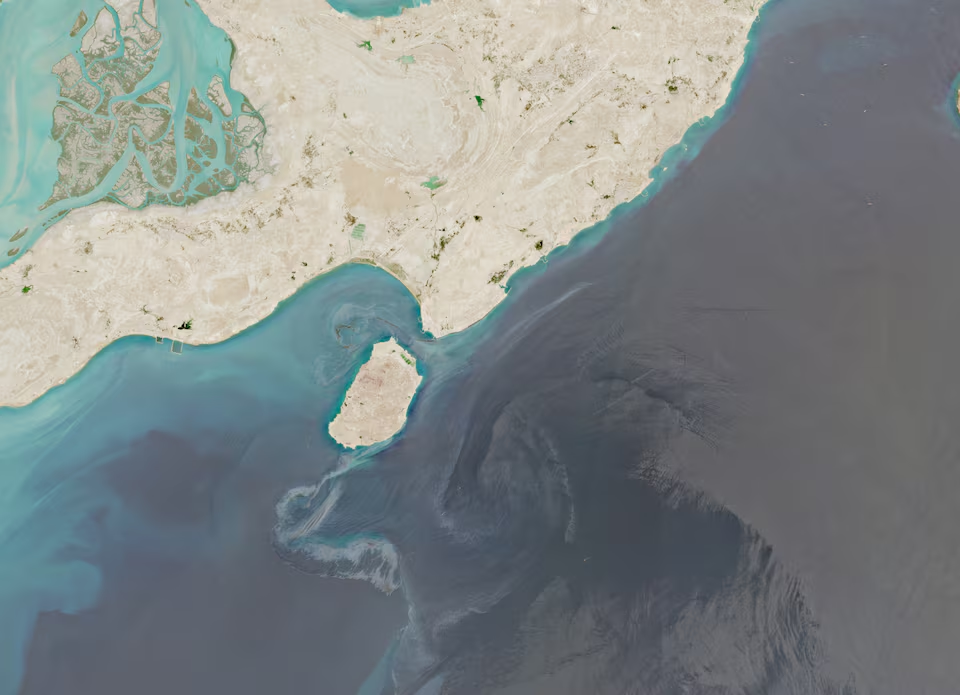
The latest comments come days after an oil slick reached Iran’s Qeshm Island in the Strait of Hormuz, contaminating sections of the coastline and affecting a mangrove forest considered environmentally sensitive.
Iran had previously called for compensation over the Qeshm pollution. At the time, Baqaei said preliminary evidence pointed to a foreign bulk carrier as the source of the spill, while Iranian officials later said the affected area had been completely cleaned up.
The Qeshm spill is part of a wider environmental crisis unfolding around the Gulf, where separate oil slicks have been reported in waters around Iran and Oman.
Satellite imagery and maritime monitoring have shown a major slick near Qeshm, while another, much larger spill has spread off Oman after a tanker ran aground. Reuters reported that the two incidents are separate, although both are adding to environmental concerns in the region.
The Qeshm slick has raised particular concern because oil reached beaches and sensitive coastal ecosystems. Environmental damage in such areas can affect marine life, fisheries and communities that depend on coastal resources.
Iran’s latest position broadens its earlier demand for compensation from the specific oil-spill incident to what it describes as decades of environmental damage associated with foreign military activity in the region.
Baqaei did not provide a detailed breakdown of the trillions of dollars in damages he cited, nor did he announce a specific compensation mechanism or legal action against the United States.
The Iranian government’s claims come amid heightened military tensions in and around the strategically important Strait of Hormuz, where attacks on vessels and restrictions on maritime traffic have increased the risks facing commercial shipping.
The environmental consequences have added another dimension to the wider crisis, with oil pollution now threatening coastlines and marine habitats already exposed to intense maritime activity and conflict.
Iran has therefore linked the latest pollution incidents to a broader demand for accountability, arguing that the environmental cost of military operations should be addressed alongside their political and economic consequences.