



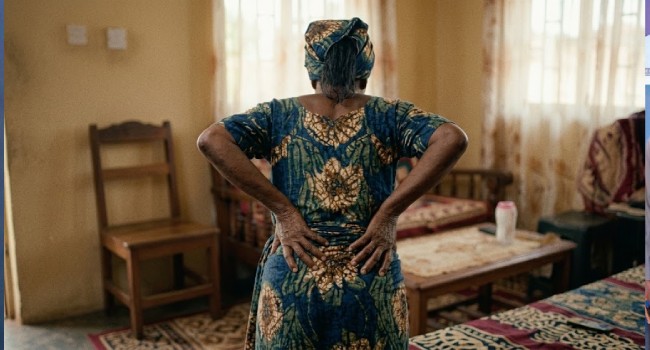
Rheumatoid arthritis can make everyday activities, including household chores, increasingly difficult as the chronic condition causes joint inflammation, pain and stiffness.
Many people associate RA with old age, but this, according to experts, is just a misconception and a myth.
Eyitomilola Oyelami’s warm smile does not give an immediate glimpse of the quiet daily battle she fights. Now in her mid-30s, her memories of an energetic life before Rheumatoid Arthritis (RA) carry a bittersweet mix of gratitude and grief. Her journey started not with a crisis but with a subtle air of pain as she chased her ambitions
“I was doing my postgraduate diploma in broadcast journalism when I noticed lots of pain in my joints and body. I didn’t attach much importance to it because I used to be a sick child while growing up,” Oyelami, 36, said with tears in her eyes and a smile on her face.
“But then I noticed these particular pains came with swollen fingers and knees, an inability to raise my arms well; then I started limping. Standing for more than 10 minutes came with more pain, and I was always in and out of the school clinic until one day when the doctor in the clinic gave me a referral to LASUTH, suggesting rheumatoid arthritis.”
What began as body and joint pain for Oyelami gradually became a challenge that affected her daily activities, not just her joints. Simple activities such as household chores became increasingly difficult, forcing her to outsource her chores and confront a condition she had never expected to face.
“RA came with an inability to sleep well. I wake up in pain and with body stiffness, and before long, it started affecting my day-to-day activities. I had to hire someone to start doing my laundry and then cleaning my house,” she said.
“Most days I wake up deprived of energy. I couldn’t carry heavy things and had to depend on neighbours to help.”
But behind all of her struggles with RA, she had a support system – her family, who stood by her.
“My family gave me their full support all round,” she said with a grin. “They are my strong support system, and a few friends too.”
To understand Oyelami’s condition, an Associate Professor of Medicine and Consultant Rheumatologist at the Lagos State University College of Medicine/Lagos State University Teaching Hospital (LASUTH), Dr. Hakeem Olaosebikan, explains that Rheumatoid Arthritis causes joint inflammation or damage, leading to pain, swelling, stiffness, reduced movement, and deformities in affected joints, including the back.
“There are over 100 types. It can affect any joint and, in inflammatory forms, other organs, including eyes, heart, lungs, kidneys, and other internal organs. The most common types in Nigeria and globally include osteoarthritis (OA) — the most frequent (often the majority in Nigerian clinic series),” Olaosebikan told Channels Television.
“Degenerative ‘wear-and-tear’ of cartilage; commonly affects weight-bearing joints such as knees, hips, spine, and hands. It is common in the elderly, particularly women. Rheumatoid Arthritis (RA) and other inflammatory arthritides.”
Other types of arthritis include soft-tissue rheumatism, spondyloarthropathies, and juvenile idiopathic arthritis seen in children less than 16 years old.
Dr. Olaosebikan says the causes of RA include genetics, hormones, family history, and age.
Arthritis Affects All Age Groups
Many people associate RA with old age, but this, according to experts, is just a misconception and a myth, as RA affects all age groups and can start at any age.
Other misconceptions include believing it is just ordinary body pain or related to old age, that it is one single disease, a female-only disease, that painkillers are the only medication for arthritis, and that nothing can be done. These misconceptions do not provide solutions but only delay care.

Associate Professor of Medicine and Consultant Rheumatologist at the Lagos State University College of Medicine/Lagos State University Teaching Hospital (LASUTH), Dr Hakeem Olaosebikan, says the causes of RA include genetics, hormones, family history, and age.
For Becky Andrew, her experience as a parent caring for a child with rheumatoid arthritis is heartbreaking. Watching a child who used to be very athletic and fit slow down, hiding her struggles and pain from her peers.
“No parent wants to see their child suffer or in pain. My daughter was very athletic and fit. The disease really slowed her down,” Andrew said.
Life has never been the same for Andrew since her daughter, who is now 13 years old, was diagnosed with arthritis when she was 10 years old. Her child has had to miss school a lot during the early days of her diagnosis, hiding the condition from her friends and pretending she was fine when, in reality, she was in pain.
“There were also a lot of missed school days in the beginning. Also, watching her trying to hide the disease from her friends and pretending she was ok when she was in pain is quite heartbreaking.”
Steroids And Weight Gain
Another major concern for Andrew’s child and Oyelami is the steroid they are taking, which comes with weight gain.
For Andrew’s child, “the steroids have caused serious weight gain, which has hindered her from doing the things she used to love.”
Oyelami is battling with her personality disorder and her self-confidence, as she used to weigh between 42- 45 kg. But with the steroids she is taking, she now weighs over 100 kg, leaving her explaining herself to people. This, in itself, has also affected her mental health and has led her to see a psychiatric doctor as a result.

Eyitomilola Oyelami before she was diagnosed with RA nine years ago
“One of the most difficult things about living with RA is having to live with my weight and having to explain myself to people. For most part of my life, up until my diagnosis, my weight readings were between 42 and 45 kg. Now, nine years down the line, I struggle between 100 and 103 kg. I struggle with self-confidence and personality disorder… My mental health was affected, and I had to keep up with talking to my psychiatrist,” Oyelami said.
“Another difficult thing is having to give excuses for (not attending) family functions because of the pain and low energy level, and most especially having to explain myself to people on how and why I’ve become so big, not knowing it’s the effects of my drugs. This is in addition to having to get more drugs to counter the side effects of my RA,” she added.

Eyitomilola Oyelami now
Diagnosis And Its Hindrance
Diagnosis involves clinical history and examination, blood tests (inflammatory markers, rheumatoid factor, anti-CCP, ANA, uric acid, etc.), imaging (X-rays, ultrasound, sometimes MRI), and occasionally joint fluid analysis.
Olaosebikan pointed out that in Nigeria, diagnosis commonly takes months to years due to “low awareness among the public and some primary-care providers, and symptoms initially attributed to malaria, typhoid, or ordinary pain”.
He also stated that the shortage of rheumatologists in the country is another factor that affects early diagnosis.
“At the moment, Nigeria has roughly 40 practising rheumatologists concentrated in major cities: Lagos, Kano, Enugu, Jos, etc. There is essentially only one formally trained paediatric rheumatologist in Nigeria who manages children with arthritis,” he said.
“There is limited availability and affordability of specialised tests, as many samples are sent abroad for examination, and the concentration of services in a few urban centres are some of the factors affecting early diagnosis, leaving patients in the dark.
“Leaving arthritis untreated leads to irreversible joint damage, deformity, disability, reduced quality of life, work loss, and higher risk of cardiovascular (heart attack, stroke, and kidney damage) and other systemic complications. Early treatment (especially within the “window of opportunity”) can prevent much of this damage,” he added.
Cureable Or Manageable?
“I was diagnosed with RA arthritis in 2025, and the doctor at the University of Maiduguri Teaching Hospital (UMTH) told me I will have to be on medications for the rest of my life, as the condition is not curable. It can only be managed,” says Fatima Adam (34), who was diagnosed with RA 10 days before her wedding in 2025.
Corroborating what Adam’s specialist had told her at the UMTH, Dr. Olaosebikan pointed out clearly that “most forms of arthritis are not curable but are highly manageable.
He emphasised that the goals of managing the condition include “symptom control, treating the underlying cause, prevention of damage, preservation of function, and good quality of life”.
“The use of painkillers for a short period of time, analgesics, and intra-articular steroids also helps relieve the symptoms. However, most patients self-medicate with painkillers for years, leading to ulcers, heartburn, reflux, bleeding, kidney damage, liver damage, and cardiovascular events (heart failure and kidney failure),” said the doctor.
“The best approach is to identify the underlying cause of arthritis and treat based on the root cause.”
He also highlighted that physiotherapy, appropriate exercise, weight management, nutrition modification (anti-inflammatory diet rich in fibres, vegetables and fruits), adequate vitamin D/calcium where needed, paced rest, and mental-health support are essential pillars of care.
Financial, Emotional Burden
Beyond the physical symptoms, living with arthritis can involve financial, social, and emotional challenges.
For Andrew, she is fortunate to have health insurance that covers the cost of her child’s care, so she does not have much of the financial burden on her shoulders.
“Fortunately, our expenses have been covered by my organisation’s HMO,” she said.
Oyelami, on the other hand, had to quit her nine-to-five job and focus on running an online business due to her condition and having to cope with work. She also pointed out that her relationship with her extended family became strained as only a few understood her condition and the battles she was fighting.
“So my source of income became short. Relationships between extended family and friends became strained because very few people understood what RA is and what I was going through. There are days I wake up with so much pain, and other days I wake up fine,” she said.
What Govts Should Do
As the world marks World Arthritis Day 2026, Oyelami’s message to policymakers is to create better funding opportunities for research, subsidise drug prices, and provide great remuneration for healthcare workers. For those living with RA, one autoimmune disease or the other, “you are stronger than you think; you are the real definition of strength,” she added.
But Dr. Olaosebikan advised that early diagnosis and treatment can prevent disability and allow people to achieve their dreams, urging all not to ignore persistent joint pains, body aches, and fatigue but to seek medical help immediately.
However, the medical practitioner believes that governments have a role to play in managing the condition.
“Increase the number of trained rheumatologists and ensure basic autoimmune tests are available and affordable in more centres in Nigeria,” he said. “Subsidise or include essential diagnostic infrastructure, DMARD medications, and, where possible, biologic medications in the National Health Insurance Scheme. Support workplace accommodations and rehabilitation services.”