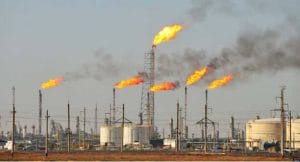



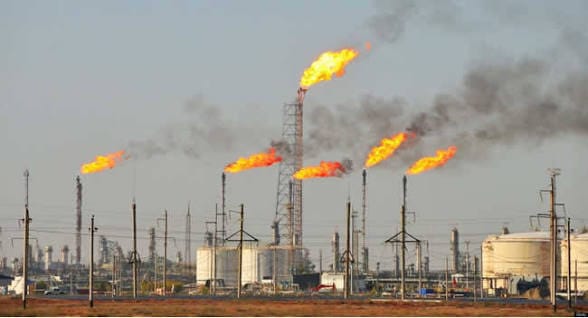
Nigeria is intensifying efforts to capture and commercialise gas that would otherwise be flared, with the shift offering the potential to cut emissions while creating new revenue, jobs and broader economic opportunities for Nigerians.
Nigeria maintained that its commitment to ending routine gas flaring by 2030.
Nigeria’s climate challenge is increasingly being reframed for optimum action: instead of allowing valuable natural gas to burn into the atmosphere, the country is pursuing a path that captures it, monetises it, supplies more energy at home and creates new value for citizens.
That ambition was brought into sharp focus as President Bola Tinubu this week urged Nigeria Liquefied Natural Gas (NLNG) to make reducing gas flaring and expanding domestic gas utilisation a priority.
From Waste To Wealth
Tinubu urged the management of the NLNG to maximise the country’s gas reserves by not only reducing gas flaring but also converting the resource into economic benefits for Nigerians.
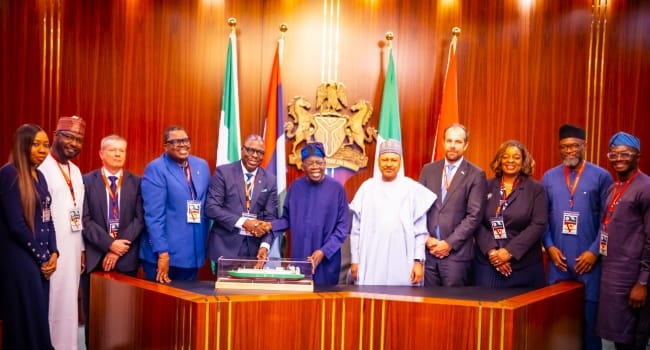
President Bola Ahmed Tinubu, with the Board of Directors and Executive leadership of Nigeria Liquefied Natural Gas (NLNG), led by its Managing Director/CEO, Engr Adeleye Falade, in the State House. August 26, 2026
While receiving members of the NLNG Board, led by its Managing Director and Chief Executive Officer, Adeleye Falade, at the State House, Abuja, the President said the company’s focus should extend beyond increasing revenue from international markets to ensuring greater domestic utilisation of Nigeria’s gas resources.
“I am inspired to understand that you are not limiting yourself to the gradual objective of upgrading. My major concern is the domestic utilisation, where you must be able to take out the flaring and convert potential environmental liability to what could be strategically and economically beneficial to the consumers in the country.
“Yes, you are doing great to really want the revenue up and taking advantage of international interests so that Nigeria might be deriving benefits, but help us back home,” Tinubu was quoted as saying in a statement signed by his spokesperson, Bayo Onanuga.
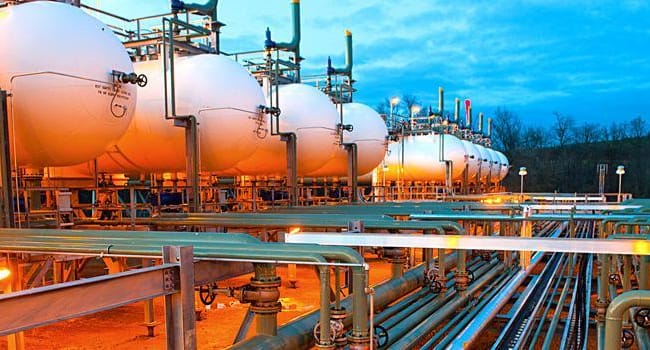
Photo of a Gas pipeline
The President’s message comes against a backdrop of continued efforts by Nigeria’s oil and gas regulators to turn flared gas from an environmental burden into a commercial resource. The Nigerian Upstream Petroleum Regulatory Commission (NUPRC) said routine gas flaring has fallen from more than 80 per cent 35 years ago to about seven per cent today. It has also introduced requirements for credible measurement, reporting and verification of methane and greenhouse-gas emissions.
The Cost Of Burning Gas
Despite the progress, the scale of the remaining challenge is significant.
In June, NUPRC’s metered data showed about 6.08 billion cubic metres of gas was flared in Nigeria in 2025, compared with the World Bank’s estimate of 6.6 billion cubic metres. The regulator attributed the difference to the methodologies used, but Nigeria maintained that its commitment to ending routine gas flaring by 2030 remains firm.
“Nigeria’s commitment to end routine flaring by 2030 remains firm,” said Eniola Akinkuotu, spokesperson of the NUPRC, which he said has “a scheme to monetise gas flares”.
NUPRC’s 2025 production figures also showed that total gas output increased by nearly eight per cent to 2.706 trillion standard cubic feet. Yet gas flaring rose from 192.9 billion standard cubic feet in 2024 to 204 billion standard cubic feet in 2025 — a 5.8 per cent increase. The figures underline the central challenge: producing more gas is not enough if a portion of the resource continues to be lost through flaring.
Nigeria is therefore pursuing a dual objective — reducing emissions while ensuring that more of the gas already being produced becomes electricity, cooking fuel, industrial feedstock and export revenue.
‘Commercialising’ The Flare
The shift is also becoming more explicit in Nigeria’s regulatory strategy.
NUPRC Chief Executive Officer Oritsemeyiwa Eyesan said in May that the commission was targeting the elimination of gas flaring by 2030 and net-zero emissions by 2060. She said gas flaring had fallen below 10 per cent and that Nigeria was moving beyond simply penalising flaring.
“We are not just penalising flaring. We are commercialising it,” Eyesan said.
According to her, flare sites are being concessioned to companies capable of converting wasted gas into usable energy, with the initiative expected to generate as much as three gigawatts of electricity.
That approach places climate action directly alongside Nigeria’s energy and economic priorities: every flare captured represents not only fewer emissions but also a potential source of power, industrial activity, investment and jobs.
Technology Against Methane
Beyond visible flames at oil fields, Nigeria is also strengthening efforts to tackle methane, a potent greenhouse gas released through leaks and oil and gas operations.
In June, TotalEnergies EP Nigeria and NNPC Limited renewed their cooperation on the deployment of AUSEA technology, a drone-based system developed by TotalEnergies with the French National Centre for Scientific Research and the University of Reims to detect and measure methane and carbon dioxide emissions.
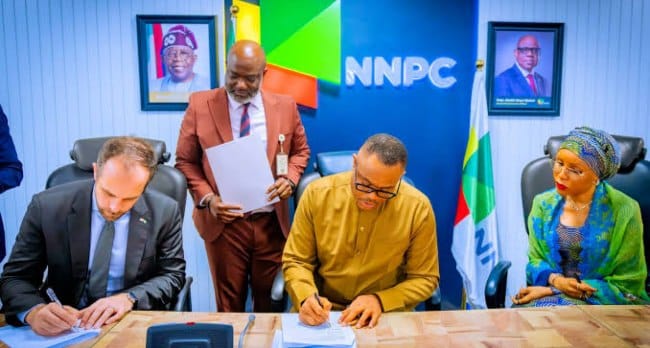
TotalEnergies, NNPC Renew AUSEA Technology Cooperation On Methane Reduction
More than 2,500 sensors were installed in 2025 to enable real-time methane leak detection and faster intervention. TotalEnergies also said it had eliminated routine flaring across all its operated assets in Nigeria at the end of 2023 and was targeting near-zero methane emissions by 2030.
Such monitoring is important because reducing climate emissions increasingly depends on knowing precisely where they originate, how much is being released and how quickly operators can intervene.
Gas For Nigerians
For Tinubu, however, climate action must ultimately translate into tangible economic value at home.
At the meeting with the NLNG on Wednesday, the President commended the management for increasing the company’s capacity and contributing to a good return on investment.
He also assured the team of his administration’s readiness to provide incentives that would support further expansion and enable the company to maximise its potential for the benefit of Nigerians.
“I enjoy the teamwork and the way the NLNG is going, and you all, as team leaders, are giving value to what was the initial objective of the company. If any other incentive is needed to stimulate growth and expand your capacity, I will be willing to do that.
“We look straight far into the future, and I believe that this country has what it takes; but whatever asset that we have in the ground is nothing unless it’s brought up to service the economy, the people, and realisation of a good return on investment.
“I think that is the primary focus. But think of people, the need for domestication of some of these energy requirements and pricing mechanisms so that the ordinary man will feel it,” Tinubu said.
The push for greater domestic utilisation is particularly significant because Nigeria continues to grapple with energy shortages while holding substantial gas resources. Chennal reported it in January that Nigeria’s government had raised its gas production target to 12 billion cubic feet per day by 2030, while the country’s “Decade of Gas” programme had already unlocked about 215 strategic upstream and midstream projects worth more than $8 billion in investments.
More Gas, More Capacity
NLNG boss, Falade, told the President that the Board was at the State House to brief him on the company’s operations since the current management assumed office in April.
He said the company had generated more than $150 billion since its inception, with its shareholders, including the Nigerian government, receiving about $47 billion in dividends. Nigeria holds a 49 per cent stake in NLNG.
Falade said the company had previously operated at about 60 per cent capacity because of inadequate crude oil production, which limited operations to four of its six available trains.
He added that all of the company’s liquefied petroleum gas (LPG), commonly known as cooking gas, was currently being supplied to the domestic market.
According to him, increased oil production following recent developments in the oil and gas sector had enabled NLNG to raise its operating capacity to five trains, with further improvements expected.
He said the company was also keen to inaugurate Train Seven, which would increase its capacity by 35 per cent, noting that NLNG currently accounts for five per cent of the global LNG market.
Falade said the company’s shareholders had commended the stability of Nigeria’s fiscal environment, which he said was attracting further investment into the sector.
He also commended the security agencies and regulators in the oil and gas industry for contributing to the stability recorded in the sector.
The NLNG chief executive further told Tinubu that the Bonny-Bodo Road and Bridge project, financed by NLNG, had been completed and was awaiting official inauguration.
Wider Energy Transition
The gas-flaring push is taking place within a broader Nigerian climate and energy-transition strategy.
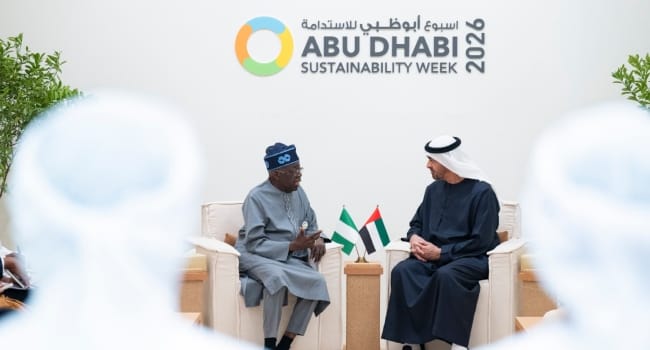
President Bola Tinubu (left) in Abu Dhabi for Abu Dhabi Sustainability Week. Photo: X@officialABAT
In January, Tinubu announced plans for a $2 billion National Climate Change Fund and said Nigeria was seeking to mobilise between $25 billion and $30 billion annually in climate finance. The Federal Government has linked those efforts to its Energy Transition Plan, which targets net-zero emissions by 2060 while expanding energy access.
At the same time, Nigeria is expanding renewable energy as another part of the transition. The Rural Electrification Agency (REA) said in July that 15 universities had been fully connected to solar farms and that 48 interconnected mini-grid projects were being developed nationwide.
The agency’s Distributed Access through Renewable Energy Scale-up (DARES) programme is expected to provide electricity access to about 17.5 million Nigerians.
In Adamawa and Kebbi, the Federal Government also broke ground on 42 renewable-energy projects, including 39 mini-grids and a 3.5-megawatt solar project. The Adamawa projects alone are expected to provide clean electricity to about 40,000 households and businesses while powering roughly 6,000 small and medium-sized enterprises and reducing dependence on petrol and diesel generators.
The wider picture is therefore emerging: Nigeria is not treating climate action as a single-technology project. It is combining gas utilisation and methane reduction with renewable energy, energy efficiency, climate finance and environmental restoration.
Turning Climate Action Into Everyday Value
There are already examples of how this philosophy can work beyond the oil and gas sector.
At Lagos’ Ikosi Fruit Market, they reported how organic waste from rotten fruits is being converted into methane, electricity and bio-fertiliser. The facility generates between 24 and 28 kilowatt-hours of electricity daily, while methane powers market lighting, food vendors and phone-charging businesses.
The principle is similar to the one behind the government’s gas-flaring strategy: what was previously treated as waste can become an economic resource when the right technology, investment and policy framework are in place.
For Nigeria, the challenge now is to translate that principle across the energy sector — capturing more gas, cutting methane emissions, reducing routine flaring and putting more of the country’s natural resources to work.
The objective is increasingly larger than simply stopping a flame at an oil field. It is about turning what once represented lost value and environmental damage into electricity, industrial growth, public revenue, investment and better living standards.
And as Nigeria works towards its 2030 flaring goal and 2060 net-zero ambition, the success of that transition may ultimately be measured not only by how much carbon is kept out of the atmosphere but also by how much economic opportunity is created for the citizens.