


Public health leaders say stronger collaboration and referral systems between traditional practitioners and hospitals could help patients access specialist care sooner when conditions exceed the healer’s expertise.
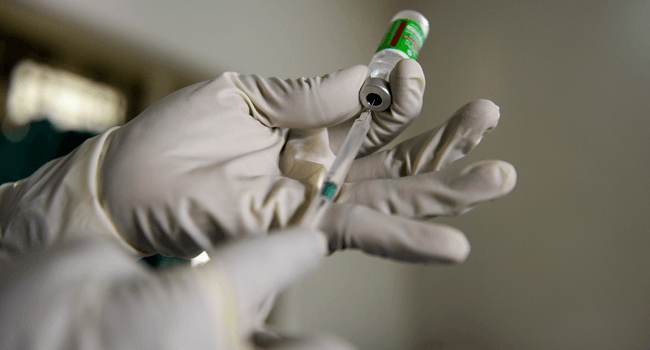
File photo: A health worker prepares to inoculate a private hospital staff with a Covid-19 vaccine in Hyderabad on January 28, 2021. Noah SEELAM / AFP
In a quiet corner of a neighbourhood in Yaba, seven-year-old Amina sits on a low wooden stool while an older woman rubs a thick, earthy herbal paste into her swollen right knee. For four agonising months, her mother, Fatimah, has watched her daughter’s energetic run slow down into a painful, persistent limp.
When the swelling first appeared, Fatimah did not head straight for a teaching hospital. The nearest specialist clinic meant sitting through hours of heavy traffic, alongside the terrifying prospect of steep consultation fees, upfront laboratory deposits, and expensive scans. Instead, she walked down the street to a trusted local healer—a familiar face who offered flexible payments, spoke her native language, and gave immediate words of comfort.
Amina’s experience plays out in millions of homes across Nigeria. Local herbalists, community healers, and traditional bonesetters remain the primary entry point for medical care. Yet, beneath what looks like a simple sprain, a silent crisis often develops. When complex autoimmune conditions such as juvenile arthritis or lupus are mistaken for ordinary injuries, delays in getting expert medical care can alter a child’s life forever.
Why Families Turn To Local Healers First
The strong preference for traditional health practitioners comes down to simple daily realities: convenience, cost, and culture.
Traditional healers live in the same neighbourhoods as their patients, saving families expensive journeys and lost workdays. Unlike modern hospitals that demand cash payments upfront before a child is even seen, local practitioners readily accept installment plans or non-monetary agreements. Beyond the money, local healers talk to parents without clinical jargon, sharing the same cultural background and offering emotional support during moments of panic.
Recognising this deep community influence, bodies like the Lagos State Traditional Medicine Board have worked to register local practitioners, train traditional birth attendants, and enforce basic health guidelines.
The Real Danger Behind Temporary Relief
While herbal balms and massage therapies may briefly soothe surface swelling or dull the pain, they cannot fix complex internal illnesses.
In conditions like juvenile arthritis, joint pain is merely an outward sign that the body’s immune system has malfunctioned. A local ointment might offer temporary comfort, but it cannot stop the immune system from attacking healthy cartilage, bones, and internal organs underneath.
Dr. Ayodele Faleye, a consultant paediatrician and joint specialist at the Lagos State University Teaching Hospital (LASUTH), warns that the resulting delays can prove catastrophic. He points out that doctors routinely see children who have been managed in traditional clinics for up to seven years before receiving a proper medical diagnosis. By the time these young patients arrive at a specialist hospital, permanent joint deformities have set in that modern medicine can no longer reverse. The tragedy is not that parents sought help, but that the root cause went untreated for so long.
The Stance Of Health Authorities And NAFDAC
Balancing traditional practices with modern medicine requires careful oversight. Both the Federal Ministry of Health and the National Agency for Food and Drug Administration and Control (NAFDAC) take a dual approach: acknowledging the cultural role of traditional care while strictly protecting public safety.
The health ministry’s traditional medicine department works to integrate safe, vetted practices into primary healthcare. At the same time, NAFDAC continuously warns the public against unverified herbal mixtures that claim to cure complex internal diseases.
NAFDAC emphasises that giving a temporary registration number to a herbal product only confirms that it is safe to consume and free from harmful toxins; it does not mean the product can cure chronic immune disorders. Health authorities maintain that traditional healers must work within safe limits and refer patients the moment a condition goes beyond their expertise.
A Safer Referral Pathway
Public health experts argue that the solution is not to ban community healers, but to build a clear referral bridge between neighbourhood practitioners and specialist hospitals.
A similar strategy has already worked in maternal healthcare, where traditional birth attendants were trained to spot pregnancy danger signs and send mothers straight to general hospitals. A related network can now protect children with long-term joint and immune conditions.
Under this proposed framework, state governments and teaching hospitals can run practical training sessions for registered traditional healers. Local practitioners would learn to identify key warning signs that demand immediate hospital care, such as joint swelling or limping that lasts longer than six weeks, daily fevers that refuse to drop, unusual skin rashes, or severe morning stiffness.
When traditional healers are linked directly to local primary health centres and specialist units at hospitals like Lagos State University Teaching Hospital (LASUTH) or Ahmadu Bello University Teaching Hospital (ABUTH), they become vital frontline allies rather than isolated care providers.
By pairing community trust with modern medical expertise, children like Amina will no longer lose precious years to treatable conditions, ensuring that expert help arrives before permanent harm is done.