



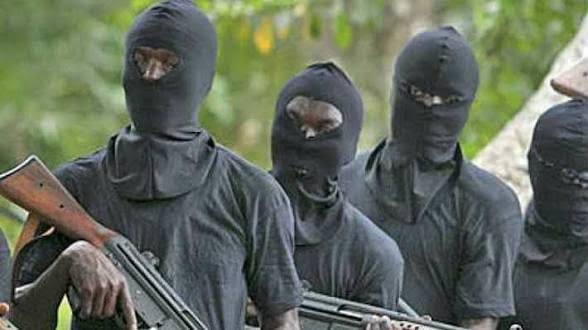
Northern Nigeria accounted for 334 of the 500 security incidents recorded nationwide in August, highlighting the region’s continued struggle with kidnapping, armed attacks and other forms of violence.
● Zamfara, Niger, Kano, Sokoto lead with highest figures
● Kano records 940% rise in violent insecurity in five years
● Borno remains Nigeria’s deadliest conflict environment
● Sokoto community faces N40m levy threat from suspected bandits
● Insurgency: 1,400 schools destroyed, 2,295 teachers killed in N’East
● Expert urges govt to move beyond reactive military response
Nigeria recorded 500 security incidents across the country in August 2026, with the North accounting for 334, or 67 per cent, according to the latest Nigeria Security Index by Eons Intelligence, which revealed growing security concerns across the country yesterday.
The report showed that Zamfara, Niger, Kano and Sokoto recorded the highest number of security incidents during the month.
The findings came amid a separate five-year analysis by the Armed Conflict Location and Event Data Project (ACLED), analysed and visualised by Semafor, which showed significant shifts in the geographical pattern of violent insecurity across Nigeria.
While the Eons Intelligence report provides a snapshot of security incidents recorded in August, the ACLED analysis tracks changes in violent deaths across the country between 2021 and 2026.
Taken together, the two assessments show that northern Nigeria remains the country’s principal pressure zone, with several states experiencing persistent or rising levels of violence.
The latest figures come as the Federal Government faces renewed pressure over the country’s worsening security situation, particularly the spread of kidnapping and armed attacks across parts of the North.
President Bola Tinubu had assured Nigerians that his administration is committed to restoring security, while directing the military, police and intelligence agencies to intensify operations against terrorists, bandits and kidnappers.
In August, security forces rescued 308 kidnapped victims in separate operations in Niger and Kwara states, with Tinubu describing the operation as the largest same-day rescue operation by a joint security team.
But the respite was short-lived, as a mass abduction in Niger State involving hundreds of worshippers again exposed the scale of the challenge confronting security agencies.
About 600 people were abducted from the mosque, while at least 30 people were killed in the attack.
Tinubu subsequently ordered a rescue operation involving the military and other security agencies.
The development has intensified concerns over the growing strength of kidnapping networks operating across the North-West and North-Central regions, where criminal groups have increasingly exploited vast forests and difficult terrain to launch attacks and hold victims for ransom.
The latest concerns are also reflected in a recent report by SBM Intelligence which found that 7,825 people were abducted in Nigeria between July 2025 and June 2026, representing a 66 per cent increase from the previous year, while kidnappers collected an estimated $5.8 million in ransom payments during the period.
The report further showed that kidnapping has increasingly become an organised criminal economy, with its effects extending beyond the immediate victims to education, agriculture, livelihoods and public confidence in the ability of the state to protect citizens.
The situation has also triggered demands for a more aggressive government response.
In late August, the Minority Caucus of the House of Representatives called on Tinubu to launch a sustained military offensive against terrorists, bandits and other criminal groups operating in the North.
The lawmakers also proposed that the Federal Government consider withdrawing $5 billion from external reserves for an extraordinary security intervention if inadequate funding was constraining operations.
According to the Eons report, the North recorded 334 of the 500 incidents, representing 67 per cent of the national total, while the South accounted for 166 incidents, or 33 per cent.
Zamfara recorded the highest number of incidents with 45, followed by Niger, 41; Kano, 38; and Sokoto, 37.
Kaduna and Katsina recorded 29 incidents each, while Kebbi recorded 29 and Borno 28.
Plateau recorded 24 incidents, while Delta and Rivers recorded 22 each.
Lagos, despite being in the South, also recorded 38 incidents, putting it among the states with the highest number of security incidents during the month.
The Eons assessment classified 86 incidents as armed attacks, while 46 involved kidnapping and 55 were cult-related.
Another 18 incidents involved protests, while 295 fell under other categories, including fire outbreaks, improvised explosive device (IED) incidents, mob violence, election-related incidents and other security events.
The concentration of incidents in the North was particularly pronounced in the North-West and North-Central regions, where kidnapping, armed attacks and other forms of violence continued to pose major security challenges.
The report identified kidnapping-for-ransom as one of the major threats confronting the North-West and North-Central.
Kebbi and Sokoto alone recorded a combined 33 kidnapping incidents, according to the assessment.
The continuing threat has also affected education, with schools remaining shut in Gwadabawa Local Government Area of Sokoto State amid fears of abductions.
The report identified continued threats from improvised explosive devices along highways in Zamfara and Borno.
An attack on a convoy in Borno on July 30 reportedly killed eight soldiers. The monthly assessment also documented several mass-casualty incidents across the region.
An attack in Gaji, Niger State, on August 21 reportedly killed at least 40 people and wounded about 100 others, according to the report.
In Plateau State, a reprisal attack in Mangu Local Government Area on August 18 reportedly killed at least 23 people, including women and minors.
A boat mishap in Sokoto State claimed at least 30 lives, making it the deadliest single incident recorded by Eons Intelligence during the month.
The latest monthly figures also come against the backdrop of a sharp long-term increase in violent insecurity in Kano.
The ACLED/Semafor analysis showed that Kano recorded a 940 per cent increase in violent insecurity between 2021 and 2026, the most dramatic increase highlighted in the five-year assessment.
The development points to a changing geographical pattern of violence, particularly across parts of the North-West that have experienced increasing levels of violent insecurity.
Other North-West states, including Katsina, Sokoto, Kebbi and Zamfara, also recorded significant increases in violent deaths over the five years.
However, the ACLED analysis showed that Borno remains Nigeria’s most deadly conflict environment. The state’s violent death rate was found to be nearly three times higher than that of any other state.
Indeed, this reflected the enduring impact of the Boko Haram insurgency and other armed extremist activities in the North-East.
The findings also highlight the need to distinguish between percentage increases and absolute levels of violence.
While Kano’s 940 per cent increase represents a dramatic rise from its 2021 baseline, Borno’s significantly higher death rate reflects years of sustained conflict and a much larger absolute burden of violent deaths.
Security crisis worsens in North despite declines in parts of South
THE worsening trend in several northern states contrasts sharply with developments in parts of southern Nigeria.
According to the ACLED/Semafor analysis, violent insecurity in Rivers State declined by 80 per cent between 2021 and 2026.
The wider South-South region also recorded predominantly declining trends, although the improvement was not uniform across all states.
The South-West recorded a mixture of increases and decreases, while some states in the South-East experienced increases in violent insecurity.
The contrasting figures suggest that Nigeria’s security crisis is not following a uniform national trajectory, with some states recording sharp increases while others experience substantial declines.
Despite accounting for just 33 per cent of the incidents recorded in August, the South continued to experience significant security challenges.
Lagos recorded 38 incidents, while Delta and Rivers recorded 22 each. Osun recorded 21 incidents.
The nature of the incidents also differed in some parts of the region, with political and cult-related violence featuring prominently.
The Eons report cited incidents linked to the August 15 governorship election in Osun, including allegations of vote-buying and disruptions at polling units.
It also recorded protests by the Take It Back Movement on August 5, which disrupted flights at airports in Lagos, Abuja and Benin City. Fire outbreaks were also recorded in markets, buildings and relocation centres in Lagos, Anambra and Cross River states.
The two reports provide different measures of Nigeria’s security situation but point to an increasingly complex security landscape.
The Eons Intelligence figures show the immediate scale of security activity, with 500 incidents recorded in a single month and two-thirds occurring in the North.
The ACLED/Semafor data, meanwhile, reveals the longer-term trajectory of violent deaths, showing dramatic increases in some northern states alongside substantial declines in parts of the South.
The combination of the findings is particularly significant in Kano, which recorded 38 incidents in August while also registering a 940 per cent increase in violent insecurity over the five years.
Experts demand shift from reactive to preventive security
IN his reaction, Secretary-General of the Africa Centre for Strategic Studies (ACSS), Nigeria Chapter, Suleiman Mande, said the worsening security crisis, particularly in the North, stemmed from interconnected socio-economic, political, environmental and governance challenges.
Mande, who is also the Founder and Executive Director of MGIC Global Leadership and Mentorship Institute, said the country’s growing good-governance deficit, weak service delivery, poor institutional coordination and inadequate oversight had made it difficult for the huge resources allocated to security to translate into sustainable results.
He said the security of lives and property remained the primary responsibility of a responsive and accountable government, adding that every administration would ultimately be judged by its successes and failures in protecting citizens.
According to him, despite the trillions of naira committed to security and the various measures announced by the government, the reality in many parts of the North continued to raise serious concerns.
He said: “We therefore begin to look beyond a purely reactive military approach and address the underlying conditions that continue to reproduce insecurity such as poverty, unemployment, weak institutions, poor governance, environmental pressures, porous borders, proliferation of criminal networks and the absence of effective state presence in vulnerable communities.
“As we approach the 2027 elections, this situation should be a major concern. Security must not become another political instrument for intimidation, harassment or suppression of citizens.
“Nigerians must be able to participate in the electoral process freely and without fear. Governments at the federal, state and local levels must therefore adopt a more proactive and coordinated approach to security, strengthen border protection and management, improve intelligence gathering and inter-agency coordination, and ensure adequate security presence in vulnerable areas.
“We cannot continue to respond to every attack after it happens; a responsible state must have the capacity to anticipate threats, prevent them where possible and protect citizens before lives and communities are lost,” he said.
For the Executive Director of the Civil Society Legislative Advocacy Centre (CISLAC), Auwal Rafsanjani, the escalation of insecurity is unfortunate, while accusing the government of allowing the safety of Nigerians to become a business.
Rafsanjani attributed the worsening situation to negligent leadership, the collapse of ethics and values in the security architecture and the failure of the government to shift from reactive responses to preventive measures.
He said civil society organisations had consistently provided early warnings on emerging security threats but that security authorities often failed to act on such information.
According to him, government attention appeared to be more focused on protecting public officials than securing vulnerable communities.
“You will see public officials who are in government; they get protection, multiple numbers of personnel attached to one person, and communities completely ungoverned. No presence of security and no preventive action to ensure that the credible early warnings are actually processed,” he said.
He said concerns had repeatedly been raised by the Auditor-General over the procurement and delivery of arms and ammunition, particularly for the police.
The CISLAC chief also criticised the lack of accountability in military and security spending, saying this could undermine recruitment, deployment and the provision of equipment and facilities to security personnel.
He identified poor coordination among security agencies as another major challenge, saying agencies often failed to adequately share intelligence and information.
According to him, the problem also has a regional dimension, following the weakening of security cooperation between Nigeria and some of its West African neighbours.
He warned that the situation could have serious implications for the 2027 elections, urging Nigerians to demand clear and practical security agendas from all presidential candidates rather than accepting campaign promises without concrete plans.
National Publicity Secretary of the Peoples Redemption Party (PRP), Muhammed Ishaq, blamed the worsening insecurity in the country and particularly in the North on the failure of the Bola Tinubu administration and elected northern leaders to protect the region.
Ishaq said the situation had become so severe that only a fundamental political change could provide the basis for rebuilding the country’s security architecture.
He said: “It is very clear that the Tinubu administration and elected northerners have abandoned northerners to insecurity.”
On his part, National Coordinator of the Coalition of Northern Groups (CNG), Jamilu Charanchi, called on presidential candidates for the 2027 general elections to sign security pacts with communities as part of measures to hold political leaders accountable for their promises to protect citizens.
Charanchi said Nigerians should move beyond relying on political manifestos and campaign promises when choosing candidates, arguing that many politicians had failed to fulfil promises made during election campaigns after assuming office.
He proposed that presidential candidates should sign memoranda of understanding (MoUs) with communities, clearly stating what they would do to address insecurity, poverty, unemployment and other challenges if elected.
According to him, such agreements would provide citizens with a basis to demand accountability from elected leaders.
Sokoto community faces N40m levy threat from suspected bandits
RESIDENTS of Kebbe town in Kebbe Local Government Area of Sokoto State are facing heightened security concerns following a reported demand by suspected bandits for a N40 million levy.
The gunmen allegedly threatened to kill residents and set the town ablaze if the money was not paid within a stipulated deadline.
According to information shared by Crisis Reporter Bakastine on his X handle, the bandits conveyed the demand through a farmer, who delivered a telephone handset to the District Head of Kebbe, Mallam Lawal Labbo.
The gunmen reportedly initially gave the community five days to raise the money but later extended the deadline to seven days following appeals from residents.
The telephone was subsequently handed over to the Divisional Police Officer (DPO) in the area.
The bandits allegedly warned that the phone must remain charged and reachable, threatening to attack the town if their calls were not answered.
Confirming the development, the spokesperson for the Sokoto State Police Command, DSP Ahmed Rufai, said the command was aware of the reported threat and had commenced efforts to address the situation.
“We are aware of the information and we, together with our Anti-Kidnapping Unit, AKU, are already working on the information,” Rufai said.
Insurgency: 1,400 schools destroyed, 2,295 teachers killed in North-East
THE Borno State Government has disclosed that more than 1,400 schools have been destroyed across the North-East, while 2,295 teachers have been killed and 19,000 displaced amid years of insurgency and conflict in the region.
The government also said about three million children remained in urgent need of emergency education support.
The Deputy Governor of Borno State, Umar Usman Kadafur, who represented Governor Babagana Zulum, disclosed this at the two-day National Dialogue on the Psychosocial Impact of Conflict on Children in Nigeria, held in Maiduguri.
The dialogue was convened by the Office of the Special Adviser to the President on Health in collaboration with the North East Development Commission (NEDC) and the Borno State Government.
Kadafur said the figures went beyond statistics, as the destruction of schools, displacement of teachers and disruption of education had left children facing profound psychological and educational challenges.
He said Borno’s experience of insurgency showed that the effects of conflict persisted long after the guns had fallen silent, with trauma affecting children’s cognition, behaviour, ability to trust and relationships with their communities.