



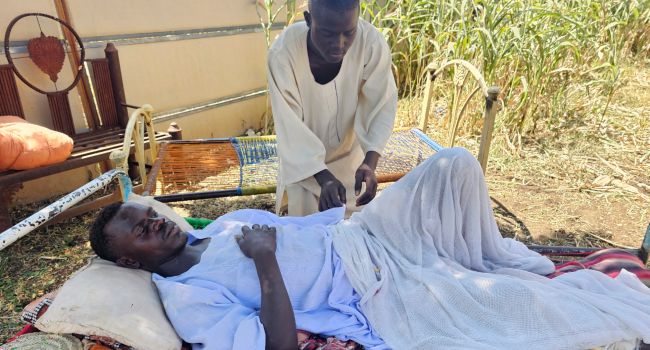
Mohamed Ali Hamza, 29, who was injured during airstrikes on a gold mine on the Sudan-Egypt border on October 11, receives treatment in Wad al-Hulaywah, Kassala State in eastern Sudan on October 16, 2026.
Days after an Egyptian strike killed scores of Sudanese gold miners on the border between the countries, wounded and traumatised survivors are trying to go back to the mines, with no other way to make a living.
“I need to go get my gold,” 26-year-old Sharaf al-Din Ali told AFP, days after burying his friend with at least two dozen others in a shallow grave.
He spoke from a waystation south of the border, where he was waiting for a truck to take him back to the mines of Jabal al-Uqaydat one last time. “Then I’m not coming back… But I can’t leave gold mining either.”
Ali dropped out of college when war broke out between Sudan’s army and the paramilitary Rapid Support Forces in April 2023.
He is one of millions who have since flocked to the deadly gold trade, which fuels both sides of the conflict. Nearly all of it is routed through the United Arab Emirates, much of it first travelling through Egypt.
Thousands had flocked to the sprawling, rugged mountains in the border area, where Ali Mohamed Hamdan, 29, was drinking tea with his fellow miners on October 10 when an aircraft began circling overhead.
“It made three rounds, on the fourth it fired a missile,” he told AFP, lying in a cot in eastern Sudan after making it home with minor injuries.
Sudanese rights group the Emergency Lawyers said at least 72 people were killed in the airstrike it blamed on the Egyptian military, which said it had conducted an operation targeting illegal miners “within its territory”.
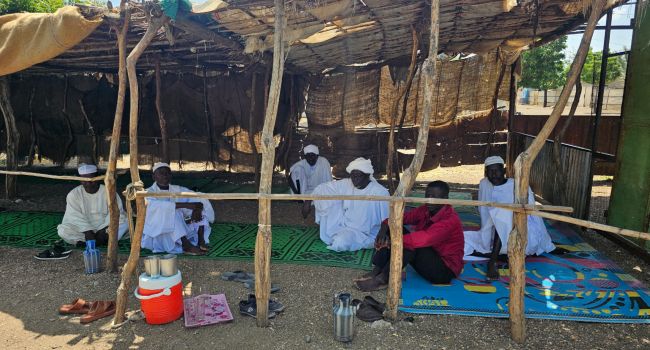
The family of Othman Omar Abdelrazik and Omar Abkar Abdelrazik, who were killed in airstrikes on a gold mine on the Sudan-Egypt border on October 11, receive condolences at their home in Wad al-Hulaywah, Kassala State in eastern Sudan on October 16, 2026.
The number is widely considered a conservative figure, with hundreds of miners — many of them children — still unaccounted for in the rugged mountains.
Eleven have been reported killed from Hamdan’s tiny hometown of Wad al-Hulaywah alone.
In the farming village near the Ethiopian border, AFP met the handful of survivors who made it home, and the bereaved families whose sons never will.
Village In Mourning
Another survivor, Omar Mohieddin, said people had initially relaxed when the aircraft disappeared from view.
“They came every day or two, so people were used to them,” he told AFP. “When it flew north, everyone thought it had gone.”
But it returned minutes later, and he said he could see “the Egyptian flag on it”.
At the first explosion, Hamdan and three others threw themselves into a hole, he said.
When he emerged, one of his comrades’ “insides were outside his body”.
The village has been in mourning for a week. Groups of men in white jellabas sit shoulder to shoulder, their faces drawn with exhaustion and shock.
This month’s strike occurred in the vast, mineral-rich mountains between Sudan and Egypt, which include the Halayeb Triangle claimed by both countries and controlled by Egypt.
Egypt this year launched a military campaign to secure its southeastern desert from illicit gold mining and human trafficking. The first Egyptian airstrike in June reportedly killed 23 miners.
Survivors of the latest strike had to walk for hours carrying the injured, while others died on the roadside “without food or water”, a doctor at a small clinic near the border told AFP.
“The scenes were impossible to describe,” he told AFP.
“People arrived in pieces, shrapnel wounds to eyes, heads, legs and chests. Some of the most seriously wounded never reached us because there was no way to transport them.”
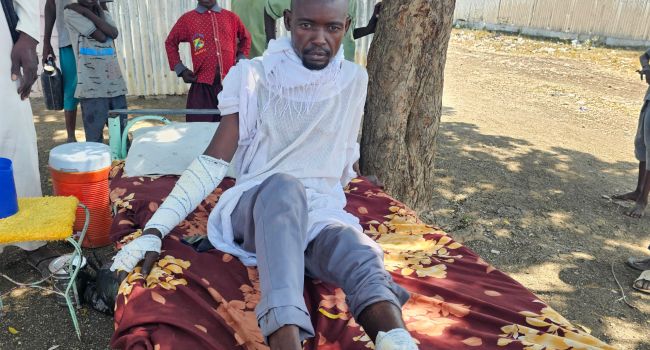
Abkar Mohamed Haron, 38, who was injured during airstrikes on a gold mine on the Sudan-Egypt border on October 11, receives treatment in Wad al-Hulaywah, Kassala State in eastern Sudan on October 16, 2026.
Gold Or Guns
Tarek Ahmed Issa, 19, had joined others hiding in mountain ridges after the strike.
When they climbed down, there were corpses everywhere.
“We buried the dead, but there were many others we couldn’t find,” he said.
The teenager is still in the area, desperate for a way to transport “four months worth of work” to the nearest gold market to sell.
“There are hardly any trucks,” and those that do come are charging double.
The war has left young Sudanese — 25 million under 18, eight million of them out of school — with two main options to make a living: take up arms in one of the country’s many militias, or dig for gold.
The multi-billion dollar gold industry depends on millions digging in dangerous, informal mines with their bare hands.
Those who survive the mine collapses and aerial bombardment face a lifetime of diseases from the mercury and cyanide used to filter the precious metal — all to sell gold nuggets in local markets, at a fraction of global prices.
“By the time the ore is sold, everyone takes a cut,” said Omar Abdelrazig Abdalla, who lost both his son and nephew in the attack.
“You pay the truck owner, the refinery owner and others before you finally get your share.”
Issa, the teenager hiding in the mountains, said he has no other option.
“The war left us no farming and no livestock. I have to keep working so my family can survive.”
AFP