


The World Bank reported that Nigeria’s economy grew by 4.2 per cent as state revenues increased by 93 per cent, while noting that the Middle East conflict has had mixed effects on the country’s economy.
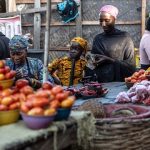
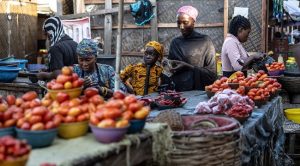
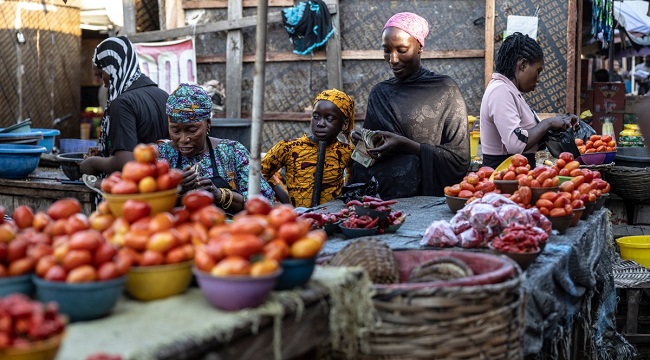
A vendor counts her money as a girls looks on at the Lokoja International Market in Lokoja on October 21, 2024. (Photo by OLYMPIA DE MAISMONT / AFP)
Nigeria’s economy grew by 4.2 per cent in the first half of 2026, while increased revenues gave states greater room to expand infrastructure spending, according to the World Bank’s latest Nigeria Development Update.
Aggregate state revenues also rose by about 93 per cent in real terms over the period, while expenditure increased by about 92 per cent.
The report, titled “Beyond the Federal Purse: How Higher Revenues Reshaped State Priorities,” said growth improved from 3.9 per cent in the corresponding period of 2025 and 3.5 per cent in 2024.
Services accounted for much of the expansion, supported by a stronger contribution from agriculture. The improvement helped stabilise the poverty rate for the first time since 2019, although elevated inflation continued to erode household purchasing power.
The World Bank said Nigeria’s economic performance had strengthened across growth, public finances and the external position, but stressed that sustained reforms and better public services were necessary to spread the benefits.
Between 2023 and 2025, gross federation revenues increased by 69 per cent in real terms, largely reflecting exchange-rate reforms, the removal of the petrol subsidy and stronger revenue administration.
States recorded the largest increase in federation revenue flows. Beyond higher statutory allocations, they benefited from refunds, the settlement of longstanding federal obligations, dedicated intervention funds and stronger Value Added Tax collections.
The additional resources supported higher capital spending, whose share of total state expenditure rose from 46 per cent to 61 per cent. Transport infrastructure recorded the largest increase, alongside substantial spending growth in housing, agriculture and other investments intended to support economic expansion.