



The Yobe State Government has emphasised that exclusive breastfeeding for the first six months of life is essential for healthy child growth, noting that it also improves maternal health by reducing the risk of breast and ovarian cancers, aiding postnatal recovery and strengthening the mother-child bond.
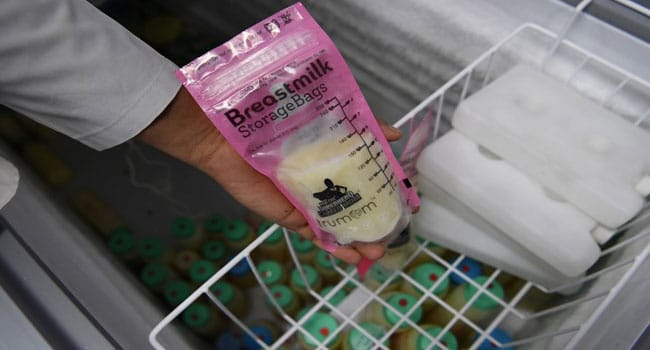
This photograph, taken on July 25, 2018, shows a nurse holding a packet of breast milk stored in a freezer at a milk bank at Fortis La Femme hospital in the Indian capital, New Delhi. Sajjad HUSSAIN / AFP
Exclusive Breastfeeding has remained one of the most cost-effective and impactful practices that promotes public health, provides complete nutrition for infants during the first six months of life which strengthens immunity, and supports optimal brain development.
The Executive Secretary, Yobe State Primary Healthcare Board, Babagana Kundi-Machina who disclosed this at a press conference for the commemoration of the World Breastfeeding Day in Damaturu, said breastfeeding reduces the risk of breast and ovarian cancers, promotes recovery after childbirth and strengthens the bond between mother and child.
He, however, expressed worry over the attitude of some breastfeeding mothers that are still adamant over exclusive breastfeeding, forcing the state not to achieve the national average rate.
“The Latest Nigerian Demographic and Health Survey (NDHS 2024) indicates that the national exclusive breastfeeding rate stands at 29 per cent. In Yobe state, however, the exclusive breastfeeding rate is 24.2 per cent, which is below the national average,” he said.
“This should be a source of concern to us all. It is more than just a number; it represents thousands of infants who may not be receiving the full nutritional, developmental, and health benefits that exclusive breastfeeding provides during the critical first six months of life,” he said.
The 2026 theme “Breastfeeding for a Sustainable Start in Life: Strengthen What Works” is geared towards reminding the general public the significance of exclusive breastfeeding.
The campaign called on governments, communities, workplaces, health systems and families to reinforce strategies that protect and support breastfeeding.
The key interventions during the weeklong event, is to build capacity of healthcare workers to deliver quality Infant and Young child Feeding, strengthens breastfeeding and counselling, support community-based awareness and behavioural change campaigns, collaborate with development partners to strengthen nutrition as well promote Baby-Friendly Hospital and Community Initiatives to create supportive environments for breastfeeding mothers.