



Reps demand emergency fund for teaching hospitals as health budget dips
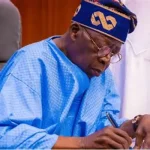
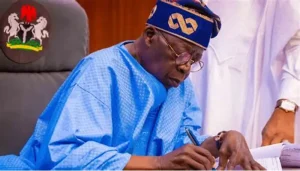
President Bola Tinubu has asked the House of Representatives to approve the Federal Government’s plan to raise $7.7 billion in external loans to finance part of the 2026 budget deficit.
This was as the House called on the government to urgently increase funding for federal teaching hospitals, medical centres and other tertiary health institutions amid declining budgetary allocations and deteriorating infrastructure.
In a letter to the Speaker, Tajudeen Abbas, the President sought legislative authorisation to secure N10.79 trillion, equivalent to $7.707 billion, at the budget exchange rate of N1,400 per dollar.
Tinubu explained that the request “does not represent a fresh borrowing proposal”, but that the National Assembly had already approved the amount and captured it in the 2026 Appropriation Act.
He said the government needed the lawmakers’ approval to meet statutory requirements governing the terms and conditions for obtaining external loans.
The President cited Sections 21(1) and 27(1) of the Debt Management Office (DMO) Establishment Act, 2003, which require the National Assembly to approve the conditions attached to external borrowing.
Section 21(1) bars the Minister of Finance from obtaining or approving external loans without presenting their terms and conditions to the National Assembly for approval.
Similarly, Section 27(1) empowers the legislature to approve standard conditions for negotiating and accepting external loans, as well as issuing guarantees.
Tinubu recalled that the 2026 Appropriation Act provided for N29.218 trillion in new borrowings to finance the budget deficit.The borrowing plan comprises N18.28 trillion from domestic sources and N10.79 trillion from external sources.
He said the government would explore different financing options simultaneously, weighing their costs, benefits and the time required to access the funds.
However, the President indicated that the government would prioritise Eurobond issuance because of its relatively quicker completion process and its capacity to attract larger financing at lower costs.
Tinubu assured the lawmakers that the Federal Ministry of Finance and the DMO would work to secure the most favourable borrowing terms available in the international market.
MEANWHILE, the lawmakers warned that inadequate funding threatens specialist healthcare delivery, medical training and research across the country.
They called for a dedicated infrastructure revitalization programme, improved welfare packages for healthcare workers and timely release of approved funds.
The resolutions followed a motion of urgent public importance moved by Patrick Umoh during yesterday’s plenary.
Presenting the motion, Umoh expressed concern over declining health sector allocations, poor hospital infrastructure, inadequate medical equipment and the continued migration of doctors, nurses and other skilled professionals.
He said federal teaching hospitals and medical centres remained central to specialist healthcare delivery, medical education and research, noting, however, that many struggled with dilapidated facilities, insufficient bed spaces, unreliable electricity and rising operational costs.
Umoh said urgent legislative intervention was necessary to strengthen the institutions and guarantee Nigerians access to quality, affordable, and accessible specialist healthcare.
Acknowledging the Federal Government’s efforts towards improving the health sector, he expressed concern that its budgetary allocation remained significantly below the 15 per cent commitment under the 2001 Abuja Declaration.
The proposed 2026 federal health budget accounts for just 4.2 per cent of total expenditure, down from approximately 5.14 per cent in the approved 2025 budget.
The 2025 figure, contained in BudgIT‘s analysis of the Federal Government-approved budget, represents N2.83 trillion out of total expenditure of N54.99 trillion.
The House unanimously adopted the motion and mandated its Committee on Health Institutions to engage relevant ministries, the Budget Office of the Federation and hospital managements.