



Iranian officials contradicted President Trump’s claim that representatives from the two countries would speak directly in Qatar’s capital on Tuesday.
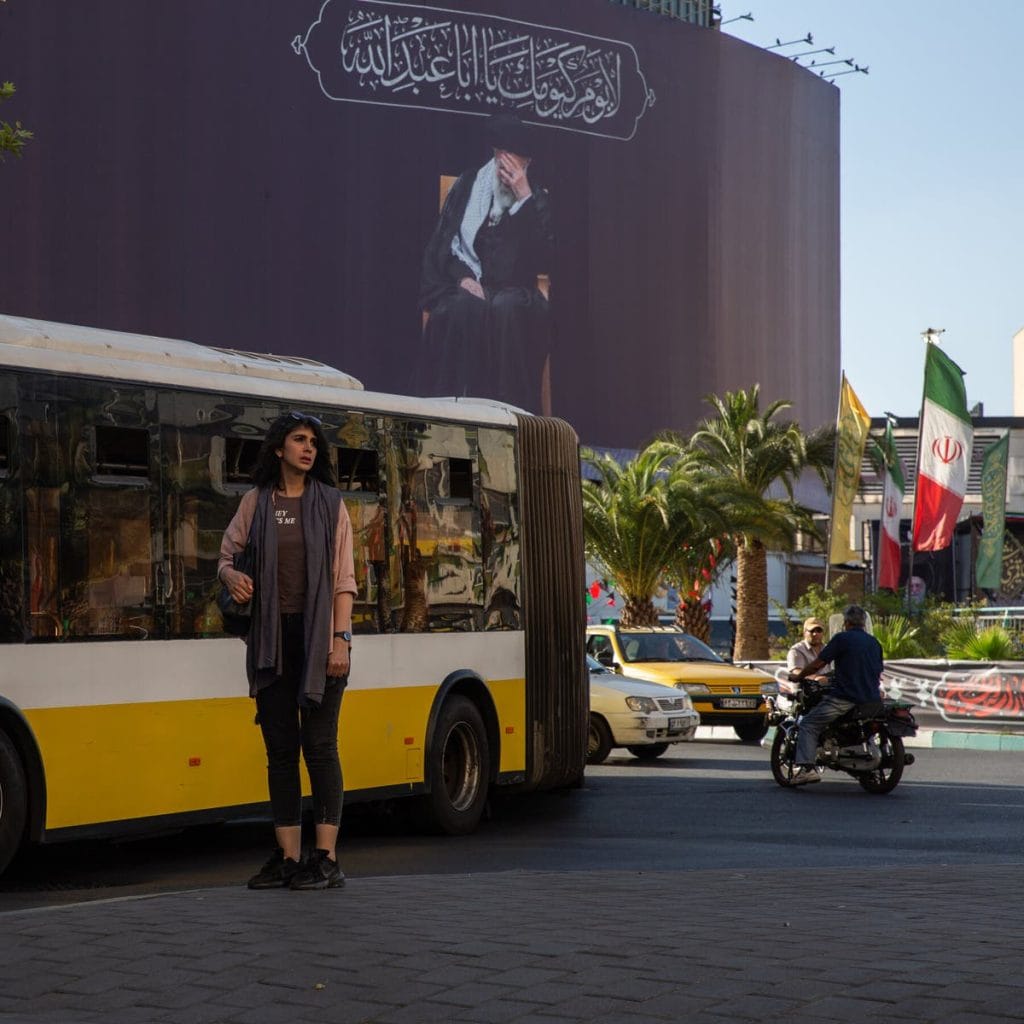
A billboard of Iran’s late supreme leader, Ayatollah Khamenei, in Tehran this month.Credit…Arash Khamooshi/Polaris for The New York Times
Iran and the United States have offered conflicting narratives about whether the delegations they plan to have in Qatar on Tuesday will hold direct talks, days after an exchange of hostilities threatened a tenuous cease-fire deal.
The four-day exchange that ended on Sunday also undercut the nascent recovery of shipping in the Strait of Hormuz, a crucial choke point for oil and gas shipments that Iran effectively blockaded after the war started. And as the two countries try to negotiate a permanent end to the war, they remain far apart on important issues, including the future of Iran’s nuclear program.
Iranian and American officials have both said they will have delegations in Doha, the Qatari capital, this week. But it was not clear as of Tuesday morning who would meet with whom, or how the discussions would unfold.
President Trump said in a brief social media post on Monday that U.S. and Iranian officials would hold talks in Qatar the next day, at Tehran’s request. The White House press secretary, Karoline Leavitt, later told Fox News that Steve Witkoff and Jared Kushner, two of Mr. Trump’s closest advisers, would fly to Doha this week for the sessions.
Hours after the president’s post, Iran’s deputy foreign minister, Kazem Gharibabadi, said that a delegation from the country would be in Doha over the next two days — but he denied that they would meet directly with U.S. officials.
Mr. Gharibabadi said in remarks carried by state television that the Iranian delegation would instead meet with Qatari mediators to make sure the U.S. abides by its commitments under the temporary deal.
He added that Iran “cannot accept any other route” through the Strait of Hormuz, a reference to the parallel shipping passage established last week by Oman and the International Maritime Organization that bypassed Iranian waters. “If vessels pass through other routes, we will oppose it, we will try to prevent it, and if anything happens to those vessels, the responsibility will be their own,” he said.
His comments appeared to underline Tehran’s stance that it has interpreted ambiguities in the interim cease-fire agreement with the United States to mean that Iran can determine which route ships must take.
The recent hostilities began on Thursday, when a cargo ship using the new route was attacked. U.S. officials blamed Iran for that attack and another on a different vessel in the strait on Saturday. The U.S. military conducted what it described as retaliatory strikes on Iran.
The Iranian military later said that it had responded by carrying out drone and missile strikes against American targets at a U.S. naval base in Bahrain and a Kuwaiti air base.
Here’s what else we’re covering.
- Shipping uncertainty: Traffic through the Strait of Hormuz dropped significantly over the weekend, after the renewed attacks between the United States and Iran left some shipowners deciding the waterway was too risky to pass through. Read more ›
- China’s advantage: The war in Iran and effective closure of the strait has inflicted deep economic pain on many countries, but China’s oil and gas reserves and clean energy supplies have allowed it to avoid the worst of the effects, a report has found.