


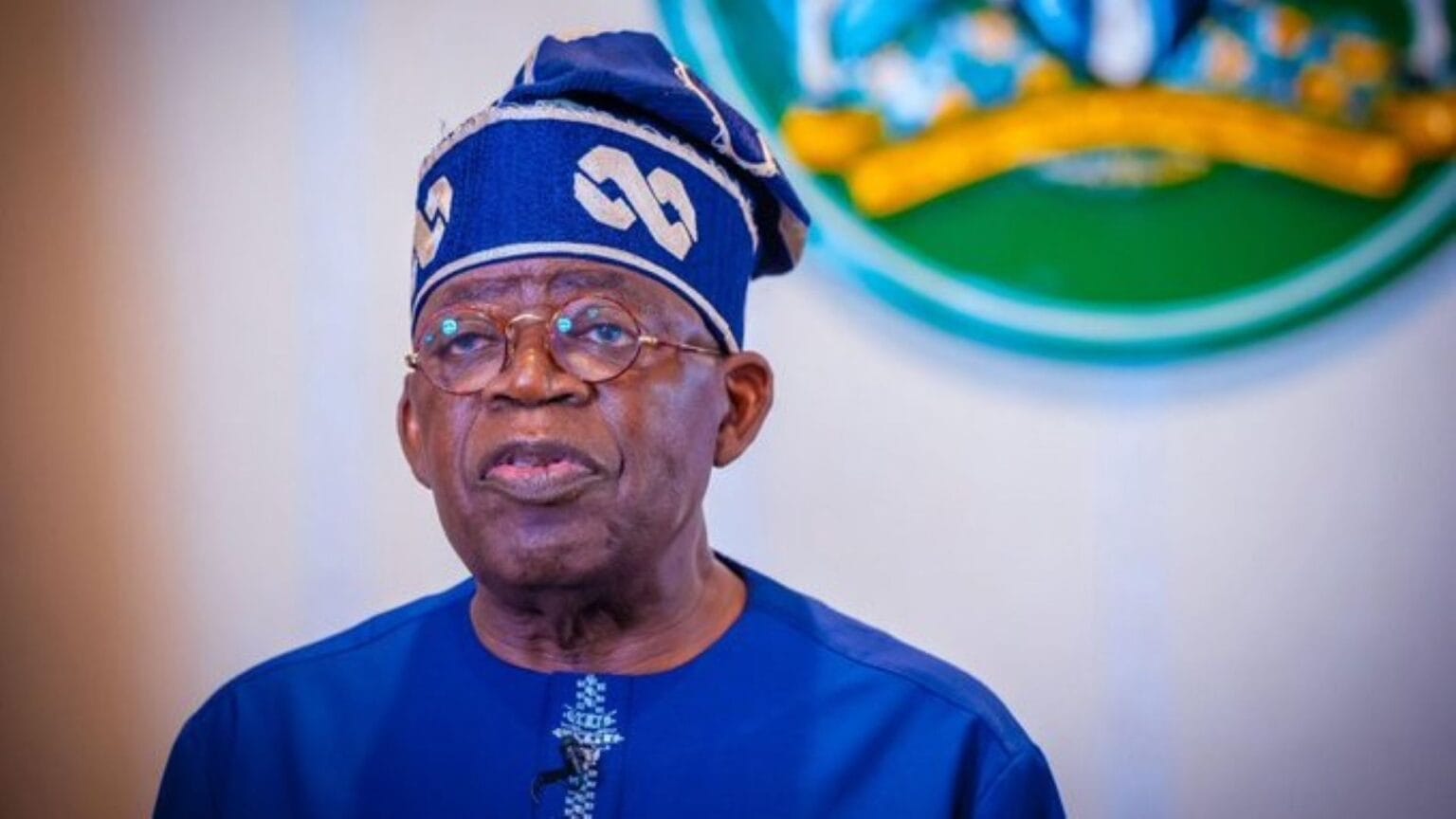
President Bola Tinubu has pledged to restore Nigeria’s state-owned refineries to sustainable operations and profitability, saying the Port Harcourt, Warri and Kaduna facilities will undergo a major structural reset after previous rehabilitation efforts costing about $2.9 billion failed to deliver lasting results.
president Bola Tinubu
NEITI audit queries $3b pre-export financing, $722.6m NLNG dividends, refinery spending
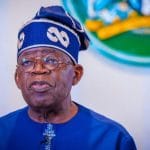
President Bola Tinubu assured yesterday in Abuja that the government-owned refineries would return to operation, insisting that merely restarting the facilities would not be enough without ensuring their profitability and long-term
viability.
Tinubu said the Port Harcourt, Warri and Kaduna refineries would undergo a firm reset and structural reworking to ensure they deliver value to Nigerians.
The president spoke during a meeting with the leadership of the Nigerian Union of Petroleum and Natural Gas Workers (NUPENG), where he acknowledged concerns surrounding the performance of the state-owned refineries.
“The refineries you mentioned are going to come back to work. We are just building a very firm reset and structural reworking of the economics of it,” Tinubu said.
“Ordinary flame and smoke of a refinery doesn’t mean that it is working until it is profitable and yields the value for which it was built.”
Tinubu said he had accepted responsibility for the assets and liabilities inherited by his administration and would ensure that the refineries were made productive for the benefit of Nigerians.
“I’m not a man who will go looking back at everything because I have accepted the assets and liabilities of my predecessors. No matter what has happened in the years past, it is my responsibility now as the president to fix it, make it work for the largest common value of our population,” he said.
The assurance comes as the Nigerian National Petroleum Company Limited (NNPCL) moves to restructure. In May, NNPC signed a Memorandum of Understanding with Sanjiang Chemical Company Limited and Xingcheng (Fuzhou) Industrial Park Operation and Management Co., Ltd. to facilitate the rehabilitation, restart and expansion of the Port Harcourt and Warri refineries through a technical equity partnership model.
The latest move follows years of government spending on rehabilitation projects that failed to deliver sustained production.
Under the President Muhammadu Buhari-led administration, about $2.9 billion was approved for the rehabilitation of the refineries. However, the facilities barely
produced refined products before being shut down again.
The development has also renewed questions over the economic viability of the
facilities.
Earlier this week, the Petroleum and Natural Gas Senior Staff Association of Nigeria (PENGASSAN) said the government-owned refineries were shut because they were losing money, and not because they could not function.
PENGASSAN President, Festus Osifo, told newsmen in Lagos that the rehabilitation of the three refineries represented one of the most significant interventions in the facilities in several years.
However, he contrasted the rehabilitation efforts with what he described as years of government announcements and approvals that were not matched by corresponding on-the-ground work.
Tinubu’s latest position therefore signals a shift from simply bringing the refineries back on stream to restructuring their economics and ensuring that operations generate sustainable returns.
MEANWHILE, the Federal Ministry of Finance has accused NNPCL and other agencies of failing to provide the financial records required to respond to queries raised in the Nigeria Extractive Industries Transparency Initiative (NEITI) 2021–2023 Oil and Gas Industry Audit Report.
The Permanent Secretary, Raymond Omachi, made the disclosure yesterday when he appeared before the Senate Committee on Public Accounts to answer questions arising from several financial infractions contained in the NEITI report.
At the session, Omachi said the ministry had been unable to provide satisfactory answers to some of the queries because it was not directly involved in the transactions and had faced difficulties obtaining relevant records from agencies, particularly the NNPCL and the Nigerian Upstream Petroleum Regulatory Commission (NUPRC).
One of the major issues flagged by NEITI is a $3 billion pre-export financing facility obtained in 2012 to settle petroleum subsidy payments. According to the audit report, the recovery of the loan from monthly federation revenue proceeds under the Pre-Export Financing and Project Eagle agreements remains unclear.
Another major query concerns $722.6 million in dividends and interest paid by the Nigeria LNG Limited (NLNG) to the then Nigerian National Petroleum Corporation (NNPC) in 2021.
NEITI observed that the funds, which belonged to the federation, were neither remitted to the Federation Account nor properly accounted for. The audit also questioned the expenditure of about N200 billion on the rehabilitation of Nigeria’s refineries, noting that none of the refineries was operational in 2021 despite the huge expenditure.
The ministry was equally unable to satisfactorily explain the $221.283 million in overhead costs incurred by the National Petroleum Investment Management Services (NAPIMS) in the same year.
Responding to the queries, Omachi said the ministry could not provide complete explanations for transactions handled by other government agencies. He stated: “We don’t have direct involvement in all the issues raised, and the required financial records from the affected agencies, particularly NNPCL, NUPRC, etc., are not there.”
Nevertheless, he disclosed that the ministry had engaged Arthur Andersen LLP to conduct a forensic audit of the transactions and reconcile the outstanding financial records.
However, members of the committee questioned the ministry about the repeated extensions granted to complete the forensic audit.
Chaired by Senator Ibrahim Hassan Dankwambo (Gombe North), the committee pressed the permanent secretary to state when the audit report would be ready, after the deadline had reportedly been extended twice – from six months to one
year.
Omachi, while insisting that the ministry was prepared to cooperate with the committee, urged the Senate to compel the NNPCL and NUPRC to appear alongside the ministry so that the outstanding issues could be addressed jointly.