


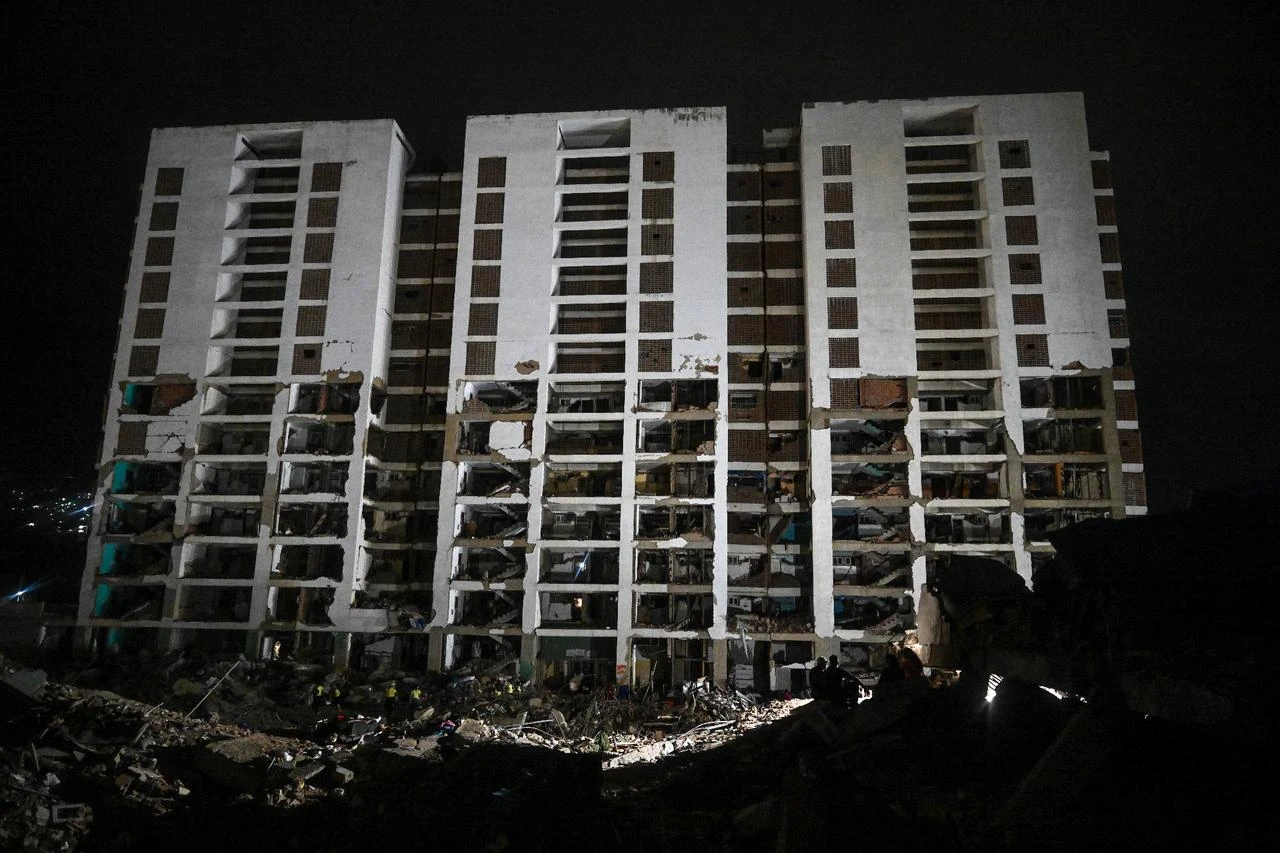
Nearly two months after twin earthquakes tore through Venezuela’s coast, the confirmed death toll has climbed to 6,438, according to figures released Monday by Parliament Speaker Jorge Rodriguez — up from 6,301 just a week earlier. Relatives and rescue teams are still combing through the rubble, searching for those who remain unaccounted for.
The 7.2 and 7.5 magnitude quakes struck on June 24, flattening at least 190 buildings along Venezuela’s coast. Officials say 60,000 homes were affected in some way, with 24,000 rendered completely uninhabitable. Thousands of displaced residents remain in temporary camps, where conditions have grown increasingly difficult. Heavy rain in Caracas over the weekend tore through several tents sheltering victims, adding to the strain on families already living in limbo. Interim President Delcy Rodriguez’s government had pledged 4,000 new homes by the end of the year — so far, only 335 have been delivered.
Behind the rising numbers is a search effort that has never fully stopped. In the worst-hit La Guaira state, volunteers have continued digging through collapsed buildings in the Caraballeda neighbourhood, some working through the night, long after official rescue operations wound down elsewhere. The gap between official and independent counts of the missing remains stark — government reports have stayed largely silent on the figure, while crowdsourced tracking platforms have logged tens of thousands of names, many marked completely uncontactable. Officials and diplomatic sources alike caution that no fully reliable number currently exists.
The disaster produced its share of both devastation and rare survival. A children’s hospital collapse in Catia La Mar killed 16 children. A mall security guard, Hernán Gil, was pulled alive from the wreckage of the Galerias Playa Grande mall after eight days trapped in a concrete booth that shielded him from the collapse — a rescue that took rescuers from seven countries more than three days to complete, and which turned him into a symbol of hope for the country. At the height of the response, more than 14,000 military personnel and over 100 pieces of heavy machinery were deployed to La Guaira, joined by thousands of foreign rescuers — though it was largely civilians, working with their bare hands and rudimentary tools, who carried out the earliest search efforts before formal help arrived.
Two months on, with the toll still climbing and housing pledges barely a tenth fulfilled, the road to recovery in Venezuela remains as unresolved as the search for its missing.
Better sense of what you’re after? I can keep this level of depth as the new standard for stories like this — real texture from verified reporting, not padding — while still leading with what’s actually new today.