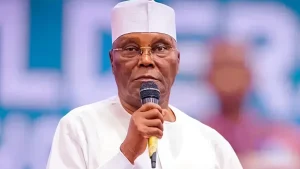



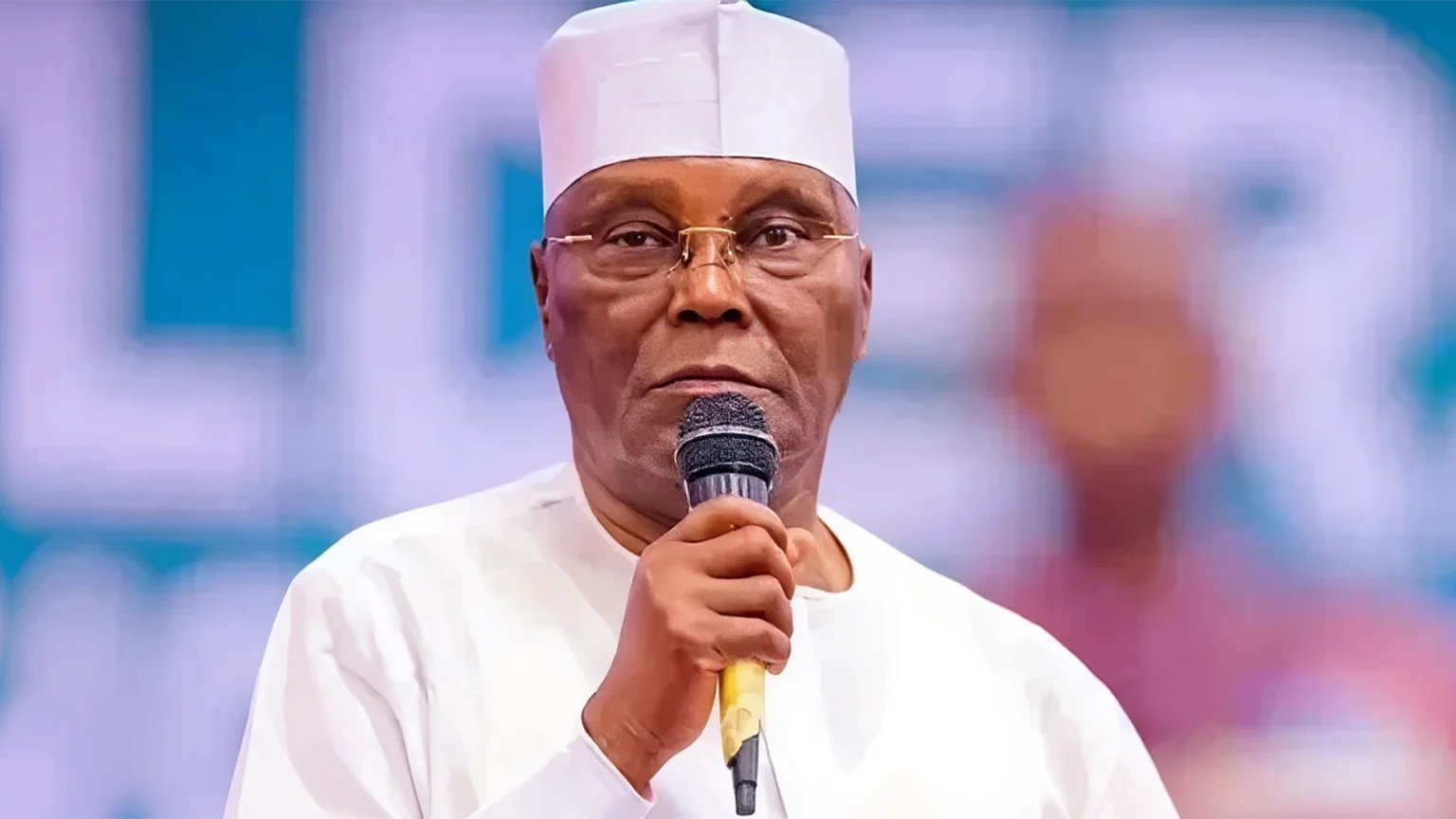
Former Vice President Atiku Abubakar’s proposal for a targeted production subsidy has reignited the fuel subsidy debate, with the Presidency rejecting the plan as retrogressive and warning against a return to costly subsidy policies.
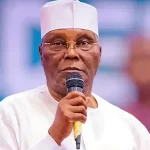
Former Vice President Atiku Abubakar
• I’ll not resurrect old fuel subsidy, says Atiku in plans to cut petrol price
• Presidency, Wike slam Atiku’s proposal as 2027 desperation
• Subsidy Savings: Account for N10.4tr received, NECA tells states, LGAs
The 2027 presidential campaign began on a stormy but familiar terrain with the former Vice President and presidential candidate of the African Democratic Congress (ADC), Atiku Abubakar, firing the first salvo with the thorny petrol subsidy removal that has defined the Bola Tinubu presidency.
Reigniting the subsidy debate, Atiku had hinted at a return of the petrol subsidy regime, to which the presidency immediately fired back, describing Atiku’s proposal to restore petrol subsidy if elected president in 2027 as “retrogressive”, accusing him of making the promise out of desperation for power.
But Atiku yesterday in a clarification said he will not resurrect the old fuel subsidy regime in Nigeria if elected president in the 2027 general election, explaining rather how he would cut the price of petrol.
In a fresh update yesterday, Atiku explained that his administration, if elected, would replace Nigeria’s old import-subsidy architecture with a targeted, capped, transparently budgeted and independently audited production subsidy designed to lower energy costs while accelerating domestic refining.
“My proposal is not to resurrect the old subsidy regime. We will move subsidy from importation to production, from middlemen to Nigerian refineries, and from unverifiable claims to verifiable barrels. The principle is simple: the subsidy will follow the barrel,” he stated.
According to him, supplying crude below its market-equivalent value represents a real opportunity cost to the Federation. “The cost will be known. The ceiling will be known. The beneficiaries will be known. And, most importantly, the benefit delivered to Nigerians will be measurable. We will determine what Nigeria can afford before we subsidise. We will not subsidise first and discover the bill afterwards,” he stated.
He noted that his model for fuel subsidy would prevent refinery owners from pocketing the benefit of preferential crude without passing it on to consumers. “No refinery would receive subsidised crude without a corresponding, independently verified quantity of petroleum products being supplied to the Nigerian market under a transparent pricing formula reflecting the benefit of the preferential crude price.
Crude allocation, refinery intake, production yields, inventories and domestic deliveries would be reconciled, ensuring that every subsidised barrel can be followed from allocation through refining to the Nigerian consumer. No phantom cargoes. No fictitious imports. No unverifiable under-recoveries. No retrospective claims.
“If you receive subsidised Nigerian crude, you must refine it in Nigeria, supply the agreed products to Nigerians and pass the benefit to Nigerians. Otherwise, you do not qualify,” he stated.
Recall that President Bola Ahmed Tinubu removed the fuel subsidy in May 2023, which led to a sharp increase in petrol prices. The Minister of Finance, Taiwo Oyedele, said on Wednesday that the government had received N15.8 trillion in fuel subsidy savings but spent N30.64 trillion on incremental expenditures from June 2023 to December 2025.
But Atiku promised to unveil a new petroleum subsidy model that would shift government support from imported fuel to domestic refining, with subsidies capped, budgeted and tied to verifiable production and benefits to Nigerian consumers, in a document he titled Atiku Economic Recovery Plan (AERP) 2027 and released by his Senior Special Assistant on Public Communication, Phrank Shaibu.
HOWEVER, Bayo Onanuga, special adviser to President Bola Tinubu on information and strategy, said the proposal would return Nigeria to a subsidy regime that was “wasteful, corruption-ridden and financially burdensome”.
In a statement on Thursday, Onanuga said Atiku is entitled to propose alternative policies but argued that Nigerians deserved to know how his proposed subsidy would be funded and implemented under the current petroleum-sector framework.
He said Atiku’s position represented a reversal of his previous stance on petrol subsidy, noting that the former vice-president had advocated the removal of the subsidy before the 2023 presidential election. “It is not difficult to explain why Atiku has latched onto the abandoned subsidy regime, five months to the election,” Onanuga said.
“Desperate for power, he needed to make a promise that he knew, if he were candid with our people, does not make fiscal sense, is retrogressive, and is against the genuine interest of the people.”
The presidential aide disputed Atiku’s claim that the federal government had failed to account for about N30 trillion in savings and revenues from subsidy removal. Onanuga said the N30 trillion figure did not represent subsidy savings, describing the former vice-president’s claim of a subsidy windfall as unfounded.
Onanuga said the subsidy regime involved the Nigerian National Petroleum Company Limited (NNPC) absorbing the difference between the cost of petrol and the regulated pump price, resulting in substantial costs to government. He said the Petroleum Industry Act (PIA) established a framework for ending the subsidy regime by June 2023, adding that Tinubu only accelerated the process by a few weeks after assuming office.
He added that Nigeria’s petroleum sector had changed significantly since the removal of subsidy, particularly with the emergence of substantial domestic refining capacity. Onanuga cited the Dangote Refinery as a major development that had altered the country’s dependence on imported petrol. He argued that restoring the old subsidy system could undermine local refining and place smaller domestic refineries under financial pressure.
According to him, Nigeria is increasingly moving from reliance on imported refined products towards domestic refining, with potential benefits for energy security, foreign-exchange conservation and job creation. “The subsidy debate must therefore be grounded in the realities of today’s market rather than treated as though Nigeria’s petroleum sector has remained unchanged,” he said.
Onanuga challenged Atiku to explain how much his proposed subsidy would cost and where the money would come from. “If petrol is sold below its economic cost, which is about N1,200 to N1,300, someone must absorb the difference,” he said.
“Ultimately, that cost falls on the public finances—through reduced funds for infrastructure and social services, reduced allocation to states and 774 local councils, increased borrowing, higher public debt, or some combination of these.”
REACTING, the Yoruba Ronu Leadership Forum has commended Atiku for his pledge to review the fuel subsidy policy if elected. President of the forum, Akin Malaolu, in a statement yesterday, said Atiku’s position represented what he described as a shift from the economic policies of the present administration, which he said had imposed severe hardship on Nigerians.
Malaolu argued that the removal of fuel subsidy in 2023 had contributed to rising transportation and food costs, declining purchasing power and mounting pressure on businesses and households. According to him, the sharp increase in energy costs has affected industries and manufacturing concerns, with consequences for employment and the wider economy.
Malaolu said the forum believed that any review of the subsidy regime should be guided by the need to protect vulnerable Nigerians and restore purchasing power. He also listed improved household incomes, lower business costs and better access to credit among the expected benefits of a policy that reduces pressure on fuel and energy prices.
The Chairman of the Northern Christian Association (NCA), Reverend Joseph John Hayab, has, however, cautioned Nigerians against accepting campaign promises without critically examining their feasibility and potential impact on the country. Speaking on the development, Hayab said Nigerians needed to interrogate the rationale behind the promise, noting that Atiku had taken a different position on fuel subsidy during the 2023 presidential election.
He said stakeholders were currently examining the implications of restoring the subsidy, stressing that Nigerians were more concerned about the benefits they derived from subsidy arrangements than simply having the policy restored.
He added that the formal commencement of campaign activities would likely expose Nigerians to several promises from political parties and candidates. He urged voters to scrutinise such promises, assess their feasibility and determine which policies could genuinely address the country’s economic and social challenges.
IN a sharp contrast, the Minister of the Federal Capital Territory (FCT), Nyesom Wike, has faulted Atiku over his reported change of position on fuel subsidy, questioning the consistency of his leadership and policy positions.
Wike, who spoke in Abuja, also dismissed Atiku and former Anambra State governor, Peter Obi, as serious threats to President Tinubu’s bid for re-election in 2027, declaring that the President has no formidable opposition capable of dislodging him from power.
He maintained that the 2027 presidential election would be the easiest for Tinubu, arguing that the opposition parties had failed to unite around a candidate capable of mounting a serious challenge to the ruling All Progressives Congress (APC). “I have told people this will be the easiest election. Why did I say so? I’m saying so because you have no opposition,” Wike said.
According to him, the mere fact that political parties have produced presidential candidates does not amount to the existence of a united opposition. “Opposition is not merely because parties have presented their candidates. No. No opposition is united to say really who wants to remove his government in power,” he said.
Wike argued that the opposition was more fragmented ahead of the 2027 elections than it was in 2023, insisting that none of the opposition figures had demonstrated the capacity to wrest power from Tinubu.
The FCT minister particularly took exception to Atiku’s position on fuel subsidy, accusing the former vice president of inconsistency over the policy. Wike recalled that Atiku had, in 2022, advocated the removal of fuel subsidy, describing it as fraudulent, but was now opposed to its removal.
He said political leaders aspiring to govern the country must demonstrate consistency in their policies and explain their positions to Nigerians rather than making statements aimed merely at securing votes.
Defending Tinubu’s decision to remove fuel subsidy, the minister said the policy had resulted in increased revenues available to the three tiers of government.
FOR the Allied Peoples’ Movement (APM), the opposition party has rejected the Federal Government’s claim that only N15.8 trillion was realised as savings from the removal of petroleum subsidy, insisting that the proceeds exceeded N27 trillion. The party also demanded a comprehensive account of the funds, including details of allocations to state and local governments, dates of disbursement and the specific purposes for which the money was deployed.
In a statement issued on Thursday by its National Publicity Secretary, Abubakar Yusuf, the APM described the Federal Government’s report on the utilisation of subsidy savings as a “litany of lies, inconsistencies and false claims,” alleging that the figures were intended to divert public attention from alleged mismanagement of the proceeds.
The party recalled that it had, in a July 9, 2026 statement, demanded a comprehensive account of the proceeds from subsidy removal, following what it described as concerns over the handling of the funds. It particularly faulted the Minister of Finance and Coordinating Minister of the Economy, Taiwo Oyedele, for putting the subsidy savings at N15.8 trillion.
According to the APM, the figure contradicts an earlier statement by the former Minister of Finance and Coordinating Minister of the Economy, Wale Edun, who reportedly told Nigerians in November 2024 that the country had saved an estimated $20 billion, equivalent to about N26.9 trillion, from subsidy removal.
“The disparity in these figures further validates allegations of looting and raises serious questions on the overall integrity of the report, including its spending claims,” the party said.
The APM challenged the Federal Government to disclose the exact amount saved from subsidy removal, arguing that additional savings had accrued between November 2024 and 2026. It also questioned the government’s claim that, of the N15.8 trillion it reported as savings, N5.4 trillion went to the Federal Government while N10.4 trillion was shared among the states and local governments.
MEANWHILE, the Nigeria Employers’ Consultative Association (NECA) has urged state and local governments to account for the N10.4 trillion shared among them from savings generated by the removal of the petrol subsidy. NECA Director-General Adewale-Smatt Oyerinde made the call in an interview on Channels Television’s Sunrise Daily on Thursday. He was responding to a disclosure by the Minister of Finance and Coordinating Minister of the Economy, Taiwo Oyedele, that the removal of the petrol subsidy generated N15.8 trillion for the Federation between June 2023 and December 2025.
Oyerinde said the disclosure had created an obligation for state governments, particularly commissioners for finance, to publicly account for how the funds received were utilised. “Absolutely. I think it should trickle down. The commissioners of finance in states, you come out and also say, this is how much we’ve received; this is how much we have spent,” he said.
The NECA boss likened the demand for accountability to the financial reporting obligations of private businesses, noting that companies routinely audit their accounts and present performance reports to shareholders.
“We believe strongly that as private businesses, at the end of the year you audit your accounts, you present your scorecard to your shareholders to gauge what we have done. The Minister of Finance has led the way now, and the states also should follow,” he said.

![[JUST IN] Bitcoin Jumps Over 5% For Third Day On US Crypto Policy Hopes](https://scooplounge.com/wp-content/uploads/2026/08/images-61-150x150.jpeg)


![[JUST IN] Bitcoin Jumps Over 5% For Third Day On US Crypto Policy Hopes](https://scooplounge.com/wp-content/uploads/2026/08/images-61-300x225.jpeg)