



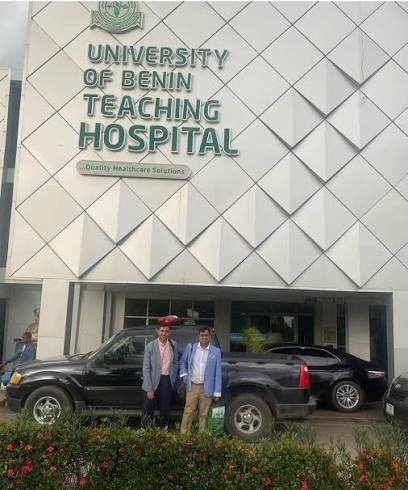
The University of Benin Teaching Hospital has commissioned a Drug Testing Centre in Benin City, Edo State, described as the first of its kind in a teaching hospital in the South-South geopolitical zone, as part of a broader push to strengthen early detection and management of substance abuse.
The facility was unveiled during the hospital’s second Special Intervention and Stakeholders Workshop on the screening of alcohol and substance abuse, which brought together representatives from the healthcare sector, the National Drug Law Enforcement Agency, the Nigeria Police Force, the judiciary, and the Edo State Ministry of Public Safety and Security. Chief Medical Director Prof.
Idia Ize-Iyamu described the centre as more than a new facility, saying it represented a significant step towards prevention, early intervention, safer communities and improved health outcomes.
She said substance abuse had become an increasing concern in society, with consequences that extend beyond individual users to families and communities — including impaired judgment, road traffic accidents, violence, broken families, poor academic and occupational performance, declining productivity and, in severe cases, loss of life.
Ize-Iyamu said the centre would screen for a wide range of substances, including amphetamines, benzodiazepines, marijuana/cannabis, ethanol, fentanyl, methadone, tramadol and barbiturates. She further warned that cannabis could impair memory, concentration and judgement, while excessive alcohol consumption could contribute to accidents, violence, dependence and liver disease, and that fentanyl, methadone and tramadol misuse could cause respiratory depression, dependence, seizures and other serious complications.
She stressed that the risk does not always come from a single substance alone, noting that combinations of drugs can significantly raise the likelihood of severe complications — making testing a critical tool not just for identifying substances but for catching risks before they escalate into tragedies.
A key advantage of housing the centre within a tertiary hospital, according to Ize-Iyamu, is the ability to immediately connect patients who test positive to appropriate medical care.
“When a problem is identified, we have the doctors, nurses, laboratory professionals, emergency teams and specialists who can assess the patient, manage complications and provide or facilitate appropriate” intervention, she said.
Other stakeholders reinforced the centre’s significance.
Director of the Forensics and DNA Centre at the University of Benin, Prof. Eddy Ehikhamenor, linked rising cases of domestic violence to substance abuse.
Edo State Commander of Narcotics for the NDLEA, Dr Mitchell Ofoyeju, stressed that screening should not be viewed as punitive but as a preventive measure to protect individuals and society, warning that substance abuse poses serious threats to both public safety and workplace productivity.
The workshop closed with participants voicing support for the new centre, which they said would provide an important platform for early detection, professional intervention and greater public awareness of the dangers of alcohol and substance abuse.
Attendees included Assistant Inspector General of Police for Zone 5, Monday Agbonika; Edo State Commissioner for Public Safety and Security, Festus Ebea; and Delta State Chief Magistrate, Tegwolo Okungbowa.
The centre adds to a broader wave of infrastructure upgrades UBTH has rolled out under Ize-Iyamu’s leadership in recent months, including a Japan-donated 160-slice CT scan machine, an expanded 460-chamber mortuary, a new Special Investigation Unit, a modern police post, and a revitalised oxygen plant — part of a wider push by the hospital to strengthen specialised care and reduce reliance on medical tourism.

![[JUST IN] Bitcoin Jumps Over 5% For Third Day On US Crypto Policy Hopes](https://scooplounge.com/wp-content/uploads/2026/08/images-61-150x150.jpeg)



![[JUST IN] Bitcoin Jumps Over 5% For Third Day On US Crypto Policy Hopes](https://scooplounge.com/wp-content/uploads/2026/08/images-61-300x225.jpeg)