


The government said scientific investigations identified methane and sulphide gases as the major emissions escaping through underground fractures along established fault lines.
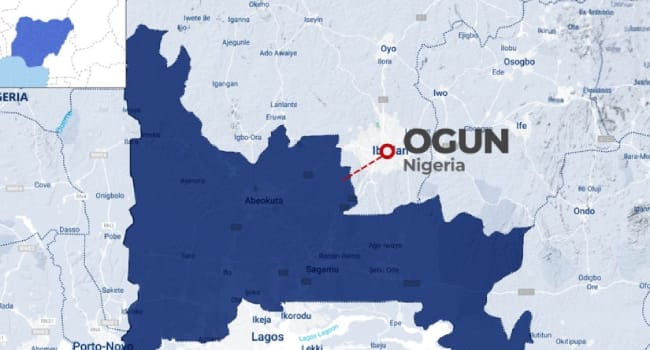
Ogun is located in South-West Nigeria
The Ogun State Government has attributed the methane emissions recorded in some schools in Ijebu-Ode to natural underground ecological causes, dismissing speculations linking the incidents to spiritual myths or security threats.
The Commissioners for Environment, Ola Oresanya, and Health, Dr Tomi Coker, made the clarification during a stakeholders’ meeting with parents, school heads and development partners in Ijebu-Ode Local Government Area.
The meeting provided an opportunity for government officials to brief stakeholders on progress made so far in addressing the situation. They also warned against the spread of unfounded rumours and speculation that could trigger unrest while the government works to find lasting solutions to the challenge.
Oresanya said scientific investigations identified methane and sulphide gases as the major emissions escaping through underground fractures along established fault lines.
READ ALSO: Ogun Inaugurates Safe Schools Steering Committee
He explained that the affected areas fall within the Ifewara-Zungeru Trans-Atlantic fault line, which stretches from Mojoda through Ijebu-Ode to Osun and Niger states.
According to him, investigations linked the fault line to the locations where the gas emissions occurred, including the schools recently affected by the incidents.
He noted that the affected part of Ijebu-Ode was historically forested and largely uninhabited before missionary schools were established there.
Oresanya said community leaders likely allocated the previously deserted land to missionaries, resulting in the establishment of several schools within the affected corridor.
He added that ongoing laboratory analyses would determine whether the gases are thermogenic or methanogenic in origin.
The commissioner also disclosed that the government was investigating the possibility that Ijebu-Ode sits on significant natural gas deposits beneath the affected communities.
The Commissioner for Health, Dr Tomi Coker, urged residents to remain calm and observe safety measures during periods of gas emission.
Coker advised residents to cover their noses with wet handkerchiefs and avoid using face masks, which she described as unsafe during such incidents.
She also urged residents to contact the state emergency health line, 08112000033, whenever urgent medical attention becomes necessary.
The Commissioner for Education, Science and Technology, Prof. Abayomi Arigbadu, said the affected schools would reopen after consultations with relevant stakeholders.
Arigbadu appealed to parents to allow the government complete the necessary processes involving principals and zonal education officers before reopening the affected schools.
Also speaking, the Head of the Department of Earth Sciences, Olabisi Onabanjo University, Prof. Philip Ikhane, urged residents to remain calm as investigations continue.
Ikhane advised residents to minimise activities such as borehole drilling and quarry blasting, warning that they could worsen the effects of the existing fault lines.
The officials urged residents and school authorities to promptly use the state emergency health helpline whenever gas emissions pose a threat to public safety.