



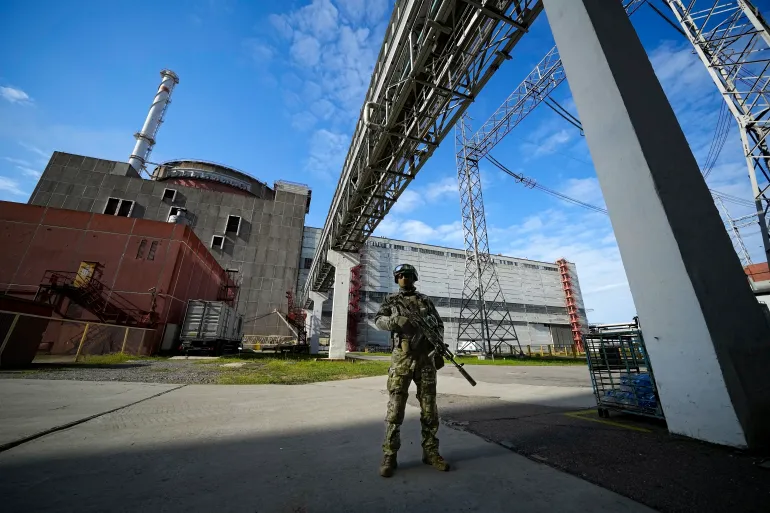
A drone exploded at a bus stop used by staff of Ukraine’s Zaporizhzhia nuclear power plant on Tuesday, killing one person and injuring several others, the UN’s nuclear watchdog has confirmed.
The International Atomic Energy Agency said the explosion took place around 6 a.m. local time, citing the plant’s director.
The blast caused 16 casualties among staff and subcontractors, including one death and three serious injuries.
The plant’s director described it as the worst event the facility has faced since Russian forces seized it. It remains unclear whether the drone responsible was Russian or Ukrainian.
Tuesday’s tragedy caps a punishing few months at the site. Just weeks earlier, Rosatom reported that chief engineer Alexander Yakovlev was killed when a Ukrainian drone struck his service vehicle between the plant and the nearby town of Enerhodar, with his driver also killed. Rosatom chief Alexei Likhachev said at the time that attacks on the surrounding area had killed 13 people and injured 48 over the preceding two and a half months alone.
Around the same period, Likhachev also said a woman was killed when a drone struck a residential building in Enerhodar, bringing the city’s death toll to 15 residents killed and 51 injured since late April,
with strikes repeatedly knocking out electricity and water supplies.
In late May, a drone tore a hole in the wall of a turbine hall at Power Unit No. 6, in what the IAEA called the first direct drone strike inside the plant’s perimeter since April 2024.
IAEA chief Rafael Grossi called it a serious incident that endangered core nuclear safety principles, warning that “attacking nuclear sites is like playing with fire.”
Ukraine denied responsibility, with its military calling the claim “yet another propaganda ploy” and noting no fighting was reported on that section of the front at the time.
That May strike was itself the latest in a long pattern stretching back to April 2024, when Grossi confirmed at least three direct hits on the plant’s main reactor containment structures — strikes he said represented “a dangerous new stage” in the war, being the first direct targeting of the complex since November 2022.
Rosatom said that episode also wounded three staff near a canteen before further drones hit a cargo area and the dome above Reactor No. 6, while Kyiv again denied involvement.
Zaporizhzhia, seized by Russian forces in the opening weeks of the 2022 invasion, is Europe’s largest nuclear power station. Though none of its six reactors have generated power since 2022, the plant still requires constant electricity for cooling, meaning attacks on the site or its power supply carry ongoing safety risks. Both Moscow and Kyiv continue to blame each other for the strikes, and the IAEA maintains a permanent monitoring team on-site to try to avert a wider nuclear accident.