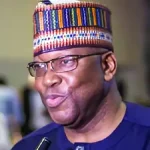



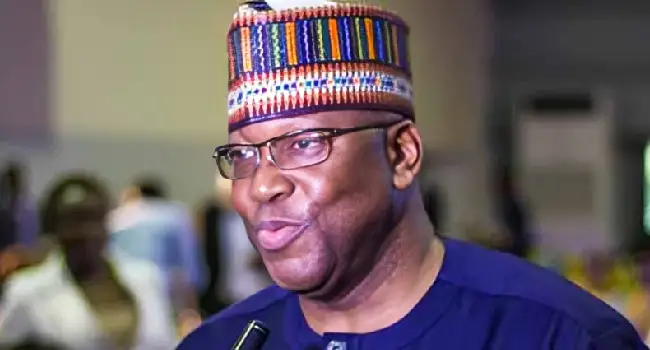
Dr. John Momoh. is the Chairman and CEO of Channels Media Group.
As campaigns for the 2027 general elections in Nigeria gather momentum, the Chairman and Chief Executive Officer of Channels Media Group, Dr. John Momoh, has urged political parties to refrain from utterances capable of fuelling disunity in the country.
Momoh, who stated this while presenting a keynote address titled, Narratives That Build Nations In Diversity, Public Relations Leadership And The Future of Nigeria, at the 38th Dr. Sam Epelle Gold Paper Lecture in Yola, Adamawa State, on Thursday, noted that a “divisive appeal to ethnicity or religion can turn a neighbour into a suspect”.
He explained that democracy needs vigorous debate, disagreement, scrutiny and the freedom to challenge those who govern, adding that political opponents should not be seen as enemies of the nation.
“Our politics is charged. The 2027 general elections are approaching, and the competition for power is already shaping public conversation. Political parties are building alliances, candidates are making claims, supporters are mobilising, and citizens are deciding whom they believe,” Momoh said at the event where Governor Ahmadu Fintiri was also unveiled as Patron of the Nigerian Institute of Public Relations (NIPR).
“Democracy needs vigorous debate. It needs disagreement, scrutiny and the freedom to challenge those who govern. But disagreement should not become permission to dehumanise. Political opponents are not enemies of the nation.
“Critics are not automatically traitors. Supporters are not exempt from the duty to tell the truth. In a tense season, words can become fuel.
“A false allegation can travel through a community before the person accused has a chance to respond. A divisive appeal to ethnicity or religion can turn a neighbour into a suspect. And a manipulated video or an invented quotation can harden opinions before the facts are known,” he added.
Stressing the importance of leadership, the CEO explained that political leaders and public figures have the reach to calm a moment or inflame it.
“They can reject language that invites violence, correct claims made by their own supporters, and remind people that the contest for office must not destroy the country we all share,” he added.
On the economy, Momoh said that the credibility of any economic story “depends on whether citizens can find evidence of progress in their own lives”.
According to him, the economy also has its own powerful narrative because people feel it at the kitchen table.
“Families weigh the cost of food, transport, rent, school fees, power and healthcare. A promising economic indicator matters, but citizens want to know whether their lives are becoming more manageable,” he said.
“The World Bank reported that Nigeria’s real GDP grew by 4.2 per cent in the first half of 2026. The Central Bank’s figures showed year-on-year headline inflation easing to 14.63 per cent in September from 15.39 per cent in August.
“These are positive movements. But when inflation falls, prices may still be rising, only at a slower pace. It does not mean that the cost of living has returned to what families could afford before.”
Speaking further, the media chief stated, “This distinction matters for public communication. If an official says that inflation has eased, and a family hears that food is still more expensive, the family is not being unreasonable. The two statements can both be true. Good leadership explains the difference and keeps working on the effect people actually feel.
“Growth must mean more than a number. It must become decent jobs, dependable public services, wages that can support a household, opportunity for young people, and confidence that the effort to build a life is worthwhile. The credibility of any economic story depends on whether citizens can find evidence of progress in their own lives.”
Promoting Security
Momoh also emphasised the need for intelligence, training, coordination, and public support to strengthen security agencies in the country.
“Security is an even more immediate measure. Across the country, communities face insurgent violence, banditry, kidnapping, communal conflict, farmer–pastoralist tensions and other threats. In Adamawa and the wider North-East, insecurity has disrupted homes, farming, education, livelihoods and family life,” he said.
“We must speak of these realities with care. Behind every statistic is a person: a child who cannot attend school, a farmer afraid to return to a field, a family forced from its home, a community unable to reach a clinic. Their experience must not be reduced to a talking point in a political argument.
“Our security agencies need intelligence, equipment, training, coordination and public support.”
The chief executive further stated that communities need protection and a reason to trust that reports will be heard. Justice must follow crime, and prevention must accompany response.
“A government’s account of security will be judged by whether people can live, work, travel, learn and sleep without fear,” said Momoh.
“These are not easy stories to tell. But a good national narrative does not hide difficult truths. It gives them names, identifies responsibility, reports what is being done, and allows citizens to see whether the response is working.”
On governance, he urged political leaders to match words with action for the benefit of the citizens
“Every government tells a story about its purpose. It may speak of renewal, reform, development, security or opportunity. But the public does not assess that story by the words alone. People compare it with their lived experience,” he stated.
“When leaders promise a road, citizens watch to see whether it is built. When government promises relief, people ask whether it reaches those who need it. When officials announce a reform, families want to understand why it is necessary, what it will cost them, what support is available, and what success will look like.
“Good communication therefore begins with the quality of the decision. If a policy has not been thought through, if its impact has not been understood, or if those who carry its cost have not been heard, communication cannot repair the weakness. It may postpone the reckoning, but it will not remove it.”
“Leadership must make room for honest advice before decisions are announced. It must ask: who will benefit? Who may be harmed? What evidence supports this choice? What will we do if the expected result does not come? How will we explain the trade-offs without talking down to the public?
“The public also needs to see that leaders accept responsibility. If a project is delayed, say why and give a credible timeline. If a service fails, acknowledge it and explain how the failure will be addressed. If a claim was wrong, by all means correct it. A leader’s willingness to repair a mistake can strengthen trust more than pretending the mistake never happened,” he added.
Mohom commended Governor Fintiri for the achievements recorded in Adamawa.
“I would like to acknowledge the work your administration is doing to transform Adamawa. Investment in roads and urban renewal, public buildings, schools and healthcare facilities is changing the state’s landscape and strengthening access to public services,” he said.
“These efforts deserve recognition, and the people of Adamawa deserve a clear account of what has been completed, what is under way and what remains to be done.”
He described Epelle as one who understood that communication goes beyond sending out information and encompasses the work of building understanding and confidence between an institution and the people it serves.